A wobbling electric fan isn’t just an eyesore; it can be an annoying distraction and even pose a safety risk, leading to inefficient operation and premature wear on the motor. If your electric fan is shaking, swaying, or making excessive noise, it’s a clear signal that something is out of balance. Don’t worry, most wobbling issues can be resolved with a few simple diagnostic steps and a common balancing kit. As a technician with over a decade of experience, I’m here to guide you through the process, ensuring your electric fan runs smoothly and safely.
Electric Fan: Overview and Common Types
Electric fans have been a cornerstone of home comfort for generations, providing cooling and air circulation. From their early mechanical designs to today’s smart, energy-efficient models, fans have evolved significantly. Understanding the basic types helps appreciate their function and potential issues.
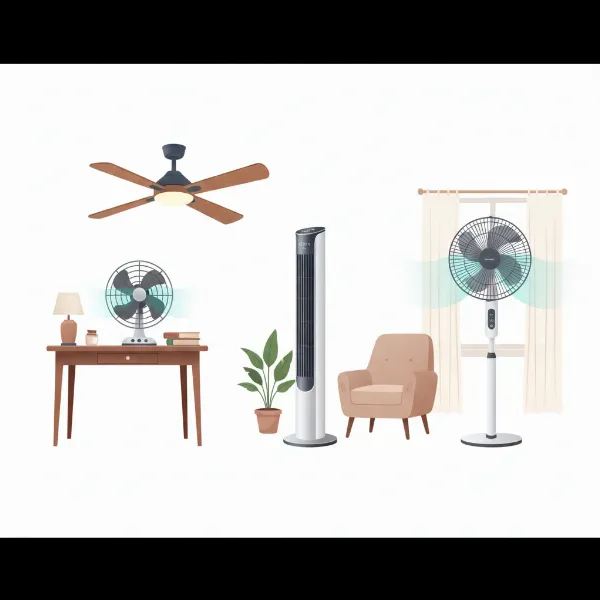 Illustration showing different types of electric fans like ceiling, table, pedestal, and tower.
Common electric fan types include:
- Ceiling Fans: Mounted on the ceiling, they circulate air across a larger room area.
- Table Fans: Compact and portable, ideal for personal cooling on desks or tables.
- Pedestal Fans: Taller, adjustable-height fans offering wider oscillation, suitable for small to medium rooms.
- Tower Fans: Slim, vertical fans known for their space-saving design and quiet operation.
- Window Fans: Designed to fit in window frames, used for intake or exhaust ventilation.
- Bladeless Fans: Utilize air multiplier technology for a smooth, consistent airflow without visible blades.
While the primary function of an electric fan is consistent airflow, their design variations mean different considerations for maintenance and troubleshooting. For ceiling fans, stability is paramount due to their overhead installation and rotating blades, making wobbling a particularly concerning issue.
Guide to Fixing a Wobbling Electric Fan: Troubleshooting and Balancing
A wobbly electric fan, especially a ceiling fan, can result from several factors, ranging from simple fixes to issues requiring a balancing kit. Before jumping to weights, it’s crucial to systematically check for underlying causes.
Step 1: Safety First – Power Off!
|
Our Picks for the Best Electric fan in 2026
As an Amazon Associate I earn from qualifying purchases.
|
||
| Num | Product | Action |
|---|---|---|
| 1 | LEVOIT Tower Fan for Bedroom, 25ft/s Velocity Standing Fan with 28dB Quiet for Sleep, Remoter, 12H Timer, 5 Speeds, 4 Modes, 90° Oscillation for Home, Office, Indoor, Bladeless 36 inch, White |

|
| 2 | Amazon Basics Air Circulator Fan, Desk Fan for Bedroom, Home and Office, With 90-Degree Tilt Head, 3 Speed Settings, Lightweight (3 LBS), 35 Watts, Black, 11.1"W x 6.3"D x 10.9"H |
|
| 3 | 10" Modern Standing Fan for Bedroom, Sleek Oscillating Pedestal Fan, 3-Speed & Height Adjustable Compact Floor Fan for Home Office & Dorm |
|
| 4 | Dreo Fan for Bedroom, 120° Oscillating Standing Fan, Quiet Floor Fan with DC Motor, Pedestal Fan for Room, 9 Speeds, 4 modes, 20dB, 120° Manual Vertical, 37-42" Adjustable Height, 9H Timer, Black |
|
| 5 | Dreo Tower Fan for Bedroom, 25ft/s Velocity Quiet Floor Fan, 90° Oscillating Fans for Indoors with 4 Speeds, 4 Modes, 8H Timer, Standing Fans, Bladeless Fan, Black, Nomad One (DR-HTF007) |
|
| 6 | XPOWER FC-100S Multipurpose 11 Pro Air Circulator Utility Fan with Oscillating Feature |
|
| 7 | Dreo Fan for Bedroom, 120° Oscillating Standing Fans, Quiet Floor Fan with DC Motor, 100ft Pedestal Fans for Room, 9 Speeds, 4 modes, 20dB, 120° Manual Vertical, 37-42" Adjustable Height, 9H Timer |
|
| 8 | Viniper Portable Rechargeable Fan, Small Desk Fan : 3 Speeds & about 8-24 Hours Longer Working, 180 Rotation, Portable Desktop Fan Small but Mighty, Strong Wind (White, Light Black Blade)6.2 Inch |
|
| 9 | Amazon Basics 16" Pedestal Fan with Remote, Floor Fan, Standing Fan for Bedroom, Living Room, Office, with 3 Speeds, 3 Modes, Timer, Dual-Layered Blades, Adjustable Height, Tilt Head, 60W, Black |
|
| 10 | Lasko 2520 Oscillating Stand Fan,White 16 Inch |
|
Always prioritize safety. Before performing any checks or adjustments on your electric fan, especially a ceiling fan, ensure the power is completely off. Turn off the fan at the wall switch, and for added safety, turn off the circuit breaker that controls the fan. This prevents accidental startup and potential injury.
Step 2: Clean the Fan Blades
Accumulated dust and grime can add uneven weight to your fan blades, causing an imbalance. This is a common and often overlooked culprit.
- Frequency: Clean your fan blades regularly, especially if you notice dust buildup.
- Tools: A damp cloth, duster, or even a pillowcase (to catch dust).
- Process: With the power off, carefully wipe down both the top and bottom surfaces of each fan blade. For dusty blades, use a pillowcase by sliding it over each blade and pulling it back, trapping the dust inside.
Step 3: Check and Tighten All Screws
Loose screws are a frequent cause of fan wobble. Vibration from normal operation can gradually loosen fasteners over time.
- Mounting Bracket: If your fan is mounted to the ceiling, ensure the screws securing the mounting bracket to the electrical box are tight. You may need to slide down the canopy (decorative cover) to access these.
- Downrod Screws: For ceiling fans, check the screws on both ends of the downrod—the rod connecting the fan motor to the mounting bracket. Ensure any pins are also firmly in place.
- Blade Attachment Screws: Examine the screws that attach the fan blades to the blade holders (or brackets), and those that attach the blade holders to the motor housing. Tighten any that appear loose. Do not overtighten, as this can strip the screws or damage the components.
Step 4: Inspect Fan Blades for Warping or Bending
Over time, changes in temperature or humidity can cause wooden blades to warp, or accidental impacts can bend metal blades.
- Visual Inspection: Look closely at each blade for any visible signs of warping, bending, or damage.
- Blade Alignment Check: Use a ruler or tape measure to check the distance from the tip of each blade to the ceiling. Choose a fixed point on the ceiling and measure from that point to the same spot on the tip of each blade. All measurements should be identical.
- Adjustment: If you find a slightly bent blade holder, you can gently try to bend it back into alignment with slight pressure. If a blade itself is significantly warped or damaged, it might need to be replaced. Severe warping or damage to multiple blades often warrants replacing the entire set or even the fan.
“Often, homeowners overlook the simplest fixes first. A thorough cleaning and tightening of all fasteners can resolve more than half of all ceiling fan wobble complaints.” – John Davis, Master Electrician and Fan Specialist
Step 5: Using a Fan Balancing Kit (If Wobble Persists)
If your electric fan still wobbles after cleaning, tightening screws, and checking blade alignment, a fan balancing kit is your next best solution. These kits are inexpensive and typically include a weighted clip and several adhesive balancing weights.
-
Attach the Balancing Clip: With the fan power off, take the plastic clip from the kit. Attach it to the trailing edge of one fan blade, approximately halfway between the blade holder and the blade tip.
-
Test Each Blade: Turn the fan on to its highest speed. Observe if the wobble has improved, worsened, or stayed the same. Turn the fan off.
-
Identify the Problem Blade: Move the clip to the same position on the next blade. Repeat the process of turning the fan on and observing the wobble. Continue this for every blade until you find the specific blade where attaching the clip reduces the wobble the most. This is your “culprit” blade.
-
Pinpoint Weight Placement: Once the problem blade is identified, keep the clip on that blade. Now, turn the fan off and slide the clip incrementally along the blade, moving it either towards the motor or towards the tip. After each small adjustment, turn the fan back on to high speed to see if the wobble further diminishes. The goal is to find the exact spot on the blade where the wobble is minimized.
-
Apply the Adhesive Weight: With the power off, carefully remove the plastic clip. Take one of the adhesive weights from the kit. Peel off the protective backing and firmly press the weight onto the top surface of the identified blade, directly in line with where the clip provided the best balance. Many weights are designed to be placed along the centerline of the blade.
-
Final Verification: Allow a few minutes for the adhesive to set. Turn the fan back on to its highest speed and observe. The wobble should be significantly reduced or completely eliminated. If a slight wobble remains, you may need to repeat the process, potentially adding another small weight or slightly adjusting the position of the existing one.
When to Call a Professional
While balancing an electric fan is often a DIY task, there are instances when professional help is advisable:
- Persistent Wobble: If you’ve tried all the troubleshooting and balancing steps and the wobble remains significant.
- Structural Issues: If you suspect the fan’s mounting bracket or electrical box in the ceiling is loose or damaged, especially in older homes, as this can be a serious safety hazard.
- Electrical Concerns: If you are uncomfortable working near electrical components or if the fan’s wiring appears damaged.
- New Installation Wobble: If a newly installed fan wobbles excessively, it could indicate an improper installation from the start, which a professional can diagnose.
Conclusion
A stable, wobble-free electric fan is essential for both comfort and safety in your home. By systematically addressing common issues like dust buildup, loose components, and blade misalignment, you can often restore your fan to optimal performance. The humble balancing kit, combined with careful troubleshooting, empowers you to tackle this common household nuisance effectively. Don’t let a shaky fan disrupt your peace – a few methodical steps can make all the difference.
Is your electric fan now spinning smoothly, or are you still encountering a subtle wobble?
Frequently Asked Questions
Is a slight wobble in an electric fan normal?
A very slight, almost imperceptible wobble (less than 1/8 inch) in a ceiling fan can be considered normal, especially at higher speeds. However, any noticeable or excessive shaking indicates an imbalance that should be addressed to prevent wear and potential safety risks.
Can I balance an electric fan without a special kit?
While a balancing kit offers the most precise solution, you can attempt to identify loose components or warped blades through cleaning and tightening. Some DIYers might try makeshift weights like electrical tape, but these are less reliable and less safe than purpose-made balancing weights found in kits.
How often should I clean my electric fan blades?
The frequency depends on usage and environmental factors like dustiness. Generally, cleaning your electric fan blades every few months, or at least twice a year, is a good practice to prevent uneven dust accumulation and maintain optimal performance.
What if my new electric fan wobbles right after installation?
If a new electric fan wobbles, first check that all mounting hardware and blade screws are securely tightened, as per the manufacturer’s instructions. If the wobble persists, it might indicate an issue with the fan’s manufacturing, an unlevel mounting surface, or an improperly installed electrical box, in which case professional assistance may be required.