As the administrator of electricfanatic.com and a technician with over a decade of hands-on experience, I understand the critical role an electric fan plays in maintaining comfort, especially as temperatures rise. From classic models to the latest smart innovations, choosing the right fan can dramatically impact your indoor environment. This comprehensive guide, crafted from extensive testing and deep industry knowledge, will help you navigate the vast world of electric fans in 2026, ensuring you find a perfect match for your specific needs, budget, and lifestyle.
Electric Fans: Overview and Popular Types
Electric fans have evolved significantly since their inception, transforming from simple air movers into sophisticated devices that offer a range of functionalities beyond basic cooling. They work by circulating air, creating a wind-chill effect that helps to evaporate sweat from your skin, making you feel cooler without actually lowering the room’s ambient temperature. Understanding the different types available is the first step in making an informed decision for your home or office.
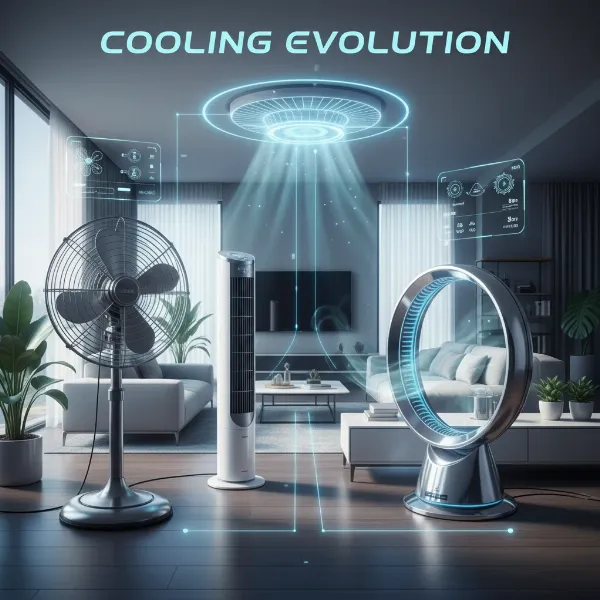 Diverse modern electric fans, showcasing various types and their technological evolution for home comfort.
Types of Electric Fans:
- Ceiling Fans: Permanently mounted to the ceiling, these fans are excellent for circulating air evenly across large rooms. Many modern ceiling fans integrate with smart home systems and offer adjustable LED lighting. They are a cost-effective solution for year-round air circulation, pushing cool air down in summer and redistributing warm air in winter.
- Table Fans: Compact and portable, table fans are ideal for personal cooling in small spaces like desks, bedside tables, or small rooms. They are lightweight and easy to move, providing direct airflow without occupying much floor space.
- Pedestal Fans: Tall, adjustable in height, and often powerful, pedestal fans are well-suited for cooling medium to large rooms where a ceiling fan isn’t an option. Their oscillating heads ensure wider air distribution, making them a versatile choice for living rooms or bedrooms.
- Tower Fans: Known for their sleek, space-saving design, tower fans provide excellent airflow in small to medium-sized rooms without taking up much floor area. They often come with features like oscillation, multiple speed settings, and quiet operation, making them popular for bedrooms and offices.
- Air Circulators: Unlike traditional fans that blow air directly, air circulators are designed to create a spiral beam of air that bounces off walls and ceilings to circulate the entire room’s air. This results in more even cooling and can improve the efficiency of air conditioners.
- Bladeless Fans: These modern fans operate without visible blades, drawing air into a base and expelling it through a thin slit to create a smooth, consistent airflow. They are often safer (especially for children and pets), quieter, and easier to clean than traditional bladed fans.
- Smart Fans: Integrating with smart home ecosystems (like Alexa or Google Assistant), these fans offer advanced control via smartphone apps, voice commands, and automation. Features include scheduling, auto-adjusting speeds based on temperature, and remote operation.
- Portable Fans: Designed for on-the-go cooling, these compact, battery-powered fans are perfect for outdoor activities, commuting, or personal use at a desk. They emphasize lightweight design and long battery life.
- Air Purifying Fans: These fans combine cooling with air filtration, using HEPA and activated carbon filters to capture dust, allergens, pollutants, and odors. They are a two-in-one solution for improving both air quality and comfort.
|
Our Picks for the Best Electric fan in 2026
As an Amazon Associate I earn from qualifying purchases.
|
||
| Num | Product | Action |
|---|---|---|
| 1 | 10" Modern Standing Fan for Bedroom, Sleek Oscillating Pedestal Fan, 3-Speed & Height Adjustable Compact Floor Fan for Home Office & Dorm |

|
| 2 | LEVOIT Tower Fan for Bedroom, 25ft/s Velocity Standing Fan with 28dB Quiet for Sleep, Remoter, 12H Timer, 5 Speeds, 4 Modes, 90° Oscillation for Home, Office, Indoor, Bladeless 36 inch, White |
|
| 3 | Amazon Basics Air Circulator Fan, Desk Fan for Bedroom, Home and Office, With 90-Degree Tilt Head, 3 Speed Settings, Lightweight (3 LBS), 35 Watts, Black, 11.1"W x 6.3"D x 10.9"H |
|
| 4 | Lasko 2520 Oscillating Stand Fan,White 16 Inch |
|
| 5 | Amazon Basics 16" Pedestal Fan with Remote, Floor Fan, Standing Fan for Bedroom, Living Room, Office, with 3 Speeds, 3 Modes, Timer, Dual-Layered Blades, Adjustable Height, Tilt Head, 60W, Black |
|
| 6 | Dreo Fan for Bedroom, 120° Oscillating Standing Fan, Quiet Floor Fan with DC Motor, Pedestal Fan for Room, 9 Speeds, 4 modes, 20dB, 120° Manual Vertical, 37-42" Adjustable Height, 9H Timer, Black |
|
| 7 | Viniper Portable Rechargeable Fan, Small Desk Fan : 3 Speeds & about 8-24 Hours Longer Working, 180 Rotation, Portable Desktop Fan Small but Mighty, Strong Wind (White, Light Black Blade)6.2 Inch |
|
| 8 | Dreo Tower Fan for Bedroom, 25ft/s Velocity Quiet Floor Fan, 90° Oscillating Fans for Indoors with 4 Speeds, 4 Modes, 8H Timer, Standing Fans, Bladeless Fan, Black, Nomad One (DR-HTF007) |
|
| 9 | Dreo Fan for Bedroom, 120° Oscillating Standing Fans, Quiet Floor Fan with DC Motor, 100ft Pedestal Fans for Room, 9 Speeds, 4 modes, 20dB, 120° Manual Vertical, 37-42" Adjustable Height, 9H Timer |
|
| 10 | XPOWER FC-100S Multipurpose 11 Pro Air Circulator Utility Fan with Oscillating Feature |
|
How to Choose the Right Electric Fan
Selecting the ideal electric fan requires careful consideration of several factors to ensure it meets your specific requirements for comfort, efficiency, and convenience. Let’s break down the key aspects to guide your decision.
Determine Your Needs
Before diving into models, clarify what you expect from your fan. This foundational step will narrow down your options significantly and help you find the most effective cooling solution.
- Room Size/Area: For small rooms or personal spaces, a compact desk fan or a personal air circulator will suffice. Larger rooms benefit from powerful pedestal fans, tower fans with wide oscillation, or ceiling fans to ensure adequate airflow and comfort. For example, rooms less than 100 sq. ft. are best served by fans with a blade sweep of 900-1050 mm, while larger rooms (150-250 sq. ft.) require 1400 mm or more for optimal air circulation.
- Purpose of Use: Are you primarily looking for personal cooling at your desk, general room circulation, or powerful relief during intense heat? Some fans offer additional functionalities like air purification, humidification, or even misting, expanding their utility beyond simple cooling.
- Budget: Electric fans range widely in price, from affordable basic models to premium, feature-rich smart fans. Determine your budget beforehand, keeping in mind that investing in a slightly more expensive, energy-efficient model can lead to long-term savings on electricity bills.
Key Criteria for Selection
Once your needs are clear, evaluate fans based on these crucial performance and feature criteria.
- Power and Airflow: The effectiveness of a fan is largely determined by its power and the volume of air it moves, often measured in Cubic Feet per Minute (CFM) for ceiling fans or simply by the force and reach of its breeze for portable units. Look for multiple speed settings to customize airflow, from a gentle breeze to a powerful gust. Higher wattage generally indicates more power, but energy-efficient designs can deliver strong airflow with lower consumption.
- Noise Level: A noisy fan can be disruptive, especially in bedrooms or workspaces. Prioritize models with low decibel (dB) ratings, typically under 60 dB for quiet operation. Many modern fans feature DC motors and advanced blade designs to minimize noise, making them suitable for sleep mode.
- Features:
- Oscillation: Ensures air is distributed across a wider area, preventing stagnant spots. Options include horizontal, vertical, or 3D oscillation.
- Timer: Allows you to set the fan to turn off automatically after a set period, useful for bedtime.
- Remote Control: Offers convenience, letting you adjust settings from a distance.
- Smart Connectivity: App control, voice commands (Alexa, Google Assistant), and integration with smart home systems provide unparalleled convenience and automation.
- Misting/Air Purification: Advanced features for enhanced comfort and air quality.
- Brand and Reliability: Reputable brands often offer better build quality, performance, and customer support. Always check for a good warranty and readily available after-sales service.
- Energy Efficiency: To minimize electricity costs, look for fans with high energy efficiency ratings. Many modern fans utilize DC motors, which are quieter and consume less power than traditional AC motors. Fans with lower wattage ratings and energy-saving modes are a smart investment.
 Person comparing different electric fan features and specifications on a tablet, considering power, noise, and energy efficiency.
Comparing Popular Electric Fan Types
Here’s a quick comparison of some popular fan types to help you align them with your specific needs.
| Fan Type | Best For | Key Features | Pros | Cons |
|---|---|---|---|---|
| Ceiling Fan | Large rooms, permanent installation | Wide airflow, often with lights, smart options | Even room cooling, year-round use | Fixed installation, higher initial cost |
| Tower Fan | Small to medium rooms, space-saving | Slim design, oscillation, quiet modes, often smart | Aesthetically pleasing, discreet, safe for kids/pets | Airflow can be less focused, less portable than desk fans |
| Pedestal Fan | Medium to large rooms, adjustable cooling | Adjustable height, powerful airflow, wide oscillation | Versatile, strong breeze, good coverage | Can be bulky, visible blades |
| Desk Fan | Personal cooling, small spaces | Compact, lightweight, portable | Highly portable, direct cooling, affordable | Limited range, less powerful for room cooling |
| Air Circulator | Whole-room air movement, AC enhancement | Focused air beam, 3D oscillation, powerful | Evens out room temperature, energy efficient when paired with AC | Can be louder at high speeds, not for direct personal cooling |
| Bladeless Fan | Safety, modern aesthetics, air purification | No exposed blades, smooth airflow, often air purification, quiet operation | Safer, easy to clean, sleek design | More expensive, can be less powerful than bladed fans |
| Portable Fan | On-the-go use, outdoor, travel | Battery-powered, compact, lightweight, often USB-C charging | Ultimate portability, versatile use | Limited power, shorter battery life on high settings |
Top 10 Electric Fans of 2026: Detailed Reviews
Drawing from extensive testing and expert analysis, here are the top electric fans that stand out in 2026 for their performance, features, and overall value.
1. MeacoFan Sefte 10” Air Circulator
- Overview: The MeacoFan Sefte 10” Air Circulator is widely acclaimed as the best overall fan for its exceptional power and extraordinarily quiet operation. It represents a significant improvement on previous models, offering versatile height adjustments (desktop, waist height, tall standing) by adding or removing columns, making it adaptable to any environment.
- Key Features: 12 fan speeds, full horizontal and vertical oscillation (20˚, 30˚, and 65˚), magnetic remote control with glow-in-the-dark keys, sleep mode, eco mode.
- Pros: Supremely powerful air circulation, eerily quiet even at high speeds, height adjustable, wide oscillation for even cooling.
- Cons: Remote control feels less premium.
2. Dyson Pure Cool TP07/TP04 Air Purifying Fan
- Overview: Dyson continues to lead in premium air purifying fans with models like the Pure Cool TP07/TP04. This elegant tower fan doubles as an effective air purifier, capturing 99.95% of ultra-fine particles, including those as small as 0.1 microns, and harmful gases. It’s a smart investment for those seeking both cooling and significantly improved indoor air quality.
- Key Features: Air purification with HEPA and activated carbon filters, 10 fan speeds, oscillation, timer, app control (iOS and Android), auto mode, night mode.
- Pros: Highly effective at both cooling and air purification, attractive and sleek design, smart features for comprehensive control.
- Cons: High price point, can be noisy at the highest speeds.
3. Shark FlexBreeze Pro Mist Pedestal Fan
- Overview: The Shark FlexBreeze Pro Mist stands out for its incredible versatility, functioning as both an indoor and outdoor fan with a unique cool misting feature. It can convert from a pedestal to a tabletop model and offers impressive cooling for various room sizes. This 12-in-1 design makes it a true multi-functional powerhouse.
- Key Features: 5 fan speeds, 180-degree oscillation, up to 55-degree manual tilt, InstaCool misting feature for outdoor use, cordless operation (up to 24 hours on low).
- Pros: Exceptionally versatile (indoor/outdoor, pedestal/tabletop), powerful and quiet, effective misting, long cordless battery life, rain and UV resistant.
- Cons: Only five speeds, lacks smart app control.
4. Dreo Smart Tower Fan 519S
- Overview: The Dreo Smart Tower Fan 519S is a top pick for efficient whole-room cooling combined with smart features, offering excellent value for money. It delivers powerful airflow capable of cooling multiple connected rooms and integrates seamlessly with smart home setups.
- Key Features: 9 fan speeds, 90-degree oscillation, auto mode (maintains constant temperature), sleep mode, natural breeze mode, app control, voice control (Alexa, Google Assistant), scheduling.
- Pros: Powerful whole-room cooling, extensive smart features, auto and sleep modes for comfort, great value.
- Cons: Relatively narrow oscillation compared to some premium models, not easily portable.
5. Honeywell QuietSet HYF290B Whole Room Tower Fan
- Overview: If quiet operation is a priority, the Honeywell QuietSet HYF290B is an excellent choice. This feature-rich tower fan offers eight speed levels and lives up to its “QuietSet” name, making it one of the quietest fans available, perfect for bedrooms or quiet offices.
- Key Features: 8 speed levels, oscillation, timer, dimming options, remote control.
- Pros: Exceptionally quiet operation, multiple speed settings for precise control, convenient remote and timer functions.
- Cons: Fewer smart features compared to some newer models.
6. MeacoFan 1056 Air Circulator
- Overview: The MeacoFan 1056 Air Circulator is lauded as one of the best budget-friendly fans that doesn’t compromise on power. It’s renowned for its ability to move a substantial volume of air (1,056 cubic meters per hour) while maintaining surprisingly low noise levels.
- Key Features: 12 fan speeds, on/off timer, horizontal and vertical oscillation (near 360º when combined), DC motor, remote control.
- Pros: Extremely powerful airflow, freakishly quiet operation, excellent value for money, comprehensive oscillation.
- Cons: Design is less sleek than some competitors.
7. Xiaomi Smart Standing Fan 2 Pro
- Overview: The Xiaomi Smart Standing Fan 2 Pro offers a blend of smart technology and versatile design. With dual-layer fan blades for a softer, more natural breeze, it’s capable of circulating air over a wide 140° angle and up to 14 meters. Its ability to function as both a table and floor fan, combined with smart controls, makes it highly adaptable.
- Key Features: Dual-layer fan blades, 100 wind speed settings, 140° ultra-wide oscillation, Mi Home app control, wireless design with charging dock, low noise (27.9 dB(A)).
- Pros: Versatile (table/floor), smart app control, energy-efficient, soft natural breeze, very quiet.
- Cons: Reliance on the Mi Home app for full functionality.
8. Vornado Flippi V6 Personal Air Circulator Fan
- Overview: For those on a tight budget or needing a compact solution, the Vornado Flippi V6 is an excellent choice. This personal air circulator fan is small yet mighty, providing focused airflow perfect for individual use on a desk or bedside table.
- Key Features: Compact design, 2 speed settings, manual tilt for directed airflow.
- Pros: Best budget option, highly portable, effective personal cooling, durable Vornado build quality.
- Cons: Limited features, not designed for whole-room cooling.
9. JisuLife Ultra2 Portable Fan
- Overview: The JisuLife Ultra2 is an impressive portable fan, combining powerful airflow with a compact, travel-ready design. It’s equipped with a large 9,000 mAh battery, making it not just a fan but also a portable charger. Its 100-speed settings offer unparalleled control over airflow.
- Key Features: 9,000 mAh battery (also functions as a power bank), 100-speed settings, compact and lightweight, attachable nozzles for cleaning/inflating.
- Pros: Extremely powerful for its size, versatile (fan/power bank), long battery life, premium feel, highly portable.
- Cons: Primarily for personal cooling, not designed for large spaces.
10. Dreo CLF521S Smart Ceiling Fan
- Overview: The Dreo CLF521S is our top pick for a smart ceiling fan, offering powerful airflow, adjustable LED lighting, and seamless integration with smart home systems like Amazon Alexa and Google Assistant. It provides both comfort and modern convenience at a reasonable price.
- Key Features: Powerful airflow, adjustable LED lighting, app control, voice control (Alexa, Google Assistant).
- Pros: Excellent for large rooms, smart home integration, effective cooling with ambient lighting, competitive pricing.
- Cons: Permanent installation required, more complex to set up than portable fans.
Tips for Using and Maintaining Your Electric Fan
Proper care and maintenance are crucial for maximizing your electric fan’s performance, ensuring its longevity, and maintaining a healthy indoor environment. A well-maintained fan operates more efficiently and quietly.
Vệ Sinh Quạt Điện Đúng Cách (Proper Cleaning)
Regular cleaning prevents dust and debris buildup, which can hinder airflow and strain the motor.
- Frequency: Aim to clean your fan every few weeks, or more often if it’s used daily or if you have pets.
- Tools: You’ll need a screwdriver (for some models), a soft cloth, mild soap, water, a vacuum cleaner with a brush attachment, and compressed air (optional).
- Steps:
- Unplug: Always ensure the fan is unplugged before cleaning to prevent electric shock.
- Disassemble: For bladed fans, carefully remove the front grille, fan blade, and rear grille according to the manufacturer’s instructions. Bladeless fans typically only require exterior wiping.
- Clean Blades/Grilles: Wash bladed parts with warm, soapy water, rinse thoroughly, and let them dry completely. For grilles and bladeless exteriors, wipe with a damp cloth. Use a vacuum or compressed air for hard-to-reach dust on the motor housing.
- Reassemble: Once all parts are dry, reassemble the fan, ensuring everything is securely fastened.
Cách Sử Dụng Quạt Điện An Toàn và Hiệu Quả (Safe and Efficient Use)
Strategic placement and mindful operation can significantly boost your fan’s effectiveness and safety.
- Placement: Position your fan to maximize air circulation. Placing it near an open window can draw fresh air in, while positioning it to create a cross-breeze enhances ventilation. For ceiling fans, ensure at least 7-9 feet of clearance from the floor for optimal performance.
- Adjust Speed: Use the lowest effective speed setting. Higher speeds consume more energy and can be noisier without necessarily providing significantly better cooling, especially in smaller spaces.
- Avoid Continuous Use: Give your fan breaks, especially if it’s not a high-end model designed for continuous operation. This helps prevent motor burnout and extends its lifespan.
- Pair with AC: Using a fan in conjunction with an air conditioner can help distribute cool air more efficiently, allowing you to set your AC thermostat higher and save energy.
Bảo Dưỡng Quạt Điện Để Kéo Dài Tuổi Thọ (Extending Lifespan)
Beyond regular cleaning, a few proactive steps can keep your fan running smoothly for years.
- Check for Loose Parts: Periodically inspect screws and connections, tightening any that have come loose due to vibration.
- Lubrication: Some older fan motors might benefit from occasional lubrication. Consult your fan’s manual; never apply oil unless specified.
- Proper Storage: When not in use, especially during off-seasons, store your fan in a dry, dust-free place, ideally in its original packaging or covered to protect it from dust and potential damage.
- Avoid Harsh Chemicals: When cleaning, stick to gentle cleaners and soft cloths. Harsh chemicals or abrasive materials can damage the fan’s finish and internal components.
Mua Quạt Điện Ở Đâu Uy Tín? (Where to Buy Electric Fans in 2026)
Purchasing an electric fan from a reputable source ensures you get a genuine product with reliable warranty and customer support.
- Electronics Retailers: Large electronics stores and appliance superstores often carry a wide selection of fans from various brands. These stores typically offer product displays, allowing you to see and hear the fans in action.
- Online Marketplaces: Websites like Amazon, Best Buy, Target, and the official brand websites (e.g., Dyson.com, SharkNinja.com) provide convenience, competitive pricing, and a vast array of options. Always check seller reviews and return policies.
- Department Stores: Many department stores have home goods sections that include electric fans, particularly during warmer months.
- Specialty Stores: For high-end or specific types of fans (like smart home integrated models), specialty stores or authorized dealers of brands like Dyson or Meaco can offer expert advice.
When buying, always verify the warranty period and understand the manufacturer’s after-sales service policy. It’s also wise to check user reviews for real-world performance insights, especially regarding noise levels and durability.
Hướng Dẫn Mua Quạt Điện (Electric Fan Buying Guide: Your Questions Answered)
Making the right choice can feel daunting with so many options. Here’s a simplified buying guide to help you focus on what truly matters for your needs.
What is your budget?
Your budget dictates the range of features and brands you can consider. While basic models are affordable and functional, investing a bit more in an energy-efficient fan with desirable features can lead to better performance and long-term savings on electricity bills. High-end fans often offer superior quietness, smart connectivity, and additional functions like air purification.
What is your room size?
Matching the fan size and type to your room is crucial for effective cooling. Personal fans suit small areas, tower fans are good for medium rooms, and pedestal or ceiling fans excel in larger spaces. Using an undersized fan for a large room will be ineffective, while an oversized fan for a small room might create excessive noise and airflow.
What features do you need?
Prioritize features based on your lifestyle and preferences. If you value convenience, look for remote controls, timers, or smart app connectivity. For those with allergies, an air-purifying fan is ideal. If you need quiet for sleep, focus on models with low decibel ratings and dedicated sleep modes. Consider versatility if you need a fan for different locations or purposes.
Conclusion
Choosing the best electric fan in 2026 means balancing your desire for comfort with practical considerations like room size, noise levels, and advanced features. The market offers an impressive array of options, from ultra-quiet air circulators like the MeacoFan Sefte to multi-functional powerhouses like the Shark FlexBreeze Pro Mist. By understanding your specific needs and leveraging the detailed reviews and buying guide provided, you’re now equipped to make an informed decision. Remember, a well-chosen electric fan is more than just a cooling device; it’s an investment in your home’s comfort and air quality. Which electric fan feature is most important to you for your next purchase?
Frequently Asked Questions
Are bladeless fans truly better than traditional fans?
Bladeless fans generally offer a smoother, more consistent airflow and are safer and easier to clean due to the absence of exposed blades. While often quieter, they tend to be more expensive and may not always provide the same sheer power as some traditional bladed fans, making the “better” choice dependent on your priorities.
How much energy do electric fans consume?
Electric fan energy consumption varies by type and speed, typically ranging from 30-90 watts. Table fans often use 30-60 watts, while ceiling fans use 70-90 watts. Modern energy-efficient models, especially those with DC motors, can consume as little as 30-50 watts, significantly lowering electricity bills over time.
Can smart fans integrate with any smart home system?
Most smart fans are designed to integrate with popular smart home ecosystems such as Amazon Alexa, Google Assistant, and sometimes Apple HomeKit. Always check the product specifications for compatibility with your existing smart home system to ensure seamless control via apps or voice commands.
What is the ideal noise level for a bedroom fan?
For a bedroom, an ideal fan noise level is generally considered to be below 60 decibels (dB). Many quiet-operation fans, especially those with sleep modes or DC motors, operate significantly lower, often in the 20-40 dB range, ensuring minimal disruption for a peaceful night’s sleep.
How often should I clean my electric fan?
You should clean your electric fan every few weeks, or at least once a month, especially if it’s used frequently or if you have pets. Regular cleaning prevents dust and allergen buildup, which can reduce efficiency, strain the motor, and compromise air quality, ensuring optimal performance and longevity.
Can I use a regular electric fan outdoors?
Most indoor electric fans are not designed for outdoor use and should not be exposed to the elements. However, some versatile models, like the Shark FlexBreeze Pro Mist, are specifically built with weather-resistant features for both indoor and outdoor applications, sometimes even including misting capabilities.
What is an air circulator fan and how does it differ from a standard fan?
An air circulator fan moves air in a concentrated, spiraling column to create a whole-room air current that bounces off walls and ceilings, thoroughly mixing and circulating the air. This differs from a standard fan, which typically creates a direct breeze for personal cooling, making circulators more effective for evening out room temperatures.