Stepping into the sweltering heat of summer, the quest for effective cooling becomes a top priority. While the classic electric fan has long been a household staple, a newer contender, the misting fan, promises a more profound chill by introducing moisture into the air. But is this added humidity a game-changer or an unnecessary complication? Understanding the distinct mechanisms and ideal applications of both regular and misting fans is crucial for anyone looking to beat the heat effectively. This comprehensive guide will dissect their differences, highlight their benefits and drawbacks, and help you determine if the moisture from a mist fan is truly worth it for your cooling needs.
Electric Fans: An Overview of Common Types
Electric fans, in their simplest form, are mechanical devices designed to create a flow of air. Their history dates back to the late 19th century, evolving from rudimentary designs to the sleek, efficient models we see today. The core principle remains the same: circulate air to create a breeze, helping to evaporate sweat from the skin and provide a perception of coolness.
Regular Fans
Conventional electric fans, such as ceiling fans, desk fans, pedestal fans, and tower fans, operate by moving existing air. They don’t actively change the air’s temperature or humidity. Instead, they provide relief by enhancing air circulation, which helps accelerate the evaporation of moisture from your skin, making you feel cooler. They are known for their simplicity, energy efficiency, and are primarily suited for indoor environments where basic air movement is desired without adding moisture. However, they only circulate the ambient air, offering a perceived cooling effect rather than an actual temperature reduction.
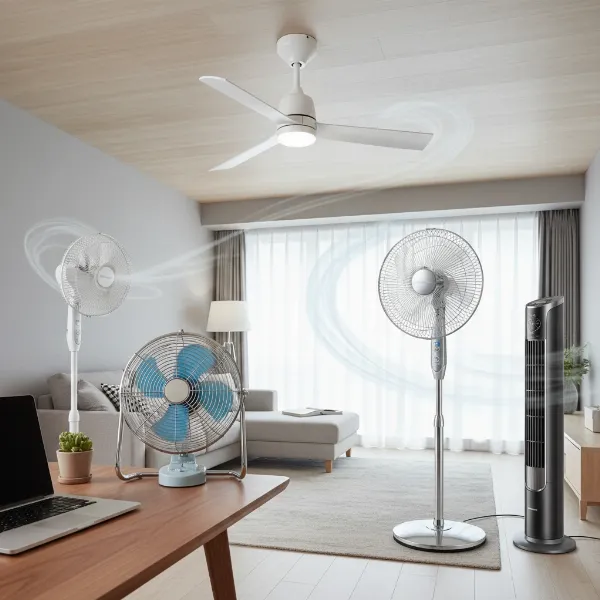 A collage showing various types of electric fans: ceiling, desk, pedestal, and tower fans.
Misting Fans
Misting fans take the concept of cooling a step further. They combine the airflow of a traditional fan with a fine mist of water. This innovative approach relies on the principle of evaporative cooling. Here’s how it works: water is pumped through tiny nozzles, creating a fine mist that the fan then disperses into the air. As these minuscule water droplets evaporate, they absorb heat from the surrounding environment, leading to a noticeable drop in ambient temperature. This process, often referred to as “flash evaporation,” can effectively lower temperatures by several degrees, particularly in dry climates. Misting fans are commonly found in portable models for personal use or heavy-duty versions for industrial and outdoor settings like patios, sporting events, or warehouses. They offer dual benefits: air circulation and genuine temperature reduction.
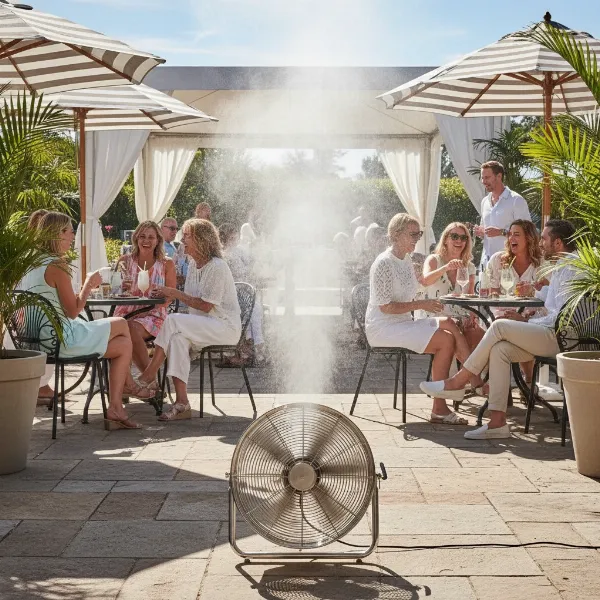 A powerful misting fan cooling an outdoor patio area with fine water mist.
Misting Fan vs. Regular Fan: A Head-to-Head Comparison
Choosing between a mist fan and a regular fan depends heavily on your specific needs, environment, and desired level of comfort. Let’s delve into a detailed comparison across several critical aspects.
Cooling Mechanism and Effectiveness
|
Our Picks for the Best Electric fan in 2026
As an Amazon Associate I earn from qualifying purchases.
|
||
| Num | Product | Action |
|---|---|---|
| 1 | Lasko 2520 Oscillating Stand Fan,White 16 Inch |

|
| 2 | Amazon Basics Air Circulator Fan, Desk Fan for Bedroom, Home and Office, With 90-Degree Tilt Head, 3 Speed Settings, Lightweight (3 LBS), 35 Watts, Black, 11.1"W x 6.3"D x 10.9"H |
|
| 3 | Dreo Fan for Bedroom, 120° Oscillating Standing Fans, Quiet Floor Fan with DC Motor, 100ft Pedestal Fans for Room, 9 Speeds, 4 modes, 20dB, 120° Manual Vertical, 37-42" Adjustable Height, 9H Timer |
|
| 4 | Dreo Tower Fan for Bedroom, 25ft/s Velocity Quiet Floor Fan, 90° Oscillating Fans for Indoors with 4 Speeds, 4 Modes, 8H Timer, Standing Fans, Bladeless Fan, Black, Nomad One (DR-HTF007) |
|
| 5 | LEVOIT Tower Fan for Bedroom, 25ft/s Velocity Standing Fan with 28dB Quiet for Sleep, Remoter, 12H Timer, 5 Speeds, 4 Modes, 90° Oscillation for Home, Office, Indoor, Bladeless 36 inch, White |
|
| 6 | Viniper Portable Rechargeable Fan, Small Desk Fan : 3 Speeds & about 8-24 Hours Longer Working, 180 Rotation, Portable Desktop Fan Small but Mighty, Strong Wind (White, Light Black Blade)6.2 Inch |
|
| 7 | 10" Modern Standing Fan for Bedroom, Sleek Oscillating Pedestal Fan, 3-Speed & Height Adjustable Compact Floor Fan for Home Office & Dorm |
|
| 8 | XPOWER FC-100S Multipurpose 11 Pro Air Circulator Utility Fan with Oscillating Feature |
|
| 9 | Amazon Basics 16" Pedestal Fan with Remote, Floor Fan, Standing Fan for Bedroom, Living Room, Office, with 3 Speeds, 3 Modes, Timer, Dual-Layered Blades, Adjustable Height, Tilt Head, 60W, Black |
|
| 10 | Dreo Fan for Bedroom, 120° Oscillating Standing Fan, Quiet Floor Fan with DC Motor, Pedestal Fan for Room, 9 Speeds, 4 modes, 20dB, 120° Manual Vertical, 37-42" Adjustable Height, 9H Timer, Black |
|
The fundamental difference lies in how they deliver cooling.
Regular fans provide comfort by creating a wind-chill effect. They move air across your skin, speeding up the natural process of sweat evaporation. This creates a sensation of coolness, but the actual air temperature remains unchanged. They are most effective in less humid environments where sweat can evaporate easily.
Misting fans, on the other hand, actively reduce the ambient air temperature. The fine water mist released by these fans absorbs heat from the air as it evaporates, causing a genuine temperature drop. In dry climates, a good quality misting fan can lower the surrounding temperature by as much as 30°F. The effectiveness of a misting fan is directly tied to humidity levels; they perform optimally in dry conditions where water can evaporate quickly. In highly humid environments, the mist may not evaporate as efficiently, leading to dampness rather than cooling.
Ideal Environments and Use Cases
The best environment for each fan type highlights their core strengths.
Regular fans are the go-to for indoor spaces where you need to circulate air, reduce stuffiness, or complement an air conditioning system. They are perfect for bedrooms, living rooms, and offices, especially in areas with moderate temperatures or higher humidity where adding more moisture isn’t desirable.
Misting fans truly shine in outdoor or semi-open spaces and in dry climates. Think patios, gardens, outdoor cafes, workshops, or sporting events. Their evaporative cooling power makes unbearable heat much more tolerable. “Misting fans are excellent for patios, gardens, warehouses, and events. They cool large spaces quickly in dry climates,” notes a cooling expert. They can also improve air quality by suppressing dust, pollen, and other airborne allergens, settling them to the ground, which can benefit those with respiratory issues. However, due to the moisture they produce, misting fans are generally not recommended for prolonged indoor use in enclosed spaces, as they can lead to excess humidity, condensation, and potentially mold growth.
Energy Consumption and Cost
When considering your budget, both upfront and operational costs are important.
Regular fans are typically more affordable to purchase, with a wide range of models available at various price points. They are also highly energy-efficient, consuming only electricity to power their motor and blades. This makes them a cost-effective choice for everyday cooling.
Misting fans generally have a higher initial cost due to the additional components like mist nozzles, water tanks, and pressure pumps. They also require both electricity for the fan motor and a water supply for the misting function. While they consume more energy than regular fans, they are often more energy-efficient and cost-effective than running a full air conditioning unit, especially for cooling large outdoor areas.
Maintenance and Durability
Proper maintenance is key to extending the lifespan of any electric fan.
Regular fans are relatively low-maintenance. Regular dusting of the blades and grill is usually sufficient to keep them running smoothly. Periodically, you might need to clean dust from the motor vents.
Misting fans require more attentive care. The nozzles can become clogged with mineral deposits, especially if using hard tap water. Regular cleaning of the nozzles and the water tank is essential to ensure optimal performance and prevent bacterial growth. Experts recommend using distilled or filtered water to minimize mineral buildup. You should also check for any leaks in the water lines and properly store the unit when not in use, especially during colder months. “Both systems require regular maintenance, such as cleaning nozzles and checking for leaks,” states an industry professional. Durability depends heavily on the quality of materials and consistent maintenance.
Health and Air Quality Considerations
The impact on your health and the air you breathe is another crucial aspect.
Regular fans simply circulate the air. In doing so, they can sometimes stir up dust, pollen, and other allergens present in the room, potentially exacerbating allergies or respiratory issues for sensitive individuals.
Misting fans, when used correctly, can offer several health benefits. The fine mist helps to suppress airborne particles like dust and pollen, effectively cleaning the air and making it more breathable. This can be particularly beneficial for allergy sufferers or in dusty environments. Furthermore, by actively lowering ambient temperatures, misting fans help prevent heat-related illnesses such as heat exhaustion and heat stroke, which is especially important during peak heat periods. However, it’s vital to use clean water and maintain the unit properly to avoid the growth and dispersal of bacteria or mold. Improper use indoors, especially in already humid conditions, can lead to excessive moisture, which fosters mold growth and can negatively impact respiratory health. “One of the primary health benefits of misting cooling systems is their ability to improve air quality. The mist not only cools the air but also helps in dust suppression,” says a representative from MCS Austin.
Choosing the Right Electric Fan: A Comprehensive Buying Guide
Selecting the perfect fan involves more than just picking the first one you see. Careful consideration of your environment, needs, and preferences will lead to a more satisfactory purchase.
Assess Your Needs and Environment
Before anything else, understand where and how you’ll use the fan.
- Indoor vs. Outdoor Use: For indoor cooling where you don’t want added moisture, a regular fan is ideal. For outdoor patios, workshops, or any open-air space where significant temperature reduction is needed, a misting fan is usually the better choice.
- Climate (Dry vs. Humid): Misting fans are highly effective in dry climates where the mist can evaporate quickly and cool the air. In humid climates, however, the mist may not evaporate efficiently, leading to dampness and increased humidity, making a regular fan or air conditioner a more suitable option.
- Space Size: For personal spaces or smaller rooms, a desk or pedestal fan might suffice. Larger rooms might benefit from a powerful standing fan or ceiling fan. For expansive outdoor areas, larger, more robust misting fans or multiple units may be required.
- Desired Temperature Drop vs. Air Circulation: If a noticeable temperature drop is your priority, especially outdoors, a misting fan is designed for this. If you simply need improved airflow and a breezy sensation indoors, a regular fan is perfectly adequate.
Key Features to Consider
Once you’ve identified your basic needs, look into these features to narrow down your options:
- Power and Airflow (CFM): For regular fans, look at the CFM (Cubic Feet per Minute) rating to understand how much air it moves. For misting fans, consider the misting capacity and how fine the mist is. A finer mist generally evaporates more effectively.
- Noise Level: Fans can vary significantly in noise output. If you’ll be using it in a bedroom or office, a quieter model is paramount. Look for decibel (dB) ratings if available.
- Additional Features:
- Oscillation: Most fans oscillate to cover a wider area.
- Remote Control/Timer: Convenient for hands-free operation and energy saving.
- Adjustable Mist Settings: For misting fans, this allows you to control the amount of moisture released.
- Multiple Speed Settings: Gives you control over airflow intensity.
- Portability: Wheels and lightweight designs are beneficial if you plan to move the fan frequently.
- Brand Reputation and Reliability: Research reputable brands known for durability and good customer service. Check for warranty information.
Budget Allocation
Your budget will also play a significant role in your decision.
- Initial Purchase Cost: Regular fans are generally less expensive upfront. Misting fans, with their added technology, tend to have a higher initial price.
- Running Costs: Consider the electricity consumption for both types. For misting fans, also factor in the cost of water, especially if you opt for distilled or filtered water to prevent mineral buildup. While misting fans use more resources than regular fans, they can still be a more energy-efficient alternative to air conditioning for certain applications.
Best Practices for Fan Usage and Maintenance
To maximize the performance and longevity of your electric fan, proper usage and maintenance are essential.
Proper Placement for Optimal Performance
The placement of your fan can significantly impact its effectiveness.
- Regular Fans: Position regular fans strategically to create cross-ventilation. Placing a fan near a window can help draw in cooler outside air or push out warm indoor air. Avoid placing it directly against a wall or in a corner where airflow is restricted.
- Misting Fans: For misting fans, choose an outdoor or well-ventilated semi-open area. Ensure there’s enough space for the mist to evaporate before it settles on surfaces, preventing dampness. Avoid pointing misting fans directly at electronics, delicate fabrics, or in close proximity to people for extended periods to prevent them from getting wet.
Cleaning and Care for Longevity
Regular cleaning is crucial for both hygiene and performance.
- Regular Fans: Routinely dust the fan blades, grill, and motor housing to prevent dust accumulation, which can hinder airflow and potentially strain the motor. Use a soft cloth or a vacuum attachment.
- Misting Fans: Misting fans require more diligent cleaning. Clean the water tank regularly (daily water changes are recommended for room-sized humidifiers to prevent mold and bacteria). Inspect and clean the misting nozzles frequently to prevent clogging from mineral deposits. Using distilled or filtered water can significantly reduce mineral buildup. When not in use, especially during off-seasons, drain the water tank completely and store the fan in a dry, protected area.
Safety Tips
Safety should always be a priority when operating electrical appliances.
- Always follow the manufacturer’s instructions for operation and maintenance.
- Ensure that any fan, especially misting fans, is placed on a stable, flat surface to prevent tipping.
- Keep electrical cords in good condition and out of high-traffic areas to prevent tripping hazards or damage.
- For misting fans, be mindful of electrical outlets and connections, keeping them away from direct mist to prevent electrical hazards.
- Monitor indoor humidity levels if using a misting fan (though generally not recommended for enclosed indoor spaces). The U.S. Environmental Protection Agency (EPA) suggests maintaining indoor humidity between 30% and 50% to prevent issues like mold growth.
Where to Purchase Quality Electric Fans?
Investing in a quality electric fan ensures both effectiveness and durability. You can find a wide variety of fans at several reputable outlets.
- Electronics Stores: Major electronics retailers often carry a broad selection of both regular and misting fans from well-known brands.
- Home Improvement Centers: Stores specializing in home goods and renovations are excellent sources, particularly for ceiling fans or larger outdoor misting units.
- Online Marketplaces: Websites offer unparalleled selection and competitive pricing, often with detailed product reviews. However, always verify the seller’s reputation and review their return policy.
- Specialty Fan Retailers: Some stores focus exclusively on fans and cooling solutions, providing expert advice and a curated selection of high-performance models.
When making a purchase, always look for reputable brands, check for a manufacturer’s warranty, and read customer reviews to ensure product reliability and after-sales support.
Conclusion
The decision between a mist fan and a regular fan ultimately boils down to your specific environment and cooling objectives. Regular fans excel at providing energy-efficient air circulation indoors, offering a perceived cooling effect perfect for bedrooms and offices. Misting fans, with their evaporative cooling technology, deliver a more substantial temperature drop, making them indispensable for outdoor spaces and dry climates where the moisture evaporates effectively.
Is the moisture worth it? Absolutely, if you’re battling high temperatures outdoors or in low-humidity environments where true temperature reduction is paramount. However, for typical indoor cooling in moderately humid areas, the added moisture might be counterproductive. By understanding the unique benefits, limitations, and maintenance requirements of each, you can make an informed choice that promises to keep you cool and comfortable all season long. Which fan will be your summer champion?
Frequently Asked Questions
Are misting fans suitable for indoor use?
Misting fans are generally not recommended for prolonged indoor use, especially in enclosed spaces or humid climates. The added moisture can increase indoor humidity, potentially leading to condensation, dampness, and mold growth. They are best suited for outdoor or well-ventilated semi-open areas.
Do misting fans really lower the air temperature?
Yes, misting fans truly lower the air temperature through a process called evaporative cooling. As the fine water droplets evaporate, they absorb heat from the surrounding environment, resulting in a measurable drop in ambient temperature, particularly effective in dry climates.
How much cooler can a mist fan make an area?
In optimal dry conditions, misting fans can reduce the ambient temperature by as much as 10 to 30°F. The exact temperature drop depends on factors such as ambient temperature, humidity levels, and the fan’s misting efficiency.
What kind of water should I use in a mist fan?
For optimal performance and to prevent mineral buildup and clogging of nozzles, it is highly recommended to use distilled or filtered water in misting fans. Tap water, especially hard water, can leave mineral deposits over time.
Can misting fans cause mold?
Yes, if used improperly, particularly indoors in enclosed or already humid environments, misting fans can contribute to excessive moisture that fosters mold and mildew growth. Regular cleaning of the water tank and nozzles, along with using the fan in appropriate environments, can mitigate this risk.