As the seasons shift and temperatures fluctuate, maintaining a comfortable and fresh indoor environment becomes a priority for every homeowner. Electric window fans, particularly those with reversible airflow, offer an incredibly efficient and versatile solution, serving as a breath of fresh air—literally. These innovative devices transcend basic cooling, providing dynamic air exchange that can significantly improve your home’s comfort and air quality without the heavy energy consumption of air conditioning. In this comprehensive guide, we’ll explore the world of reversible airflow window fans, helping you navigate the options to find the perfect model that meets your specific needs and keeps your space perfectly ventilated through 2026 and beyond.
Electric Window Fans: An Overview and Popular Types
Electric window fans have evolved significantly from their simple predecessors. No longer just a motor and blades, today’s models integrate smart features, advanced controls, and thoughtful designs that make them indispensable for modern homes. Unlike freestanding fans that merely circulate existing air, window fans are designed to create a direct exchange between indoor and outdoor environments. This targeted approach makes them exceptionally effective for localized cooling and ventilation.
The hallmark of modern window fans, especially those we’re focusing on for 2026, is reversible airflow. This crucial feature allows the fan to operate in multiple modes:
- Intake: Drawing fresh, cooler air from outside into your room.
- Exhaust: Pushing stale, hot air, or unwanted odors (like cooking fumes or VOCs from new furniture) out of your space.
- Air Exchange: Some advanced models with dual fans can even operate one fan on intake and the other on exhaust simultaneously, creating a powerful cross-ventilation effect for rapid air circulation.
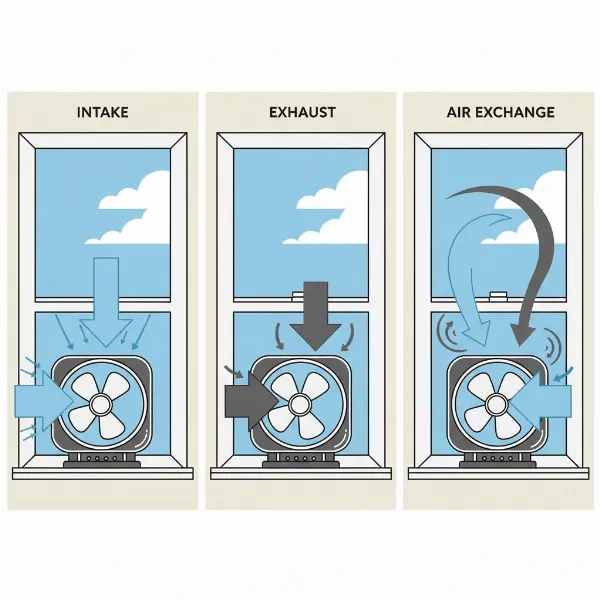 Illustration of a modern dual-blade window fan showing intake, exhaust, and air exchange modes with arrows
The convenience of reversible airflow is further enhanced by its implementation:
- Electronic Reversibility: This is the most sought-after type, allowing you to switch the direction of airflow with the mere press of a button or a toggle switch, without needing to physically remove and flip the fan in the window.
- Manual Reversibility: These fans require you to unmount the unit, turn it around, and reinstall it to change airflow direction. While functional, it’s less convenient for frequent adjustments.
How to Choose the Right Reversible Airflow Window Fan
Selecting the ideal reversible airflow window fan involves more than just picking a popular model. It requires a thoughtful assessment of your living space, lifestyle, and priorities.
Assess Your Needs
Before diving into specifications, consider these fundamental questions:
- Room Size: A fan’s power is often measured in Cubic Feet per Minute (CFM). A general rule of thumb is to aim for approximately 1 CFM per square foot of space, plus an additional 50 CFM for good measure. For instance, a 150 sq ft room would benefit from a fan with at least 200 CFM. Overpowering a small room can waste energy and create excessive noise, while an underpowered fan in a large room will be ineffective.
- Purpose of Use: Are you primarily looking to cool a bedroom at night, remove cooking odors from a kitchen, ventilate a workshop, or maintain general air freshness throughout your home? Your primary use case will guide your feature priorities.
- Budget: Window fans range from budget-friendly basic models to high-tech, feature-rich units. Determine a realistic budget to narrow down your options without compromising essential functionality.
|
Our Picks for the Best Electric fan in 2026
As an Amazon Associate I earn from qualifying purchases.
|
||
| Num | Product | Action |
|---|---|---|
| 1 | LEVOIT Tower Fan for Bedroom, 25ft/s Velocity Standing Fan with 28dB Quiet for Sleep, Remoter, 12H Timer, 5 Speeds, 4 Modes, 90° Oscillation for Home, Office, Indoor, Bladeless 36 inch, White |

|
| 2 | XPOWER FC-100S Multipurpose 11 Pro Air Circulator Utility Fan with Oscillating Feature |
|
| 3 | Viniper Portable Rechargeable Fan, Small Desk Fan : 3 Speeds & about 8-24 Hours Longer Working, 180 Rotation, Portable Desktop Fan Small but Mighty, Strong Wind (White, Light Black Blade)6.2 Inch |
|
| 4 | Dreo Tower Fan for Bedroom, 25ft/s Velocity Quiet Floor Fan, 90° Oscillating Fans for Indoors with 4 Speeds, 4 Modes, 8H Timer, Standing Fans, Bladeless Fan, Black, Nomad One (DR-HTF007) |
|
| 5 | Amazon Basics Air Circulator Fan, Desk Fan for Bedroom, Home and Office, With 90-Degree Tilt Head, 3 Speed Settings, Lightweight (3 LBS), 35 Watts, Black, 11.1"W x 6.3"D x 10.9"H |
|
| 6 | Dreo Fan for Bedroom, 120° Oscillating Standing Fans, Quiet Floor Fan with DC Motor, 100ft Pedestal Fans for Room, 9 Speeds, 4 modes, 20dB, 120° Manual Vertical, 37-42" Adjustable Height, 9H Timer |
|
| 7 | Dreo Fan for Bedroom, 120° Oscillating Standing Fan, Quiet Floor Fan with DC Motor, Pedestal Fan for Room, 9 Speeds, 4 modes, 20dB, 120° Manual Vertical, 37-42" Adjustable Height, 9H Timer, Black |
|
| 8 | Lasko 2520 Oscillating Stand Fan,White 16 Inch |
|
| 9 | 10" Modern Standing Fan for Bedroom, Sleek Oscillating Pedestal Fan, 3-Speed & Height Adjustable Compact Floor Fan for Home Office & Dorm |
|
| 10 | Amazon Basics 16" Pedestal Fan with Remote, Floor Fan, Standing Fan for Bedroom, Living Room, Office, with 3 Speeds, 3 Modes, Timer, Dual-Layered Blades, Adjustable Height, Tilt Head, 60W, Black |
|
Key Features to Look For
The best window fans offer a blend of performance, convenience, and durability.
- Power and Airflow Capacity: Look for models with strong wind speeds and a good CFM rating that is appropriate for your room size. Effective air circulation is key to cooling and ventilation.
- Noise Level: Measured in decibels (dBA), a fan’s noise level is critical, especially if it will be used in a bedroom or office. While powerful fans tend to be louder, many manufacturers are now designing quieter motors and enclosed blade systems to minimize operational noise.
- Control Options: Modern fans offer various ways to manage settings:
- Remote Control: A significant convenience, allowing you to adjust speed, direction, and thermostat settings from across the room.
- Digital Controls & LED Displays: Provide precise and easy-to-read feedback on settings.
- Programmable Thermostat: Automatically turns the fan on or off when a desired temperature is reached, saving energy and maintaining comfort.
- Smart Features: Integration with voice assistants like Alexa or control via smartphone apps (Bluetooth/Wi-Fi) offers ultimate convenience and scheduling capabilities.
- Fit and Seal: A snug fit in your window is crucial for efficiency and to keep out bugs and debris. Look for:
- Expandable Accordion Panels: Standard on most window fans, these slide out to fill the gaps in various window widths.
- Innovative Sealing Systems: Some premium models use foam blocks or soft-fit systems that create a superior seal, enhancing performance and preventing drafts.
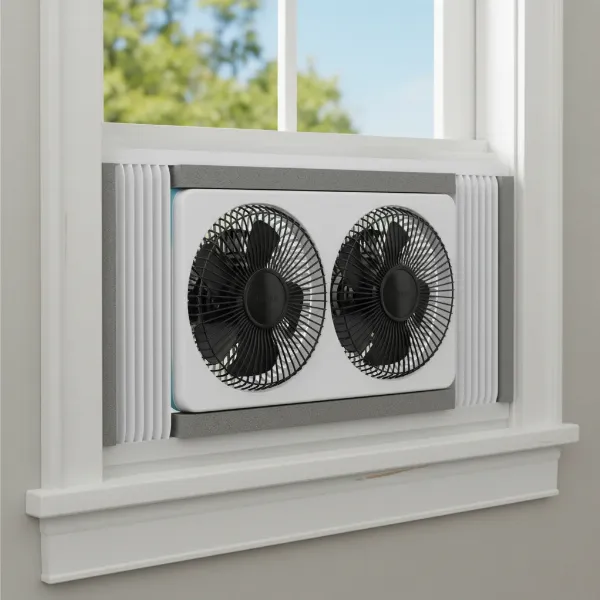 Close-up of a window fan securely installed with expandable accordion panels creating a tight seal
- Durability and Build Quality: A robust fan will last longer.
- Materials: Metal construction (e.g., steel grills) offers greater durability than plastic, especially for outdoor-facing components.
- Motor Quality: Copper motors are often cited for their longevity and weather resistance.
- Weather-Resistant Housing: Important if the fan will be exposed to the elements, preventing damage from rain or UV rays.
- Energy Efficiency: While all fans use less energy than AC, models with programmable thermostats and timers contribute to even greater savings by operating only when necessary.
- Versatility: Some window fans come with removable legs or handles, allowing them to be used as freestanding or tabletop fans, adding to their utility in different rooms or situations.
Comparing Reversible Airflow Window Fan Types
While the core function remains the same, variations exist in design and operation:
- Twin-Blade Window Fans: These are the most common and often feature two separate fans, sometimes allowing independent control of each blade’s direction (one intake, one exhaust). This offers superior air exchange.
- Single-Blade Reversible Window Fans: Typically found in simpler models, these usually offer electronic reversibility for a single airflow direction (either intake or exhaust at one time).
- Hybrid Designs: Some fans can convert from a window unit to a floor or tabletop fan, offering flexibility beyond seasonal window use.
Choosing between these often boils down to the level of control and specialized airflow dynamics you need for your space.
Best Reversible Airflow Window Fans for 2026: A Comparative Look
The market offers several excellent reversible airflow window fans, each with unique strengths. Here’s a comparative overview of some top contenders for 2026:
| Model Name | Reversible Type | Control Options | Seal Mechanism | Noise Level (dBA) | Key Pros | Key Cons | Best For |
|---|---|---|---|---|---|---|---|
| Bionaire Window Fan w/ Twin 8.5-inch Blades (BW2300-N) | Electronic Twin | Remote, Digital, Programmable Thermostat | Expandable Panels | ~72 (operational) | Excellent overall value, quiet on low, good for various room sizes, 3-year warranty | LCD can be bright in dark rooms, not highest wind speed | Overall Value, Bedrooms |
| Vornado TRANSOM AE Window Fan | Electronic Single | Remote, Digital, Smart (Alexa integration) | Innovative Foam Blocks | ~76 (operational) | High wind speed, superior seal, sleek design, weather-resistant, 5-year warranty, smart features | Foam blocks limited to three sizes, designed for horizontal use only, higher price | Smart Home Integration, High Performance, Modern Design |
| Genesis A1 Window Fan | Electronic Twin | Digital, Thermostat (adjustable) | Accordion Panels | Can be noisy | Durable copper motors, versatile (freestanding option), good power | Can be noisier than competitors, sometimes manual reversal | Durability, Versatility |
| AmazonBasics Window Fan | Electronic Twin | Remote, Digital, Programmable Thermostat | Expandable Panels | Good | Affordable, copper motor, independent blade operation, portable features | Some reviews mention flimsiness, lower overall wind speed | Budget-Conscious, Basic Needs |
| Air King 9155 Whole House Window Fan | Electronic Single | Dial/Switch | Metal Screwed Panels | ~82 (operational) | Superior circulation for whole rooms, robust metal construction, storm guard feature, 16-inch blades | Requires significant vertical clearance, can be noisy on high settings, pricier | Large Rooms, Extreme Durability |
| Comfort Zone CZ319WT 9-inch Twin Window Fan | Electronic Twin | Remote, 3-Speed Dial | Auto-Locking Expanders | Quiet mode | Versatile (portable), removable bug screen, lightweight, good for air circulation | Accordion panels may need additional sealing, some installation reports tricky | Versatility, Quiet Operation |
| Holmes HAWF2041-N Twin Window Fan | Electronic Twin | Digital, Built-in Thermostat | Expandable Panels | ~78 (operational) | Good value for performance, dual fans with independent controls, decent wind speeds for cost | Thermostat interface (dial method) can be unintuitive | Value-Oriented, Dual Functionality |
| Sharper Image FA1-0135-06 PORTAL Window Fan | Electronic Single | Push-button | Innovative Foam Blocks | ~68 (operational) | High wind speeds for its size, effective foam block sealers, weather-resistant, slim design | No remote control, can be pricy for its value | Compact Power, Effective Sealing |
Tips for Using and Maintaining Your Window Fan
To ensure your reversible airflow window fan performs optimally and lasts for years, proper usage and maintenance are essential.
Proper Cleaning and Care
Regular cleaning prevents dust buildup, which can reduce efficiency and potentially strain the motor.
- Frequency: Aim to clean your fan at least once a month during heavy use, and before storing it for the off-season.
- Tools: You’ll typically need a screwdriver (if disassembly is required), a soft cloth, a vacuum cleaner with a brush attachment, and mild soap and water.
- Steps:
- Unplug: Always disconnect the fan from power before cleaning.
- Disassemble (if possible): Many window fans allow you to remove the front grill or even the blades for thorough cleaning. Consult your user manual.
- Vacuum: Use a vacuum cleaner to remove loose dust and debris from the grilles and blades.
- Wipe Down: Use a damp cloth with mild soap to wipe down the blades, grilles, and housing. Ensure all parts are completely dry before reassembling.
- Clean Exterior: Wipe the exterior with a dry or lightly damp cloth.
Maximizing Efficiency and Safety
Strategic placement and operation can significantly boost your fan’s effectiveness.
- Optimal Placement:
- For cooling, place intake fans in windows on the cooler, shadier side of your home, or where the coolest outside air is available (e.g., during night).
- For exhausting hot air or odors, place exhaust fans in windows in the warmest areas (e.g., kitchen, sun-exposed rooms).
- For whole-house ventilation, use a combination: an exhaust fan in a warm room and an intake fan in a cooler room, with other windows open to create a cross-breeze.
- Sealing Gaps: Even with expandable panels, small gaps can occur. Use weather stripping or foam tape to seal these gaps for maximum efficiency and to prevent insects from entering.
- Avoid Continuous Use (unnecessarily): Use programmable thermostats and timers to operate the fan only when needed. Running it 24/7 without purpose wastes energy.
- Electrical Safety: Ensure the fan is plugged into a properly grounded outlet. Avoid running cords under carpets or in high-traffic areas. Never operate a damaged fan.
Extending Fan Lifespan
A little proactive care goes a long way in prolonging your fan’s life.
- Regular Checks: Periodically inspect the power cord for fraying, the blades for damage, and the housing for cracks. Address any issues promptly.
- Lubrication: Some older models may benefit from occasional lubrication of motor bearings, but most modern fans have sealed, maintenance-free motors. Refer to your manual.
- Proper Storage: When not in use (e.g., during winter), clean the fan thoroughly, cover it to protect from dust, and store it in a dry, safe place away from extreme temperatures.
Where to Purchase Reputable Reversible Airflow Window Fans
Finding a reliable vendor is just as important as choosing the right fan.
- Online Retailers: Major online platforms like Amazon, Home Depot, and Lowe’s offer a vast selection, competitive pricing, and extensive customer reviews.
- Electronics and Home Improvement Stores: Brick-and-mortar stores allow you to see the fans in person, assess their size, and sometimes hear their operational noise.
Before making a purchase, always remember to:
- Verify Window Dimensions: Measure your window opening accurately (width and height) to ensure compatibility with the fan’s adjustable range.
- Check Warranty and Return Policy: A good warranty (3-5 years is common for quality fans) and a clear return policy provide peace of mind.
- Read Customer Reviews: Real-world experiences offer valuable insights into a fan’s performance, durability, and any potential quirks.
Buying Guide for Reversible Airflow Window Fans
Making the best choice often comes down to answering a few key questions about your personal circumstances.
What is your budget?
Entry-level reversible window fans can be found for under $50, offering basic functionality and manual or simple electronic controls. Mid-range fans ($50-$100) typically include remote controls, digital displays, and better build quality. Premium models ($100+) often feature smart home integration, advanced sealing mechanisms, superior durability, and quieter operation. Your budget will largely determine the convenience and advanced features you can expect.
What is your room size?
For small to medium rooms (under 200 sq ft), most twin window fans will provide sufficient airflow. For larger rooms or whole-house ventilation, look for fans with higher CFM ratings or more powerful motors, like the Air King 9155, which is designed to circulate air throughout an entire room effectively. Consider the fan’s height clearance, especially for larger units.
Which features do you prioritize?
- Convenience? Opt for electronic reversibility, remote control, and smart home compatibility.
- Quiet Operation? Look for models with enclosed designs or specific “quiet” settings, such as some Vornado or Comfort Zone models.
- Durability? Fans with metal construction or copper motors (e.g., Air King, Genesis A1) are built to last.
- Best Seal? Consider innovative foam block systems found in Vornado and Sharper Image units.
- Portability? Some fans offer removable legs for freestanding use, adding to their versatility.
Prioritizing these features based on your specific needs will guide you to the perfect window fan.
Conclusion
Choosing the best reversible airflow window fan for 2026 means investing in enhanced comfort, improved air quality, and energy efficiency for your home. These versatile electric fans provide dynamic control over your indoor environment, capable of drawing in fresh, cool air or expelling stale, hot air with the touch of a button. By considering factors like airflow capacity, noise level, control options, and durability, you can select a model that perfectly aligns with your needs and budget. Whether you prioritize smart features, whisper-quiet operation, or robust construction, there’s an ideal window fan waiting to transform your living space.
What aspect of a reversible airflow window fan do you find most appealing for your home?
Frequently Asked Questions
Are reversible window fans energy efficient?
Yes, reversible window fans are generally very energy efficient. They use significantly less electricity than air conditioning units and can effectively cool or ventilate a room, especially when outdoor temperatures are below 90°F. Many models include programmable thermostats and timers to optimize usage, further reducing energy consumption by only operating when needed.
How do I install a window fan with reversible airflow?
Most window fans with reversible airflow are designed for easy, tool-free installation. They typically feature expandable accordion panels that slide out to fit snugly within most double-hung or vertical slider window frames. For horizontal installation, some fans include removable feet or are specifically designed for that orientation. Ensure the fan is securely seated and any gaps are sealed to maximize efficiency and prevent pests.
Can a reversible window fan replace an AC?
For temperatures below approximately 90°F, a reversible window fan can be a highly effective and energy-efficient alternative to an air conditioner. It excels at circulating fresh air, exhausting stale air, and creating a comfortable environment. However, for extreme heat above this threshold, an air conditioner’s ability to actively cool the air may be necessary for optimal comfort.
What’s the difference between electronic and manual reversible airflow?
Electronic reversible airflow allows you to change the direction of the fan’s blades (intake, exhaust, or sometimes air exchange) with the press of a button on the fan itself or via a remote control, without physically moving the unit. Manual reversible airflow requires you to physically remove the fan from the window, flip it around, and reinstall it to change the direction of air movement. Electronic reversibility offers much greater convenience.