Do you often find yourself tossing and turning, disturbed by street noise, a partner’s snoring, or simply the eerie silence of the night? If so, you’re not alone. Many struggle to achieve a truly restful night’s sleep. While numerous solutions exist, sometimes the simplest and most accessible can be the most effective: an electric fan. Beyond just cooling your room, the consistent, soothing hum of a well-chosen electric fan can act as a powerful white noise generator, masking disruptive sounds and creating a serene environment conducive to deep, uninterrupted sleep. This comprehensive guide will help you navigate the world of electric fans to find your perfect sleep companion.
Electric Fans: An Overview and Their Role in Sleep
Electric fans have been a staple in homes for decades, primarily valued for their ability to circulate air and provide cooling comfort. However, their utility extends far beyond just moving air. For many, the consistent, non-intrusive sound produced by an operating fan—often referred to as white noise—is just as important as the breeze it generates. This ambient hum effectively masks sudden noises, such as traffic, distant conversations, or household creaks, by raising the overall noise floor. Instead of jarring silence punctuated by disruptive sounds, you experience a smooth, predictable auditory backdrop that helps your brain relax and maintain a deeper sleep state.
The evolution of electric fans has brought forth various types, each with unique characteristics that influence both cooling performance and white noise quality:
- Tower Fans: Known for their sleek, space-saving design, tower fans often offer widespread oscillation and multiple speed settings. Many modern tower fans are specifically engineered to produce a smooth, consistent sound profile, making them excellent for white noise.
- Pedestal Fans: These adjustable-height fans are versatile, providing powerful airflow and often wider coverage. Their larger blades can sometimes produce a more traditional “fan sound,” which some prefer for white noise.
- Box Fans: Simple, powerful, and typically more affordable, box fans deliver strong airflow and a robust, consistent hum. They are a classic choice for those who desire a louder, more encompassing white noise.
- Desk/Personal Fans: Compact and portable, these are ideal for localized cooling and white noise. While smaller, many models are surprisingly effective at creating a soothing background sound for individual sleepers.
- Window Fans: Designed to fit within a window frame, these fans can either draw cool air in or exhaust warm air out, simultaneously providing ventilation and white noise. They are great for masking outdoor sounds.
- Bladeless Fans: Utilizing air multiplier technology, these fans offer a smooth, uninterrupted stream of air and often a distinct, less choppy sound profile compared to traditional bladed fans, which can be very appealing for white noise enthusiasts.
Each type offers a different balance of airflow, sound texture, and features, allowing you to tailor your choice to your specific sleep preferences and room environment.
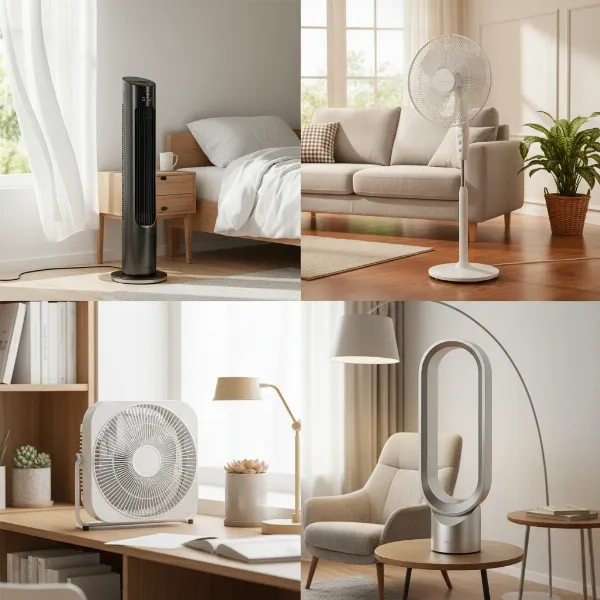 Different types of electric fans like tower, pedestal, box, and bladeless models.
Choosing the Right Electric Fan for Optimal White Noise and Sleep
Selecting the ideal electric fan for both cooling and white noise involves more than just picking the first model you see. It’s about finding a fan that harmonizes with your unique sleep needs and environment.
Assess Your Specific Needs
Before diving into features, consider what you truly need from your fan:
- Room Size: A compact desk fan might suffice for a small bedroom or a nightstand, while a larger pedestal or tower fan with wide oscillation is better suited for master bedrooms or open living spaces to ensure consistent sound distribution and cooling.
- Primary Purpose: Are you primarily seeking powerful cooling, or is white noise the main goal? Some fans prioritize quiet operation even at higher speeds, making them excellent for white noise without overwhelming air movement. Others offer robust airflow that comes with a naturally louder hum.
- Budget: Electric fans range widely in price. Determine how much you’re willing to invest, keeping in mind that higher-end models often come with advanced features like smart controls, quieter motors, and more precise sound engineering.
|
Our Picks for the Best Electric fan in 2026
As an Amazon Associate I earn from qualifying purchases.
|
||
| Num | Product | Action |
|---|---|---|
| 1 | Amazon Basics 16" Pedestal Fan with Remote, Floor Fan, Standing Fan for Bedroom, Living Room, Office, with 3 Speeds, 3 Modes, Timer, Dual-Layered Blades, Adjustable Height, Tilt Head, 60W, Black |

|
| 2 | Dreo Fan for Bedroom, 120° Oscillating Standing Fans, Quiet Floor Fan with DC Motor, 100ft Pedestal Fans for Room, 9 Speeds, 4 modes, 20dB, 120° Manual Vertical, 37-42" Adjustable Height, 9H Timer |
|
| 3 | XPOWER FC-100S Multipurpose 11 Pro Air Circulator Utility Fan with Oscillating Feature |
|
| 4 | 10" Modern Standing Fan for Bedroom, Sleek Oscillating Pedestal Fan, 3-Speed & Height Adjustable Compact Floor Fan for Home Office & Dorm |
|
| 5 | Amazon Basics Air Circulator Fan, Desk Fan for Bedroom, Home and Office, With 90-Degree Tilt Head, 3 Speed Settings, Lightweight (3 LBS), 35 Watts, Black, 11.1"W x 6.3"D x 10.9"H |
|
| 6 | LEVOIT Tower Fan for Bedroom, 25ft/s Velocity Standing Fan with 28dB Quiet for Sleep, Remoter, 12H Timer, 5 Speeds, 4 Modes, 90° Oscillation for Home, Office, Indoor, Bladeless 36 inch, White |
|
| 7 | Dreo Tower Fan for Bedroom, 25ft/s Velocity Quiet Floor Fan, 90° Oscillating Fans for Indoors with 4 Speeds, 4 Modes, 8H Timer, Standing Fans, Bladeless Fan, Black, Nomad One (DR-HTF007) |
|
| 8 | Lasko 2520 Oscillating Stand Fan,White 16 Inch |
|
| 9 | Dreo Fan for Bedroom, 120° Oscillating Standing Fan, Quiet Floor Fan with DC Motor, Pedestal Fan for Room, 9 Speeds, 4 modes, 20dB, 120° Manual Vertical, 37-42" Adjustable Height, 9H Timer, Black |
|
| 10 | Viniper Portable Rechargeable Fan, Small Desk Fan : 3 Speeds & about 8-24 Hours Longer Working, 180 Rotation, Portable Desktop Fan Small but Mighty, Strong Wind (White, Light Black Blade)6.2 Inch |
|
Key Criteria for Selection
Once you understand your needs, focus on these critical factors when choosing your fan:
- Sound Profile & Decibel Levels: This is paramount for white noise. Look for fans that produce a smooth, consistent hum without rattling, clicking, or irregular motor noises. The ideal decibel (dB) rating for white noise is often cited between 25-35dB, as this range effectively masks disruptive sounds without being overly intrusive. Models with brushless motors tend to offer superior sound consistency.
- Speed Settings & Control: Multiple speed settings (at least three, preferably more) allow you to fine-tune both the airflow and the intensity of the white noise. This flexibility is crucial for adapting to different ambient noise levels and personal preferences.
- Sleep-Enhancing Features: Features like a programmable timer (1-8 hours or more) allow the fan to run for a set duration, ideal for those who prefer white noise only during the initial sleep phases. A dedicated “sleep mode” often includes display dimming or auto-off functions to eliminate light pollution, while some advanced models may even offer gradual speed reduction to ease you into sleep. Remote controls and smart app integration provide convenience, letting you adjust settings without getting out of bed.
- Airflow Performance: While white noise is the focus, effective cooling remains important for sleep comfort. Ensure the fan’s airflow capacity matches your room size, preventing you from needing to run it at excessively loud speeds just to feel a breeze.
- Design & Portability: A bladeless design, such as those found in some tower fans, can offer a smoother, less turbulent sound. Consider the fan’s footprint and weight if you plan to move it between rooms.
- Brand Reputation & Reliability: Investing in a fan from a reputable brand often translates to better build quality, quieter motors, and consistent performance over time. Look for models with positive long-term user reviews, as rattles or vibrations can develop with age and negate the white noise benefits.
Comparing Fan Types for White Noise
| Fan Type | White Noise Suitability | Cooling Power | Key Benefits | Considerations |
|---|---|---|---|---|
| Tower Fan | Excellent (smooth hum) | Moderate to High | Space-saving, wide oscillation, sleek design | Can be less powerful than box/pedestal fans |
| Pedestal Fan | Good to Excellent (traditional hum) | High | Adjustable height, wide coverage, powerful airflow | Can be bulkier, louder motor noise on some models |
| Box Fan | Excellent (robust, consistent) | High | Powerful airflow, affordable, classic sound | Less aesthetically pleasing, can be louder |
| Desk Fan | Good (localized, gentle) | Low to Moderate | Portable, compact, personal cooling | Limited coverage, may not mask large rooms |
| Window Fan | Good (masks outdoor noise) | Ventilation & Cooling | Draws in fresh air/exhausts stale air, quiet models available | Requires window space, less flexible placement |
| Bladeless Fan | Excellent (smooth, no chop) | Moderate to High | Safe, modern aesthetic, consistent air & sound | Generally more expensive |
Tower fans and bladeless fans generally excel at producing a desirable smooth white noise, while box and pedestal fans offer a more traditional, often louder, fan hum that many find equally effective.
Top Picks: Best Electric Fans for White Noise and Better Sleep
Based on their features and user feedback, several electric fans stand out for their ability to provide effective white noise and enhance sleep. Here are some highly-regarded models:
| Product | Noise Level | Speed Settings | Key White Noise Feature | Pros | Cons |
|---|---|---|---|---|---|
| Honeywell QuietSet Tower Fan | Ultra-quiet | 5 levels | Specialized QuietSet technology, dimming display | Consistent, soothing hum; auto-off timer, remote control | May not be the most powerful for cooling large rooms |
| Dreo Smart Tower Fan | 28dB (ultra-quiet) | 4 speeds | Dedicated sleep mode, auto-off display | Extremely quiet; smart control, temperature sensing | Price point might be higher for smart features |
| Shark TurboBlade Bladeless | Variable | 10 speeds + 10 noise levels | Dedicated noise level controls, bladeless design | Highly customizable sound; powerful, smooth airflow | Higher cost, can be large for small spaces |
| Lasko Oscillating Tower Fan | Whisper-quiet | 3 speeds | Consistent gentle airflow | Reliable, consistent sound; programmable timer, remote | Fewer speed options than some competitors |
| GoveeLife Smart Tower Fan | 29dB | 8 speeds | Temperature-responsive auto mode | Quiet operation, smart connectivity, 24-hour timer | Smart features might require a learning curve |
| Vornado 683DC Pedestal Fan | Low to High | Variable (99 settings) | Powerful vortex action, wide range of sound | Exceptional air circulation; precise speed control | Can be louder on highest settings, traditional fan sound |
The Honeywell QuietSet Tower Fan is often lauded for its engineered sound profile, which provides a smooth, consistent hum without harsh mechanical noises. Its dimming features and auto-off timer further enhance the sleep environment. The Dreo Smart Tower Fan is another excellent choice, operating at an ultra-quiet 28dB, comparable to a quiet library, and includes a sleep mode that turns off the display. For those seeking maximum control, the Shark TurboBlade Bladeless Tower Fan offers a remarkable 10 dedicated noise levels alongside 10 speed settings, allowing for a highly customized white noise experience.
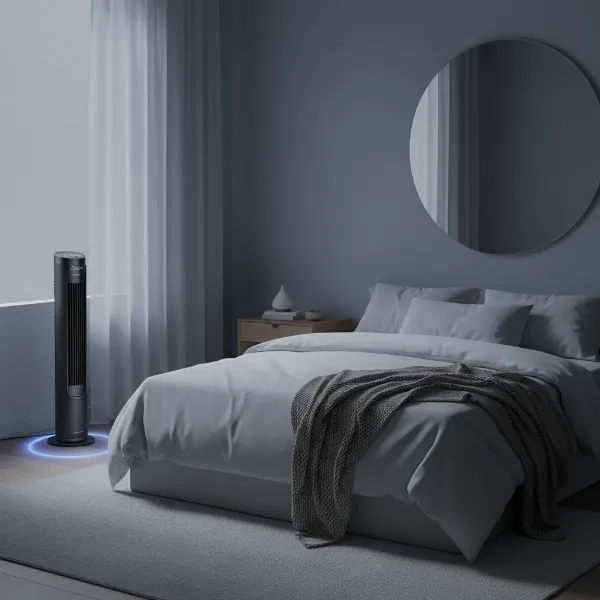 Modern, quiet tower fan operating in a peaceful bedroom for restful sleep.
“The goal isn’t silence, but a consistent, gentle backdrop that allows your brain to ignore external disturbances and focus on resting.” – Dr. Sarah Miller, Sleep Specialist
Maximizing Your Fan’s White Noise for Restful Sleep
Once you’ve selected your ideal fan, optimizing its placement and settings can further enhance its effectiveness as a white noise generator and cooling device.
Optimal Placement and Positioning
The location of your fan significantly impacts both sound distribution and airflow.
- Near the Bed: Placing the fan within a few feet of your bed is generally best for personal white noise, as it ensures the sound is most prominent where you need it.
- Against a Wall (Indirectly): For more diffused white noise and air circulation, especially from a powerful fan, position it so the air bounces off a wall or ceiling. This helps distribute the sound more evenly and avoids direct, strong drafts.
- Away from Obstacles: Ensure the fan’s airflow and sound path are not blocked by furniture, curtains, or other objects, as this can disrupt the consistent hum.
- Strategic Oscillation: If your fan oscillates, experiment with its range. A wider oscillation might be better for consistent sound masking across a larger room, while a fixed position might provide more direct cooling and concentrated white noise.
Adjusting Settings for Your Ideal Sleep Environment
Every individual has a unique preference for white noise and temperature.
- Experiment with Speeds: Start with a lower speed setting and gradually increase it until you find the perfect balance where external noises are masked, but the fan itself isn’t too distracting. What sounds “quiet” to one person might be “just right” for another.
- Utilize Timers and Sleep Modes: If your fan has a timer, set it to turn off after a few hours once you’ve fallen asleep, conserving energy. Sleep modes, which often reduce fan speed and dim lights, are designed for overnight use.
- Balance Cooling and Noise: If cooling is also a priority, consider the temperature in your room. A higher fan speed might be necessary for adequate cooling, and the increased white noise might be a welcome side effect.
Maintenance Tips for Consistent Performance
Regular maintenance ensures your fan continues to operate efficiently and produce consistent, soothing white noise.
- Regular Cleaning: Dust buildup on blades and grilles can reduce airflow efficiency and cause rattling noises, diminishing the quality of your white noise. Clean your fan blades and grilles weekly or bi-weekly with a cloth or vacuum attachment. For tower fans, carefully clean the internal components as per the manufacturer’s instructions.
- Check for Loose Parts: Periodically inspect your fan for any loose screws, grilles, or bases that could vibrate and create unwanted noise. Tighten them if necessary.
- Lubrication (If Applicable): Some older or traditional fans might benefit from occasional lubrication of motor bearings. Always consult your fan’s manual before attempting this, as modern fans often have sealed, maintenance-free motors.
- Proper Storage: If you only use your fan seasonally, store it in a clean, dry place, ideally covered to prevent dust accumulation.
Where to Purchase Reputable Electric Fans for Sleep
Finding a reliable electric fan that genuinely improves your sleep can make a significant difference. When looking to buy, consider these avenues to ensure you’re getting a quality product:
- Major Electronics Retailers: Stores like Best Buy, Target, and Walmart, both online and in-store, offer a wide selection of fans from various brands. They often have customer reviews and clear product specifications to help your decision.
- Online Marketplaces: Websites like Amazon provide an extensive range of options, often with competitive pricing and detailed customer reviews that can offer valuable insights into a fan’s white noise quality and durability. Always check seller ratings and return policies.
- Manufacturer Websites: Purchasing directly from a brand’s official website can sometimes offer exclusive deals, direct warranty support, and access to their full product lineup.
- Specialty Sleep Stores (Online): Some online retailers focusing on sleep products might curate fans specifically chosen for their white noise capabilities, often with expert recommendations.
When making a purchase, always verify the warranty information, understand the return policy, and read recent customer reviews focusing on noise level and long-term performance.
Your Buying Guide for White Noise Fans
To simplify your decision, consider these three crucial questions:
What is your budget?
Fans suitable for white noise can range from budget-friendly desk models under $30 to high-end bladeless or smart tower fans exceeding $200. Setting a budget helps narrow down your choices and focuses your search on models that offer the best features within your price range, without compromising on quality.
How large is your room?
The size of your room directly influences the fan’s required airflow and oscillation range for effective cooling and consistent white noise distribution. For small bedrooms, a compact desk or personal fan might be sufficient, while larger spaces will benefit more from powerful tower, pedestal, or box fans to ensure the ambient sound and cool air reach every corner.
Which features are essential for you?
Prioritize features based on your sleep habits. Do you need a programmable timer, a dimmable display, or smart home integration for seamless control? Is precise speed adjustment crucial, or are a few basic settings enough? Understanding your must-have features will guide you towards a fan that truly enhances your sleep environment.
Conclusion
The pursuit of better sleep is a universal quest, and sometimes, the answer is as simple as the comforting hum of an electric fan. By providing both cooling comfort and effective white noise, these versatile appliances can transform your bedroom into a sanctuary of calm, masking the interruptions that prevent truly restful nights. From ultra-quiet tower fans designed with specialized sleep modes to powerful box fans known for their robust, consistent sound, there’s an Electric Fan perfectly suited to every preference and need. Carefully considering sound quality, features, and your room’s requirements will empower you to choose a fan that not only keeps you cool but also lulls you into the deep, restorative sleep you deserve. What kind of fan hum helps you drift off to dreamland most effortlessly?
Frequently Asked Questions
Is a fan really better than a dedicated white noise machine?
For many, a fan offers a dual benefit: cooling and white noise. While dedicated white noise machines can offer a wider variety of sounds and often a more consistent, precisely engineered sound profile, the natural, moving air generated by a fan is often preferred. Personal preference is key, but a good fan can be a highly effective and economical two-in-one solution.
Do all fans create good white noise?
No, not all fans are created equal when it comes to white noise. Some fans produce choppy, inconsistent, or mechanical noises (rattling, whirring) that can be more disruptive than soothing. Look for fans specifically designed for quiet operation or those with smooth, consistent airflow and sound profiles.
What’s the ideal fan speed for white noise?
The ideal fan speed depends on personal preference and the level of external noise you need to mask. Start with a low to medium setting and adjust until you find a hum that is noticeable enough to block distractions but not so loud that it becomes a distraction itself. Many find that mid-range speeds offer the best balance.
How loud should a white noise fan be?
An optimal white noise fan typically operates between 25-35 decibels (dB). This range is usually sufficient to mask common household and outdoor noises without being overly intrusive. However, some individuals prefer a slightly louder hum, especially if they are highly sensitive to external sounds or need to block out significant noise.
Can a fan be too loud for sleep?
Yes, a fan can definitely be too loud. If the fan’s noise level is excessive or if it produces irregular, jarring sounds, it can disrupt sleep rather than promote it. The goal is a consistent, non-alarming sound that blends into the background, not a roar that keeps you awake.
Are bladeless fans good for white noise?
Many bladeless fans are excellent for white noise. Their design often results in a smoother, less turbulent airflow and a more consistent, less “choppy” sound compared to traditional bladed fans. This makes them a popular choice for those seeking a modern aesthetic combined with effective, unobtrusive white noise.