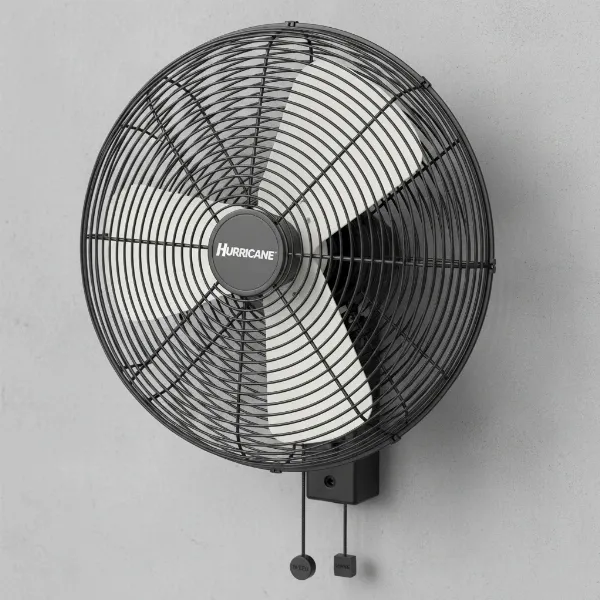
The humble electric fan has undergone a remarkable transformation, evolving from a simple cooling device to an intelligent centerpiece of the modern smart home. Gone are the days of fumbling for pull chains or misplaced remotes. Today, smart fans offer seamless integration with voice assistants like Amazon Alexa and Google Home, putting precise control over your indoor climate literally at your fingertips or the sound of your voice. Whether you’re seeking a gentle breeze for relaxation or powerful airflow to beat the heat, the right smart fan can elevate your comfort and streamline your daily routines. This guide will navigate the exciting world of smart fans, helping you discover the perfect model that aligns with your lifestyle and integrates effortlessly into your connected living space.
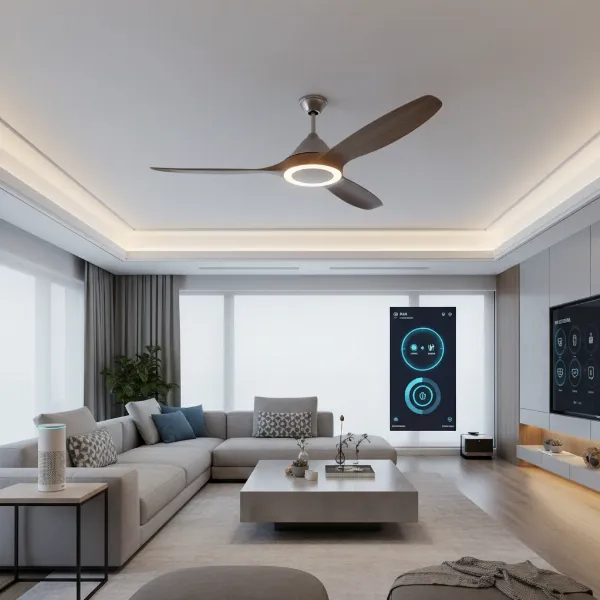 A modern smart ceiling fan integrated into a contemporary smart living room with voice assistant devices visible
Electric Fans: Overview and Popular Types
Electric fans have a long history, continuously evolving to meet changing demands for comfort and efficiency. From their early mechanical iterations to today’s high-tech smart versions, the core function remains: to circulate air and provide a cooling effect. Modern smart fans take this a step further by adding connectivity, allowing for advanced control and automation.
Here are the most popular types of electric fans, including their smart variations:
- Smart Ceiling Fans: These fans are permanently installed fixtures, often serving as both a light source and a cooling device.
- Pros: Provide whole-room air circulation, integrate seamlessly with smart lighting, often feature sleek designs. Many models, like the Dreo CLF521S or Sofucor Smart Ceiling Fan, offer quiet DC motors and advanced light controls, including RGB options.
- Cons: Require installation, not portable, and placement is fixed.
- Smart Desk/Table Fans: Compact and portable, these fans are designed for personal cooling in smaller areas.
- Pros: Highly portable, ideal for focused airflow on a desk or bedside table, space-saving. The Windmill Fan is an example of an affordable smart desk fan.
- Cons: Limited to spot cooling, may lack the power for larger rooms.
- Smart Tower Fans: Characterized by their tall, slender design, tower fans are excellent for whole-room circulation without occupying much floor space.
- Pros: Space-efficient, wide oscillation for broad coverage, often quieter due to bladeless designs or efficient motors. The Dreo Pilot Max Tower Fan is known for its quiet operation and powerful airflow.
- Cons: Can be less powerful than large ceiling or pedestal fans, some models are pricier.
- Smart Pedestal Fans: These freestanding fans feature an adjustable height and a larger fan head, providing robust airflow for medium to large rooms.
- Pros: Powerful airflow, adjustable height for directing air precisely, generally portable. The Dreo Polyfan 704S offers strong airflow and omnidirectional oscillation.
- Cons: Take up more floor space than tower or desk fans, aesthetics might not blend with all decors.
- Smart Air Purifying Fans: Combining the functions of an air purifier and a fan, these devices circulate air while removing allergens, pollutants, and odors.
- Pros: Dual functionality for cooling and improving indoor air quality, essential for allergy sufferers. The Dyson Purifier Cool TP07 is a well-known model in this category, featuring HEPA filtration and comprehensive smart controls.
- Cons: Significantly more expensive than standard fans, require regular filter replacement.
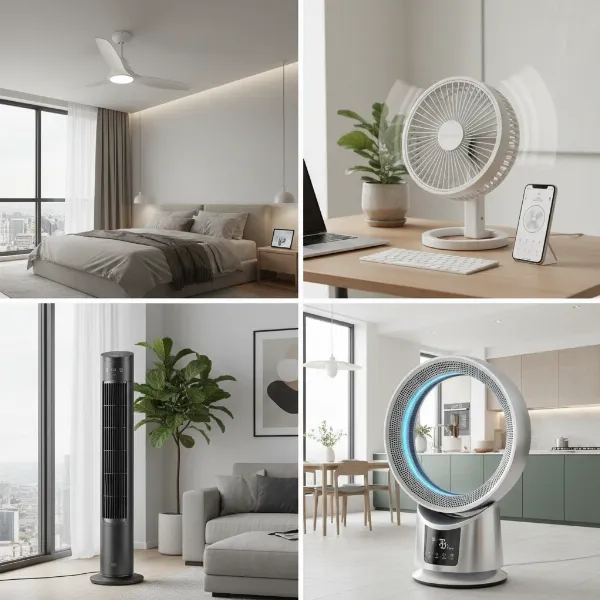 A collage of different smart fan types: ceiling, desk, tower, and air purifying fans in various modern home settings
How to Choose the Right Smart Fan
Selecting the ideal smart fan involves more than just picking a model with voice control. Thoughtful consideration of your specific environment and needs will ensure your investment genuinely enhances your comfort and smart home ecosystem.
Determine Your Usage Needs
Before diving into features, consider how and where you’ll use your smart fan.
- Room Size: The size of your room dictates the fan’s blade span (for ceiling fans) or airflow capacity (CFM) required. For example, rooms up to 75 square feet generally need a fan 36 inches or smaller, while rooms between 75 and 144 square feet benefit from 36 to 42-inch fans. Larger spaces up to 225 square feet may need a 44-inch fan, and rooms over 225 square feet require fans 50 inches or larger to be effective.
- Purpose of Use: Are you looking for general cooling, targeted airflow, air purification, or simply ambient lighting? Some fans excel in specific roles; for instance, the Dyson Purifier Cool TP07 doubles as an excellent air purifier.
- Budget: Smart fans vary widely in price, from affordable desk fans to premium ceiling fans and air purifiers. Establish a budget to narrow down your options effectively.
|
Our Picks for the Best Electric Fan in 2026
As an Amazon Associate I earn from qualifying purchases.
|
||
| Num | Product | Action |
|---|---|---|
| 1 | 10" Modern Standing Fan for Bedroom, Sleek Oscillating Pedestal Fan, 3-Speed & Height Adjustable Compact Floor Fan for Home Office & Dorm |

|
| 2 | Amazon Basics Air Circulator Fan, Desk Fan for Bedroom, Home and Office, With 90-Degree Tilt Head, 3 Speed Settings, Lightweight (3 LBS), 35 Watts, Black, 11.1"W x 6.3"D x 10.9"H |
|
| 3 | Viniper Portable Rechargeable Fan, Small Desk Fan : 3 Speeds & about 8-24 Hours Longer Working, 180 Rotation, Portable Desktop Fan Small but Mighty, Strong Wind (White, Light Black Blade)6.2 Inch |
|
| 4 | XPOWER FC-100S Multipurpose 11 Pro Air Circulator Utility Fan with Oscillating Feature |
|
| 5 | Dreo Fan for Bedroom, 120° Oscillating Standing Fan, Quiet Floor Fan with DC Motor, Pedestal Fan for Room, 9 Speeds, 4 modes, 20dB, 120° Manual Vertical, 37-42" Adjustable Height, 9H Timer, Black |
|
| 6 | Dreo Fan for Bedroom, 120° Oscillating Standing Fans, Quiet Floor Fan with DC Motor, 100ft Pedestal Fans for Room, 9 Speeds, 4 modes, 20dB, 120° Manual Vertical, 37-42" Adjustable Height, 9H Timer |
|
| 7 | Amazon Basics 16" Pedestal Fan with Remote, Floor Fan, Standing Fan for Bedroom, Living Room, Office, with 3 Speeds, 3 Modes, Timer, Dual-Layered Blades, Adjustable Height, Tilt Head, 60W, Black |
|
| 8 | LEVOIT Tower Fan for Bedroom, 25ft/s Velocity Standing Fan with 28dB Quiet for Sleep, Remoter, 12H Timer, 5 Speeds, 4 Modes, 90° Oscillation for Home, Office, Indoor, Bladeless 36 inch, White |
|
| 9 | Dreo Tower Fan for Bedroom, 25ft/s Velocity Quiet Floor Fan, 90° Oscillating Fans for Indoors with 4 Speeds, 4 Modes, 8H Timer, Standing Fans, Bladeless Fan, Black, Nomad One (DR-HTF007) |
|
| 10 | Lasko 2520 Oscillating Stand Fan,White 16 Inch |
|
Key Criteria for Selection
Once you understand your needs, evaluate fans based on these crucial criteria:
- Power and Airflow (CFM): Measured in Cubic Feet per Minute (CFM), this indicates how much air a fan moves. Higher CFM is crucial for effectively cooling larger areas. For instance, the Dreo Smart Ceiling Fan offers an impressive 6040 CFM.
- Noise Level: For bedrooms or quiet workspaces, a fan with a low decibel (dB) rating is essential. Many modern smart fans feature energy-efficient DC motors, which are significantly quieter than traditional AC motors. Fans operating below 30-50dB are considered ideal for minimal disturbance.
- Smart Features:
- Voice Control: Ensure direct compatibility with Amazon Alexa and Google Assistant for hands-free operation. Some, like the Dyson Purifier Cool TP07, also support Siri.
- App Control: A robust companion app allows for scheduling, setting timers, adjusting speeds, changing modes, and controlling integrated lighting from your smartphone, even when you’re away from home.
- Connectivity: Most smart fans connect via Wi-Fi (often requiring a 2.4GHz network) or Bluetooth for app and voice assistant integration. A reliable connection is paramount for consistent performance.
- Additional Features:
- Integrated Lighting: Many smart ceiling fans include LED lights with adjustable brightness and color temperature (warm to cool white). Some even offer RGB ambient lighting for customizable room aesthetics.
- Oscillation and Reversible Motors: Oscillation provides wider air distribution, while a reversible motor (common in ceiling fans) allows for year-round use by circulating cool air down in summer and warm air up in winter.
- Special Modes: Look for features like “Sleep Mode” for quiet, gentle airflow; “Natural Breeze” to simulate outdoor conditions; or “Auto Mode” that adjusts speed based on room temperature.
- Brand and Reliability: Opt for reputable brands known for quality and customer support. Checking recent reviews can provide insight into long-term performance and user satisfaction.
- Energy Efficiency: DC motors not only run quieter but also consume significantly less energy than traditional AC motors, leading to lower electricity bills.
Comparing Popular Smart Fan Types
Each smart fan type offers unique advantages, making them suitable for different scenarios.
- Ceiling Fans: Best for permanent, whole-room cooling and integrated lighting, especially in larger spaces. They free up floor space and often serve as a design element.
- Desk/Tower/Pedestal Fans: Ideal for focused or portable cooling. Desk fans are great for personal use, while tower and pedestal fans offer more widespread airflow and portability for various rooms. Tower fans are particularly space-saving.
- Air Purifying Fans: A premium choice for those prioritizing both cooling and improved indoor air quality. They are often more expensive but offer dual benefits.
Top Smart Fan Models for Alexa & Google Home
Here’s a comparison of some highly-rated smart fans compatible with Alexa and Google Home, covering various types and features:
| Product Name | Type | Voice Assistant Compatibility | Key Features | Pros | Cons | Best For |
|---|---|---|---|---|---|---|
| Dreo CLF521S Smart Ceiling Fan | Ceiling | Alexa, Google | 52″, 6040 CFM, RGB lighting, 12 speeds, DC motor, quiet (<45dB) | Powerful airflow, quiet, excellent app control, RGB lighting, affordable | No HomeKit/IFTTT | Living rooms, game rooms, bedrooms |
| Home Decorators Kensgrove Smart CF | Ceiling | Alexa, Google | 72″, Dimmable LED (2700K-5000K), 6 speeds, DC motor | Massive airflow for large spaces, great value, versatile lighting | Large remote, 5000K light can be harsh | Large living spaces, open-concept areas |
| Sofucor Smart Ceiling Fan | Ceiling | Alexa, Google | 52″, 5000 CFM, DC motor, quiet (<30dB), 3 light temperatures | Elegant design, very quiet, good airflow, indoor/outdoor compatible | No RGB lighting | Bedrooms, patios, design-focused homes |
| Dreo Falcon S CF714S Air Circulator | Desk | Alexa, Google | Compact, 9 speeds, horizontal/vertical oscillation, temperature readings | Compact, powerful, wide oscillation, quiet, temperature sensing | No HomeKit/IFTTT | Desks, small rooms, dorms |
| Dreo Pilot Max Tower Fan | Tower | Alexa, Google | 120° oscillation, 25dB quiet, auto speed adjust, sleek design | Ultra-quiet, powerful, whole-room coverage, easy to move | No HomeKit/IFTTT | Large rooms, noise-sensitive individuals |
| Dyson Purifier Cool TP07 | Air Purifier | Alexa, Google, Siri | HEPA filter, 10 fan speeds, 360° oscillation, air quality monitoring | Purifies and cools, sleek design, Siri support, air quality insights | Very expensive, can get loud at high speeds | Allergy sufferers, tech enthusiasts |
| Modern Forms Renegade Smart CF | Outdoor CF | Alexa, Google | 8 blades, 6 speeds, LED light, weather-resistant, works with Control4/SmartThings | Weather-resistant, powerful, quiet, supports multiple smart platforms | Pricey, no HomeKit/IFTTT | Covered patios, outdoor living spaces |
| Windmill Fan | Desk | Alexa, Google | Compact, strong airflow, scheduling via app | Affordable, strong airflow for its size, compact | No oscillation, no temperature sensor, loud at high speeds | Budget shoppers, very small rooms, bookshelves |
“The integration of voice control in smart fans isn’t just a gimmick; it’s a fundamental shift towards hands-free convenience, allowing for effortless climate adjustments and seamless smart home automation.” – Andrew Gebhart, Senior Writer, Smart Home and Wearables, PCMag
Tips for Using and Maintaining Your Smart Fan
To ensure your smart fan provides optimal performance and lasts for years, proper usage and maintenance are key.
Proper Cleaning
Regular cleaning is vital for efficiency and longevity.
- Frequency: Dust blades and grilles weekly. Perform a deeper clean every 3-6 months.
- Tools: A microfiber cloth, a vacuum cleaner with a brush attachment, and a mild soap-and-water solution are typically sufficient.
- Steps: Always disconnect power before cleaning. For ceiling fans, use a stable ladder. Wipe down blades and motor housing. For fans with removable grilles, detach and wash them if possible, ensuring they are completely dry before reassembly. Use a soft brush to remove dust from vents and internal components carefully.
Safe and Effective Use
Maximize your fan’s benefits while ensuring safety.
- Placement: Position fans centrally in a room (ceiling fans) or in an unobstructed area for floor and desk models to ensure even air distribution.
- Adjust Speed: Use the lowest effective speed for comfortable cooling. Higher speeds consume more energy and can be noisier.
- Utilize Timers and Schedules: Leverage your smart fan’s scheduling features to turn it on before you arrive home or off after you’ve fallen asleep, saving energy.
- Seasonal Motor Reversal: For ceiling fans, switch the motor to downdraft mode in summer for cooling and updraft mode in winter to redistribute warm air from the ceiling.
Extending Lifespan
A little proactive care can significantly prolong your smart fan’s life.
- Regular cleaning prevents dust buildup, which can strain the motor and reduce efficiency.
- Periodically check for any loose screws or wobbling, especially with ceiling fans, and tighten them as needed.
- Ensure the fan is installed correctly and securely, particularly for ceiling models.
- If you store portable fans during off-seasons, keep them in a clean, dry place to prevent dust accumulation and potential damage.
Where to Buy Reliable Smart Fans
Purchasing a smart fan from a reputable retailer ensures you receive a genuine product with reliable support and warranty.
- Online Retailers: Amazon, Home Depot, Wayfair, and Walmart’s online platforms offer a vast selection of smart fans, often with competitive pricing and detailed customer reviews.
- Electronics Stores: Major electronics retailers frequently carry smart home devices, including various types of smart fans, allowing you to see some models in person.
- HVAC and Specialty Stores: For high-end or specific types like outdoor-rated ceiling fans, specialized HVAC or lighting stores might offer expert advice and installation services.
When purchasing, always verify the warranty period, check the seller’s return policy, and read recent customer reviews to gauge product reliability and after-sales service.
Smart Fan Buying Guide
Making the final decision on a smart fan becomes much clearer when you consider a few core questions.
What is Your Budget?
Smart fans range in price based on type, features, and brand. Basic smart desk fans can be found for under $100, while feature-rich smart ceiling fans typically range from $200 to $500+. High-end air purifying fans can exceed $500, like the Dyson Purifier Cool TP07. Setting a realistic budget helps you focus on models that meet your financial comfort zone.
What is Your Room Size?
As previously discussed, the dimensions of your room are crucial for selecting an appropriately sized fan to ensure effective airflow.
- Up to 75 square feet: A blade span of 36 inches or smaller.
- 75 to 144 square feet: Fans with 36 to 42-inch blade spans.
- 144 to 225 square feet: Opt for a 44-inch fan.
- 225 to 400 square feet: Require fans with a blade span of 50 inches or greater.
Matching the fan size to your room prevents under-cooling or overpowering the space.
What Features Do You Need?
Prioritize the smart features that will genuinely enhance your daily life. Do you need voice control via Alexa or Google Home for hands-free operation? Is app-based scheduling and remote control essential for convenience? Consider if integrated lighting, especially dimmable or color-changing options, is a must-have. For improved air quality, an air-purifying fan might be worth the extra investment. If you have existing remote-controlled fans but don’t want to replace them, a smart controller like the Bond Bridge Smart-Home Controller can make them compatible with your smart home ecosystem.
Conclusion
Embracing smart fan technology with Alexa and Google Home compatibility is more than just an upgrade; it’s an investment in unparalleled convenience, enhanced energy efficiency, and a truly customizable home environment. From the pervasive cooling of a smart ceiling fan to the targeted breeze of a smart desk fan or the dual benefits of an air-purifying model, there’s a connected solution for every need and every room. By considering your specific requirements, understanding key features, and selecting reliable products, you can effortlessly integrate these intelligent devices into your daily life. The ability to control your comfort with a simple voice command or tap on your smartphone transforms how you interact with your living space. Which smart fan feature will revolutionize your home comfort first?
Frequently Asked Questions
Do smart electric fans typically include lights?
Yes, most smart ceiling fans come with integrated LED lights. These lights often feature adjustable brightness and color temperature, and can typically be controlled via the fan’s companion app or through voice commands with Alexa or Google Home.
Can I use a smart fan outdoors?
Smart fans can be used outdoors, but it is crucial to ensure they are specifically rated for outdoor (wet-rated) or damp locations. Using an indoor-rated fan in an outdoor or high-humidity environment can be a safety hazard.
Do smart fans require a wall switch for operation?
While many smart fans can connect directly to your home’s Wi-Fi and be fully controlled via a smartphone app or voice assistant, they typically still require a standard electrical connection at the fixture. Many also come with a physical remote control as a backup, though a dedicated wall switch might not be strictly necessary for daily smart operation.
Are smart fans a worthwhile investment for a home?
Yes, smart fans are generally considered a worthwhile upgrade. They offer significant advantages in convenience through voice and app control, can lead to energy savings with efficient DC motors and scheduling features, and provide customizable comfort settings not found in traditional fans.
Do smart fans consume a lot of electricity?
No, in general, smart fans are designed to be energy-efficient. Many models utilize advanced DC motors, which consume significantly less power than older AC motors. Coupled with LED lighting and smart features like timers and auto-off functions, they typically help reduce overall energy consumption compared to traditional fans.
What is a Bond Bridge Smart-Home Controller?
A Bond Bridge Smart-Home Controller is a device that can add smart capabilities to existing ceiling fans (and other appliances like fireplaces or shades) that are controlled by a radio frequency (RF) remote. It connects to your Wi-Fi and translates remote commands into smart home signals, allowing you to control your “dumb” fan via its app or voice assistants like Alexa and Google Home without replacing the fan itself.