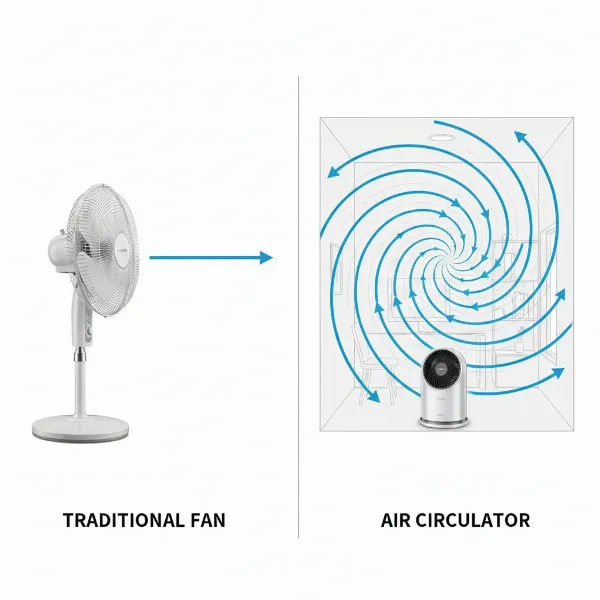
In the quest for a cooler home and lower electricity bills, electric fans remain an indispensable appliance. Yet, beneath their spinning blades lies a crucial choice that significantly impacts both performance and energy consumption: the motor type. For years, alternating current (AC) motors were the standard, but the advent of direct current (DC) motors has revolutionized the industry, promising superior efficiency and a host of other benefits. Understanding the differences between these two technologies is key to making an informed decision that suits your needs, your wallet, and the environment.
Electric Fans: Overview and Popular Types
Electric fans, from humble desk models to majestic ceiling installations, have evolved considerably since their inception. At their core, these devices use a motor to rotate blades, creating airflow to cool spaces or circulate air. Historically, most fans have relied on AC motors, which draw power directly from your home’s main electrical supply. These motors are robust and have been a reliable choice for decades, known for their straightforward operation.
However, the landscape has changed with the rise of DC motor technology in fans. DC motors convert alternating current from your home into direct current via an integrated transformer. This conversion allows for more precise control over the motor’s speed and torque. While traditional fan types like ceiling, table, and pedestal fans are available with both AC and DC motors, the motor type fundamentally alters their performance characteristics. AC motor fans are typically simpler in design and often come at a lower initial cost. In contrast, DC motor fans offer advanced features and significantly reduced running costs due to their inherent efficiency.
Guide to Choosing the Right Electric Fan
Selecting the perfect electric fan goes beyond just picking a style; it involves understanding your specific needs and how different fan technologies can meet them. The choice between an AC and DC motor fan will be a central consideration in this process, impacting everything from energy consumption to noise levels.
Determine Your Usage Needs
Before diving into technical specifications, consider where and how you’ll use your fan.
- Room Size: Larger rooms typically require fans with higher airflow capacity. A small desk fan is perfect for personal cooling, while a powerful ceiling or pedestal fan might be necessary for a spacious living area. The motor type influences how effectively a fan can move air across different settings.
- Purpose of Use: Are you seeking constant background air circulation, powerful immediate cooling, or a gentle breeze for sleep? DC fans excel in offering a wider range of speeds, allowing for subtle air movement ideal for bedrooms.
- Budget: Your budget isn’t just about the upfront purchase price. While AC fans often have a lower initial cost, DC fans typically offer substantial savings on electricity bills over their lifespan, making them a more cost-effective choice in the long run. It’s crucial to weigh the initial investment against ongoing operational expenses.
|
Our Picks for the Best Electric fan in 2026
As an Amazon Associate I earn from qualifying purchases.
|
||
| Num | Product | Action |
|---|---|---|
| 1 | 10" Modern Standing Fan for Bedroom, Sleek Oscillating Pedestal Fan, 3-Speed & Height Adjustable Compact Floor Fan for Home Office & Dorm |

|
| 2 | Dreo Tower Fan for Bedroom, 25ft/s Velocity Quiet Floor Fan, 90° Oscillating Fans for Indoors with 4 Speeds, 4 Modes, 8H Timer, Standing Fans, Bladeless Fan, Black, Nomad One (DR-HTF007) |
|
| 3 | Amazon Basics Air Circulator Fan, Desk Fan for Bedroom, Home and Office, With 90-Degree Tilt Head, 3 Speed Settings, Lightweight (3 LBS), 35 Watts, Black, 11.1"W x 6.3"D x 10.9"H |
|
| 4 | Dreo Fan for Bedroom, 120° Oscillating Standing Fan, Quiet Floor Fan with DC Motor, Pedestal Fan for Room, 9 Speeds, 4 modes, 20dB, 120° Manual Vertical, 37-42" Adjustable Height, 9H Timer, Black |
|
| 5 | Lasko 2520 Oscillating Stand Fan,White 16 Inch |
|
| 6 | Viniper Portable Rechargeable Fan, Small Desk Fan : 3 Speeds & about 8-24 Hours Longer Working, 180 Rotation, Portable Desktop Fan Small but Mighty, Strong Wind (White, Light Black Blade)6.2 Inch |
|
| 7 | Amazon Basics 16" Pedestal Fan with Remote, Floor Fan, Standing Fan for Bedroom, Living Room, Office, with 3 Speeds, 3 Modes, Timer, Dual-Layered Blades, Adjustable Height, Tilt Head, 60W, Black |
|
| 8 | XPOWER FC-100S Multipurpose 11 Pro Air Circulator Utility Fan with Oscillating Feature |
|
| 9 | LEVOIT Tower Fan for Bedroom, 25ft/s Velocity Standing Fan with 28dB Quiet for Sleep, Remoter, 12H Timer, 5 Speeds, 4 Modes, 90° Oscillation for Home, Office, Indoor, Bladeless 36 inch, White |
|
| 10 | Dreo Fan for Bedroom, 120° Oscillating Standing Fans, Quiet Floor Fan with DC Motor, 100ft Pedestal Fans for Room, 9 Speeds, 4 modes, 20dB, 120° Manual Vertical, 37-42" Adjustable Height, 9H Timer |
|
Key Criteria When Buying
Once you’ve identified your basic needs, evaluate fans based on these critical criteria:
- Power and Airflow: DC motor fans are remarkably efficient, capable of producing similar or even greater airflow than AC fans while consuming significantly less power. For instance, a 35W DC fan can match the airflow of a 60W AC fan, providing robust cooling with minimal energy draw. At full speed, AC fans commonly draw 60-100 watts, whereas DC fans peak around 35 watts and can operate as low as 5 watts on the lowest setting.
- Noise Level: One of the most compelling advantages of DC motor fans is their near-silent operation. AC fan motors, particularly at higher speeds, can produce a noticeable hum. DC motors involve less friction, resulting in a much quieter experience, which is especially beneficial for bedrooms, nurseries, or workspaces where peace is paramount.
- Features: DC motor fans generally offer more advanced features. They typically boast more speed options (often six, compared to AC fans’ three), precise speed control, and instant start/stop capabilities. Many DC fans also include convenient remote controls, timers, and reversible functions for winter use, circulating warm air.
- Brand and Reliability: The durability and lifespan of your fan are important considerations. DC motor fans, due to their efficient operation and lower heat generation, often have a longer service life and frequently come with extended warranties (e.g., up to 6 years), indicating manufacturers’ confidence in their longevity.
- Energy Saving: This is where DC motor fans truly shine. They are up to 70-88% more energy-efficient than their AC counterparts. This significant reduction in power consumption translates directly into lower electricity bills, making DC fans a smarter investment for environmentally conscious consumers or those looking to minimize utility costs.
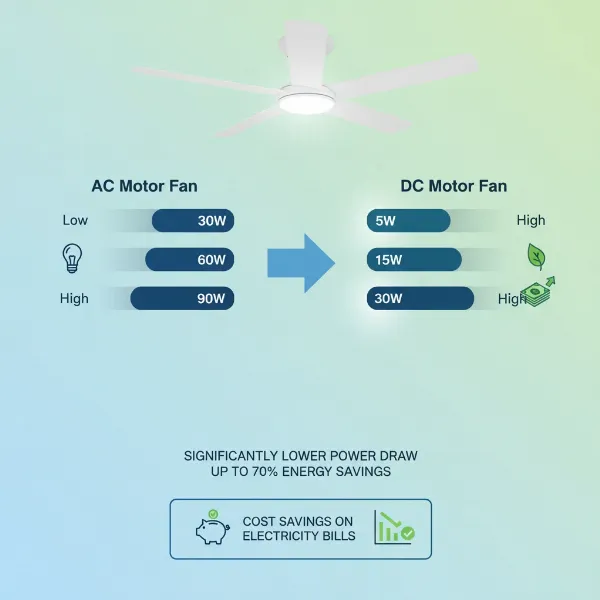 Graphic illustrating significant energy savings of DC motor fans compared to traditional AC motor fans.
Comparing Popular Electric Fan Types
When comparing AC motor fans and DC motor fans, the advantages of DC technology are clear, especially concerning energy efficiency and user experience.
- AC Motor Fans:
- Pros: Generally lower initial purchase price, simple mechanics, widely available.
- Cons: Higher energy consumption, louder operation (audible motor hum), fewer speed options, often require in-wall controllers for ceiling fans which can be more expensive to install initially.
- Best for: Budget-conscious buyers who prioritize upfront cost and may not use the fan extensively or require fine-tuned control and quietness.
- DC Motor Fans:
- Pros: Dramatically lower energy consumption (up to 88% less), ultra-quiet operation, more speed settings for precise control, often come with advanced features like remote control and reverse function, longer lifespan, lighter weight for easier installation.
- Cons: Typically have a higher initial purchase price.
- Best for: Consumers seeking long-term energy savings, quiet operation for sensitive areas like bedrooms, advanced features, and a commitment to eco-friendly living.
“Investing in a DC motor fan is not just about cooling; it’s about smart energy management. The savings on your electricity bill can quickly offset the initial cost, making it a wise long-term decision for any home.” – Alex Chen, Lead Technician at electricfanatic.com
Comparison Table of Electric Fan Characteristics by Motor Type
To provide a clearer picture, here’s a detailed comparison of key characteristics between typical AC and DC motor fans:
| Feature | AC Motor Fans | DC Motor Fans |
|---|---|---|
| Energy Consumption | High (60-100 Watts at full speed) | Low (35 Watts max, as low as 5-7 Watts on low) |
| Energy Savings | Standard | Up to 70-88% more efficient than AC |
| Noise Level | Noticeable motor hum, especially at high speeds | Ultra-quiet, nearly silent operation |
| Speed Options | Limited (typically 3) | Extensive (typically 6 or more) |
| Control | Wall switch, basic remote | Precise remote control, often with smart features |
| Reverse Function | Less common, often manual switch | Common, usually remote-controlled for winter use |
| Lifespan/Durability | Good, but shorter than DC | Longer service life, enhanced durability |
| Initial Cost | Lower | Higher |
| Installation | Standard wiring, may need specific wall controllers | Simpler wiring (can use normal wall switches), lighter motor |
| Responsiveness | Slower start/stop | Instant start/stop, quick acceleration/deceleration |
| Weight | Heavier motor | Lighter motor |
This table highlights why DC motor fans are increasingly becoming the preferred choice for their efficiency, comfort, and advanced capabilities.
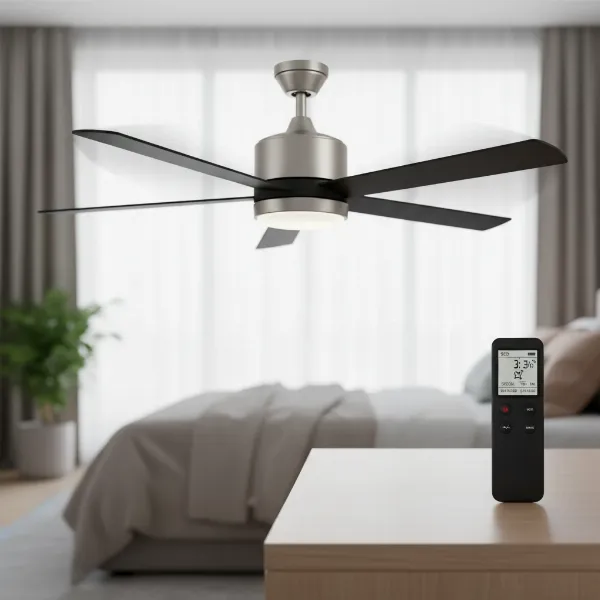 Modern DC motor ceiling fan operating silently with multiple speed settings and a wireless remote control.
Tips for Using and Maintaining Electric Fans
Regardless of motor type, proper use and maintenance are crucial for extending your fan’s lifespan and ensuring efficient operation.
Proper Fan Cleaning
Regular cleaning prevents dust buildup, which can hinder performance and airflow, and even pose a fire hazard.
- Frequency: Aim to clean your fan blades and motor housing every 1-3 months, or more frequently if used in dusty environments.
- Tools Needed: A soft cloth, mild soap and water, a vacuum cleaner with a brush attachment, and potentially a screwdriver for disassembling guards.
- Cleaning Steps:
- Always unplug the fan before cleaning.
- Remove the front guard (if applicable) and wipe down the blades. For ceiling fans, use a damp cloth.
- Use a vacuum to remove dust from the motor vents.
- Clean the guards with soap and water, then dry thoroughly before reattaching.
Safe and Efficient Fan Operation
Maximizing your fan’s effectiveness while ensuring safety is straightforward with a few key practices.
- Optimal Placement: Position your fan to create a cross-breeze or to push hot air out of a room. For personal cooling, direct airflow towards you.
- Adjust Speed Appropriately: Use higher speeds for initial cooling, then reduce to a lower, energy-saving setting once comfortable. DC fans excel here with their wide range of precise speed options.
- Avoid Continuous Use: While modern fans are designed for extended operation, giving them a break, especially AC models, can prolong their life. Utilize timers if available.
- Combine with Air Conditioning: Fans can help circulate cool air from an AC unit, allowing you to set your thermostat a few degrees higher and save energy.
Maintaining Fans for Extended Lifespan
Periodic checks and minor maintenance can significantly extend your fan’s operational life.
- Inspect for Wear and Tear: Regularly check fan blades for cracks or bends, and ensure all screws and fasteners are tight.
- Lubrication: Some older fan models may require occasional lubrication of the motor bearings. Always consult your fan’s manual before attempting this. DC motors typically require less maintenance in this regard due to their design.
- Proper Storage: If storing your fan for an off-season, clean it thoroughly, cover it to protect against dust, and store it in a dry place.
Where to Buy Reliable Electric Fans?
Purchasing an Electric Fan from a reputable source is crucial to ensure quality, warranty support, and access to customer service.
- Physical Retailers: Large electronics stores and home improvement centers often carry a wide selection of both AC and DC motor fans, allowing you to see models in person and compare features.
- Online Marketplaces: Websites like Amazon, official brand stores, and specialized fan retailers offer extensive choices, competitive pricing, and user reviews. Be sure to check seller ratings and return policies.
- Key Considerations When Buying:
- Check Warranty: Always verify the warranty period, especially for DC fans which often have longer guarantees.
- Product Inspection: Upon receipt, check the fan for any visible damage or defects.
- Read Reviews: Customer reviews can provide valuable insights into a fan’s real-world performance, noise levels, and durability.
Electric Fan Buying Guide
Making the final decision between an AC and DC motor fan can be simplified by revisiting your core priorities.
What is Your Budget?
Your budget is multifaceted. While an AC fan might save you money on the initial purchase (e.g., $50-$150 for a good quality AC fan vs. $150-$400+ for a comparable DC fan), the energy savings from a DC motor fan can quickly recoup that difference, potentially saving hundreds of dollars over its lifespan. If you plan to use the fan frequently or for many years, the long-term energy savings of a DC fan often make it the more economical choice despite a higher upfront cost.
How Large is Your Room?
The size of your room directly influences the necessary airflow, measured in Cubic Feet per Minute (CFM). Both AC and DC fans can provide powerful airflow, but DC fans often do so more efficiently across a wider range of settings. For very large rooms, a high-CFM DC ceiling fan could provide effective cooling without the high energy draw of multiple AC fans or a continuously running air conditioner.
Which Features Do You Need?
Consider the specific features that will enhance your comfort and convenience. If whisper-quiet operation, multiple precise speed settings, remote control, and a reverse function for winter are high on your list, a DC motor fan is undoubtedly the superior choice. If basic cooling and minimal features suffice, and you’re less concerned about long-term energy costs or noise, an AC fan could still be a viable option.
Conclusion
The debate between DC motor and AC motor fans ultimately boils down to a balance of initial investment, long-term operational costs, and desired performance features. While AC motor fans have served us well for decades, DC motor technology clearly emerges as the energy-saving champion. With up to 70-88% greater energy efficiency, significantly quieter operation, a wider array of speed settings, and enhanced durability, DC fans offer a superior cooling experience and substantial savings on electricity bills over their lifespan. Making the switch to a DC motor fan is a smart decision for anyone looking to reduce their carbon footprint, enjoy a more comfortable home environment, and optimize their energy expenditures.
Are you ready to embrace the quiet efficiency and significant savings that DC motor fans offer for your home?
Frequently Asked Questions
Are DC motor fans always more expensive upfront?
Generally, yes, DC motor fans do have a higher initial purchase price compared to AC motor fans. This is due to the more advanced technology and components involved in their manufacturing. However, this higher cost is often offset by their significant energy savings over time.
How much energy can a DC fan really save?
DC motor fans are remarkably energy-efficient, typically consuming up to 70-88% less electricity than traditional AC motor fans. For example, an AC fan might draw 60-100 watts at full speed, while a comparable DC fan might only draw 35 watts at its highest setting, and as low as 5-7 watts on its lowest setting.
Do AC fans have any advantages over DC fans?
The primary advantage of AC fans is their lower initial purchase price, making them a more budget-friendly option for those with tight upfront constraints. They are also simpler in design and have been a reliable standard for many years.
What is the lifespan difference between AC and DC fans?
Due to their more efficient operation, lower heat generation, and advanced design, DC motor fans generally have a longer lifespan than AC motor fans. Many DC fans come with extended warranties, often up to 6 years, reflecting their enhanced durability and reliability.