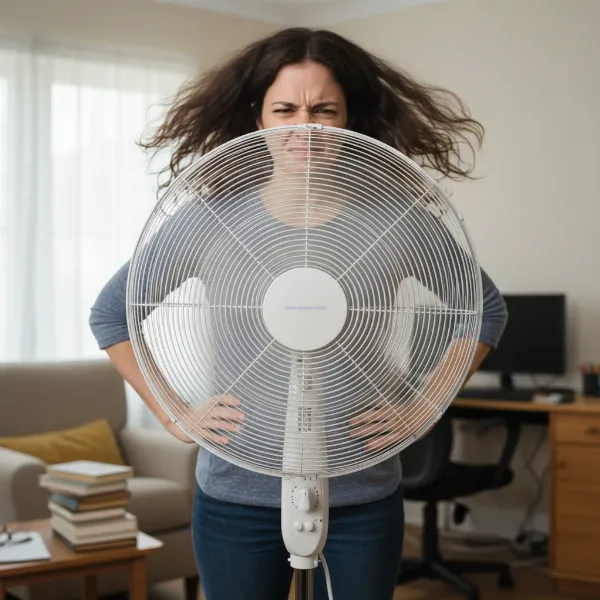
Is your tower fan blowing less cool air than it used to, or worse, recirculating dusty air? Over time, these sleek cooling companions can become a haven for dust, pet hair, and allergens, significantly impacting their performance and your indoor air quality. While the thought of taking apart a modern tower fan might seem daunting, often requiring specialized tools and a degree of mechanical prowess, the good news is you don’t have to. You can restore your fan’s efficiency and cleanliness with a few simple tools and a smart approach, all without unscrewing a single panel. This guide, drawing on years of practical experience with various electric fans, will walk you through effective, non-invasive methods to deep clean your tower fan and ensure it continues to provide refreshing breezes throughout your home.
Electric Fans: An Overview and Popular Types
Electric fans have been a cornerstone of home cooling for over a century, evolving from simple oscillating units to sophisticated, multi-functional devices. Their primary purpose remains constant: to circulate air, creating a cooling effect through convection and evaporation. Modern electric fans come in a variety of designs, each suited for different spaces and needs.
Common types include:
- Ceiling Fans: Mounted overhead, these fans are excellent for circulating air throughout large rooms, often complementing air conditioning systems. They are energy-efficient and provide widespread air movement.
- Table Fans: Compact and portable, table fans are ideal for personal cooling in small areas like desks or nightstands. They offer focused airflow.
- Pedestal Fans (Standing Fans): With adjustable height and oscillation, pedestal fans provide broader cooling for medium-sized rooms, making them versatile for various settings.
- Tower Fans: Known for their slim, vertical design, tower fans are space-saving and offer a wide oscillation arc, making them perfect for rooms where floor space is at a premium. They typically feature a bladeless or hidden-blade design for safety and aesthetics.
- Misting Fans/Evaporative Coolers: These fans combine air circulation with water misting or evaporative cooling, best suited for dry climates to add humidity and significantly lower temperatures.
- Bladeless Fans: Utilizing air multiplier technology, these fans produce a smooth, consistent airflow without visible spinning blades, often offering a sleek, modern aesthetic and enhanced safety.
Each type has its unique advantages and disadvantages, from the powerful, widespread circulation of ceiling fans to the targeted, quiet operation of some tower and bladeless models. Tower fans, in particular, are favored for their unobtrusive design and ability to cool a broad area without taking up much room.
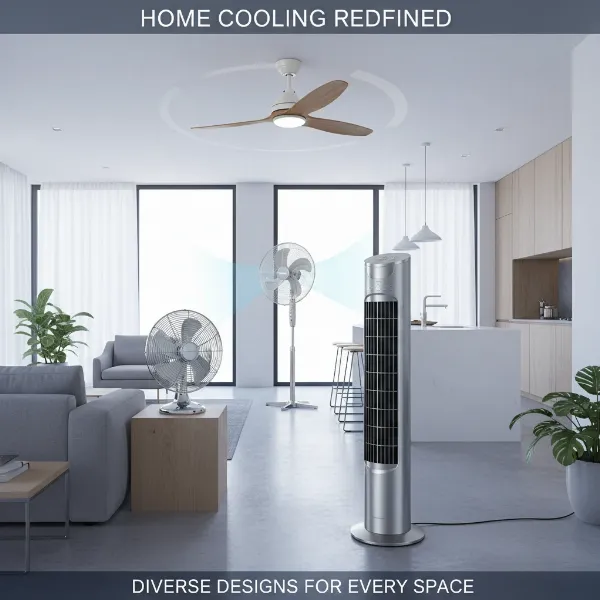 Different types of electric fans like ceiling, table, pedestal, and tower fans.
How to Clean a Tower Fan Without Taking It Apart
Cleaning a tower fan without disassembling it requires a strategic approach and the right tools. The goal is to dislodge and remove dust from the internal components, especially the cylindrical fan blades, without having to access them directly.
Tools You’ll Need:
- Compressed Air: Cans of compressed air are indispensable for blasting dust out of tight spaces. An air compressor with a narrow nozzle can also be used for a more powerful and sustainable option.
- Vacuum Cleaner with Brush Attachment: A powerful vacuum with a crevice or brush attachment is excellent for sucking up loose dust from vents and grilles.
- Microfiber Cloths: For wiping down exterior surfaces and catching dislodged dust.
- Long, Soft-Bristled Brush: A clean paintbrush, bottle brush, or a specialized flexible cleaning brush can help dislodge stubborn dust from internal grilles.
- Rubbing Alcohol (Optional): For stubborn grime on exterior surfaces.
- Safety Goggles (Recommended): To protect your eyes from flying dust.
Step-by-Step Cleaning Process
- Safety First: Unplug the Fan. Before you begin any cleaning, always ensure the fan is completely unplugged from the power outlet. This is crucial for your safety.
- Exterior Wipe-Down: Use a slightly damp microfiber cloth to wipe down the entire exterior surface of the tower fan. This removes superficial dust and grime. For sticky spots, a dab of rubbing alcohol on the cloth can be effective.
- Position for Access: Lay the tower fan down on its side or back on a protected surface (like an old sheet or newspaper). This often provides better access to the bottom air intake vents and internal components.
- Vacuum the Vents: Using your vacuum cleaner with a brush or crevice attachment, thoroughly vacuum all exterior vents—top, bottom, and sides. Focus on the intake vents, as this is where most dust accumulates before entering the fan’s interior.
- Blast with Compressed Air: This is the most critical step for internal cleaning.
- Direct the nozzle of the compressed air can into the fan’s vents, particularly where you can see the internal fan cylinder or blades.
- Spray in short bursts, moving the nozzle up and down and side to side to cover as much internal surface area as possible. You’ll likely see clouds of dust emerging from other vents, so it’s best to do this outdoors or in a well-ventilated area.
- If possible, try to rotate the fan manually (if it has exposed parts that allow this) while spraying to clean all sides of the internal cylinder.
Our Picks for the Best Electric fan in 2026As an Amazon Associate I earn from qualifying purchases.Num Product Action 1 Dreo Tower Fan for Bedroom, 25ft/s Velocity Quiet Floor Fan, 90° Oscillating Fans for Indoors with 4 Speeds, 4 Modes, 8H Timer, Standing Fans, Bladeless Fan, Black, Nomad One (DR-HTF007) 
2 Viniper Portable Rechargeable Fan, Small Desk Fan : 3 Speeds & about 8-24 Hours Longer Working, 180 Rotation, Portable Desktop Fan Small but Mighty, Strong Wind (White, Light Black Blade)6.2 Inch
3 10" Modern Standing Fan for Bedroom, Sleek Oscillating Pedestal Fan, 3-Speed & Height Adjustable Compact Floor Fan for Home Office & Dorm
4 LEVOIT Tower Fan for Bedroom, 25ft/s Velocity Standing Fan with 28dB Quiet for Sleep, Remoter, 12H Timer, 5 Speeds, 4 Modes, 90° Oscillation for Home, Office, Indoor, Bladeless 36 inch, White
5 XPOWER FC-100S Multipurpose 11 Pro Air Circulator Utility Fan with Oscillating Feature
6 Amazon Basics 16" Pedestal Fan with Remote, Floor Fan, Standing Fan for Bedroom, Living Room, Office, with 3 Speeds, 3 Modes, Timer, Dual-Layered Blades, Adjustable Height, Tilt Head, 60W, Black
7 Dreo Fan for Bedroom, 120° Oscillating Standing Fans, Quiet Floor Fan with DC Motor, 100ft Pedestal Fans for Room, 9 Speeds, 4 modes, 20dB, 120° Manual Vertical, 37-42" Adjustable Height, 9H Timer
8 Lasko 2520 Oscillating Stand Fan,White 16 Inch
9 Dreo Fan for Bedroom, 120° Oscillating Standing Fan, Quiet Floor Fan with DC Motor, Pedestal Fan for Room, 9 Speeds, 4 modes, 20dB, 120° Manual Vertical, 37-42" Adjustable Height, 9H Timer, Black
10 Amazon Basics Air Circulator Fan, Desk Fan for Bedroom, Home and Office, With 90-Degree Tilt Head, 3 Speed Settings, Lightweight (3 LBS), 35 Watts, Black, 11.1"W x 6.3"D x 10.9"H
- Dislodge Stubborn Dust with a Brush: For particularly stubborn dust or pet hair caught on internal grilles or blades, use a long, soft-bristled brush (like a clean paintbrush or a flexible bottle brush). Gently insert the brush through the vents and carefully dislodge the debris. Have your vacuum nearby to immediately suck up any dust you loosen.
- Final Exterior Clean: Once you’ve tackled the interior, give the exterior one last wipe-down to remove any remaining dust that settled during the cleaning process.
“Regular cleaning, especially using compressed air and a good vacuum, is key to maintaining optimal airflow and preventing dust buildup that can significantly reduce your fan’s lifespan.” – Sarah Chen, Home Appliance Repair Specialist
Person cleaning a tower fan's vents using a can of compressed air and a vacuum.
Advanced Tips for a Deeper Clean (Still No Disassembly!)
- The Leaf Blower Method (Outdoor Use Only): For extremely dirty fans, taking them outside and using a leaf blower on a low setting can be incredibly effective at blasting out years of accumulated dust. Ensure you wear eye protection and a mask.
- Pipe Cleaners or Straw Brushes: For very narrow slits in the grilles, pipe cleaners or specialized straw cleaning brushes can reach in and grab dust that other tools might miss.
- Frequency: Aim to clean your tower fan at least once every 1-2 months, or more frequently if you have pets or live in a dusty environment.
Maintaining Your Tower Fan for Longevity and Efficiency
Beyond cleaning, proper usage and routine maintenance can significantly extend the life and enhance the performance of your tower fan.
Best Practices for Optimal Use
- Strategic Placement: Position your fan in a location that promotes optimal airflow, ideally near an open window to draw in fresh air or opposite an air conditioning vent to help circulate cooled air. Avoid placing it directly against walls or furniture that could obstruct air intake or output.
- Adjust Speed Sensibly: Use the lowest effective fan speed. Higher speeds use more energy and can create more noise. Only increase the speed when necessary for comfort.
- Avoid Continuous Operation: While fans are designed for continuous use, giving them occasional breaks, especially during cooler parts of the day, can prolong motor life and reduce wear and tear.
- Pair with Other Cooling Methods: For maximum efficiency, use your tower fan in conjunction with open windows during cooler evenings or alongside an air conditioner to distribute cool air more effectively.
Safeguarding Your Fan: Safety Tips
- Always Unplug Before Handling: Never attempt to move, clean, or inspect your fan while it’s plugged in.
- Keep Clear of Water: Electric fans are not designed for wet environments unless specifically rated for outdoor or damp use. Avoid using them near sinks, bathtubs, or in areas where they could get wet.
- Inspect Cords Regularly: Periodically check the power cord for fraying, cuts, or damage. A damaged cord is a fire hazard and should be replaced or repaired by a professional.
- Supervise Children and Pets: Ensure children and pets cannot poke objects into the fan grilles, especially with hidden-blade designs where the temptation might be to explore.
Ensuring Longevity Through Maintenance
- Regular Cleaning Schedule: As detailed above, consistent cleaning of both the exterior and interior (without disassembly) is the most critical maintenance step. Dust buildup stresses the motor and reduces airflow.
- Inspect for Loose Parts: Occasionally, check if the base or any visible parts are loose. Tighten screws if necessary.
- Proper Storage: When not in use for extended periods (e.g., during winter), clean the fan thoroughly, cover it to protect it from dust, and store it in a dry, cool place.
- Listen for Unusual Noises: Any new or unusual noises (grinding, squealing, rattling) could indicate a problem with the motor or internal components. If you hear such noises, discontinue use and consider professional inspection.
By incorporating these simple usage and maintenance tips into your routine, you can ensure your tower fan operates efficiently, safely, and quietly for many years to come, providing consistent comfort whenever you need it.
Conclusion
Maintaining a clean tower fan is essential for its performance, longevity, and the quality of air in your home. As we’ve explored, achieving a deep clean doesn’t require complex disassembly; with the right tools like compressed air, a vacuum, and a few brushes, you can effectively remove accumulated dust and debris. Regularly incorporating these cleaning practices, alongside smart usage and maintenance habits, ensures your tower fan remains a reliable and efficient cooling companion. Don’t let dust diminish your comfort—a little effort goes a long way in keeping your breeze fresh and your fan functioning optimally.
What are your go-to tips for keeping your Electric Fans in top shape?
Frequently Asked Questions
Why is my tower fan blowing weak air even on high settings?
Weak airflow is almost always a sign of significant dust buildup inside the fan, particularly on the internal blades and grilles. This dust obstructs air pathways, reducing the fan’s efficiency and overall air output. Regular cleaning without disassembly, especially using compressed air, can effectively resolve this issue by clearing these blockages.
How often should I clean my tower fan?
It is recommended to clean your tower fan at least once every 1-2 months. If you live in a dusty environment, have pets, or use the fan frequently, cleaning it more often (e.g., every 2-3 weeks) will help maintain optimal performance and air quality.
Can I use a wet cloth to clean the inside of my tower fan?
No, it is strongly advised not to use a wet cloth to clean the internal components of a tower fan without disassembly. Moisture can damage the electronic components and motor, posing a safety hazard. Stick to dry methods like compressed air, vacuuming, and dry brushes for the interior. A damp cloth is only safe for wiping down the exterior casing.
Is it safe to use a leaf blower to clean a tower fan?
Using a leaf blower can be very effective for removing heavy dust buildup, but it should only be done outdoors. Always wear eye protection and a dust mask. Hold the fan securely and ensure the leaf blower is on a low to medium setting to avoid damaging delicate internal components.
What are some signs that my tower fan needs cleaning?
Key indicators that your tower fan needs cleaning include reduced airflow, an increase in operational noise (as the motor works harder to push air through dusty passages), visible dust accumulation on exterior grilles, or a musty odor coming from the fan. Addressing these signs promptly will restore performance and air quality.
Can cleaning a tower fan improve its energy efficiency?
Yes, absolutely. When a tower fan is clogged with dust, its motor has to work harder to move air, consuming more energy for less output. By cleaning the fan and removing obstructions, you allow air to flow freely, reducing the strain on the motor and improving its energy efficiency, leading to lower electricity consumption.
What if I can’t reach all the dust with compressed air or a brush?
While non-disassembly methods are effective for most dust, some deeply embedded or matted dust might remain inaccessible. For persistent issues, or if the fan’s performance doesn’t improve significantly after cleaning, you might consider professional servicing. However, for regular maintenance, the methods outlined usually suffice.