The subtle hum or robust whir of an electric fan is more than just background noise; it’s a testament to the engineering behind its blades. While often overlooked, the material of an electric fan’s blades plays a pivotal role in its performance, durability, and, crucially, its noise level. For anyone seeking to cool their space effectively without disrupting their peace, understanding the difference between metal and plastic fan blades is essential. Are you tired of fans that sound like a mini-jet engine, or perhaps you need industrial-level airflow? Let’s delve into the core distinctions to help you choose the ideal electric fan that perfectly matches your environment and needs.
Electric Fan Blades: An Overview of Materials
Electric fan blades, the rotating components that push air, are typically crafted from two primary materials: metal or plastic. Each material brings its own set of characteristics to the table, influencing everything from the fan’s weight and rigidity to its overall performance and acoustic footprint.
Metal fan blades are commonly made from robust materials like aluminum or steel. These blades are known for their strength and ability to maintain their shape, even at high rotational speeds. On the other hand, plastic fan blades often utilize materials such as ABS (Acrylonitrile Butadiene Styrene) or polypropylene. These plastics are valued for their lightweight nature and the flexibility they offer in design, allowing for intricate aerodynamic shapes. The fundamental difference in their composition—weight and rigidity—is what primarily dictates their operational characteristics, especially when it comes to noise.
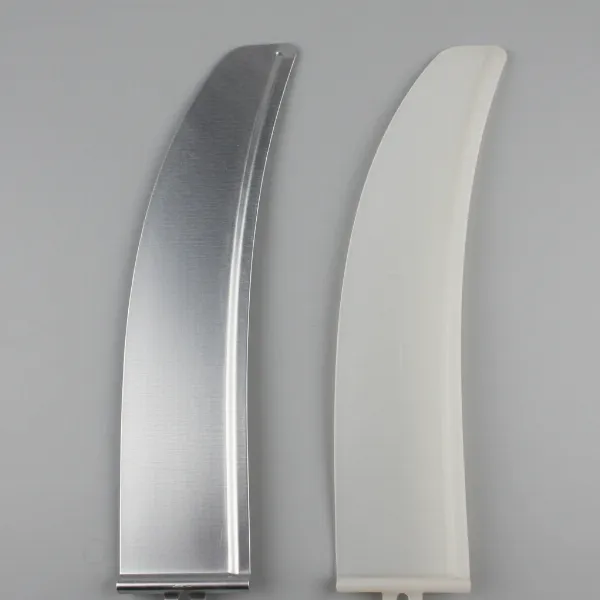 Close-up comparison of a rigid metal fan blade and a flexible plastic fan blade, showing material differences.
Decoding Fan Blade Noise: Metal vs. Plastic
When it comes to the sound an electric fan produces, the blade material is a significant factor. Your choice here can profoundly impact the tranquility of your living or working space.
The Quieter Choice: Plastic Fan Blades
|
Our Picks for the Best Electric fan in 2026
As an Amazon Associate I earn from qualifying purchases.
|
||
| Num | Product | Action |
|---|---|---|
| 1 | Viniper Portable Rechargeable Fan, Small Desk Fan : 3 Speeds & about 8-24 Hours Longer Working, 180 Rotation, Portable Desktop Fan Small but Mighty, Strong Wind (White, Light Black Blade)6.2 Inch |

|
| 2 | Amazon Basics Air Circulator Fan, Desk Fan for Bedroom, Home and Office, With 90-Degree Tilt Head, 3 Speed Settings, Lightweight (3 LBS), 35 Watts, Black, 11.1"W x 6.3"D x 10.9"H |
|
| 3 | LEVOIT Tower Fan for Bedroom, 25ft/s Velocity Standing Fan with 28dB Quiet for Sleep, Remoter, 12H Timer, 5 Speeds, 4 Modes, 90° Oscillation for Home, Office, Indoor, Bladeless 36 inch, White |
|
| 4 | Dreo Fan for Bedroom, 120° Oscillating Standing Fans, Quiet Floor Fan with DC Motor, 100ft Pedestal Fans for Room, 9 Speeds, 4 modes, 20dB, 120° Manual Vertical, 37-42" Adjustable Height, 9H Timer |
|
| 5 | Lasko 2520 Oscillating Stand Fan,White 16 Inch |
|
| 6 | XPOWER FC-100S Multipurpose 11 Pro Air Circulator Utility Fan with Oscillating Feature |
|
| 7 | 10" Modern Standing Fan for Bedroom, Sleek Oscillating Pedestal Fan, 3-Speed & Height Adjustable Compact Floor Fan for Home Office & Dorm |
|
| 8 | Dreo Tower Fan for Bedroom, 25ft/s Velocity Quiet Floor Fan, 90° Oscillating Fans for Indoors with 4 Speeds, 4 Modes, 8H Timer, Standing Fans, Bladeless Fan, Black, Nomad One (DR-HTF007) |
|
| 9 | Amazon Basics 16" Pedestal Fan with Remote, Floor Fan, Standing Fan for Bedroom, Living Room, Office, with 3 Speeds, 3 Modes, Timer, Dual-Layered Blades, Adjustable Height, Tilt Head, 60W, Black |
|
| 10 | Dreo Fan for Bedroom, 120° Oscillating Standing Fan, Quiet Floor Fan with DC Motor, Pedestal Fan for Room, 9 Speeds, 4 modes, 20dB, 120° Manual Vertical, 37-42" Adjustable Height, 9H Timer, Black |
|
Generally, plastic fan blades are the quieter option. Their lighter weight and inherent flexibility contribute to less mechanical interference and vibration during operation. Because they are lighter, plastic blades place less strain on the fan’s motor, resulting in reduced motor noise and a smoother rotation. This makes fans with plastic blades an excellent choice for environments where minimizing noise is a top priority, such as bedrooms, nurseries, home offices, or study rooms. The gentle hum of a plastic blade fan allows for undisturbed sleep, focused work, or a peaceful ambiance.
The Powerhouse Hum: Metal Fan Blades
In contrast, metal fan blades tend to generate more noise. Their heavier and more rigid construction, while beneficial for powerful airflow, can lead to increased vibration, particularly at higher speeds. This vibration can be transferred through the fan’s body and housing, amplifying the sound. Additionally, the stronger motors required to drive heavier metal blades can also contribute to a louder operational noise. While not ideal for quiet, intimate spaces, the noise from metal blade fans is often deemed acceptable, and even necessary, in settings where powerful airflow takes precedence over silent operation, such as commercial kitchens, workshops, garages, or outdoor areas.
Beyond Material: Other Factors Influencing Fan Noise
While blade material plays a crucial role, it’s not the sole determinant of a fan’s noise level. Several other factors can influence how loud or quiet your electric fan will be:
- Fan Speed: Unsurprisingly, the faster a fan spins, the more air it displaces, and the more noise it typically generates.
- Blade Design and Aerodynamics: The shape, angle, and number of blades significantly impact how smoothly air flows and how much turbulence is created. Well-designed blades can reduce aerodynamic noise.
- Motor Quality: High-quality motors are often engineered with better insulation and vibration-reducing measures, contributing to quieter overall operation, regardless of blade material.
- Balance and Alignment: Unbalanced or misaligned blades, whether metal or plastic, can cause excessive vibration and noise. Regular maintenance helps keep blades balanced.
- Installation Method: How a fan is mounted or placed can affect noise transmission. A fan directly attached to a resonant surface may seem louder.
- Air Resistance: Obstructions in the airflow path, such as dirty grilles or tight enclosures, can increase resistance and thus fan noise.
Performance and Durability: A Head-to-Head
Beyond noise, the material of your fan blades also dictates their effectiveness in moving air and how well they stand up to the test of time and environment.
Airflow and Cooling Power
When it comes to sheer air-moving capability, metal blades generally hold an advantage. Their rigidity allows them to cut through the air with less flex, creating a stronger, more direct, and robust airflow. This makes metal blade fans ideal for ventilating larger areas, industrial spaces, or applications where maximum air circulation is critical. Plastic blades, while effective, typically provide a more moderate airflow. They are perfectly suited for personal cooling, small to medium-sized rooms, or situations where a softer breeze is preferred.
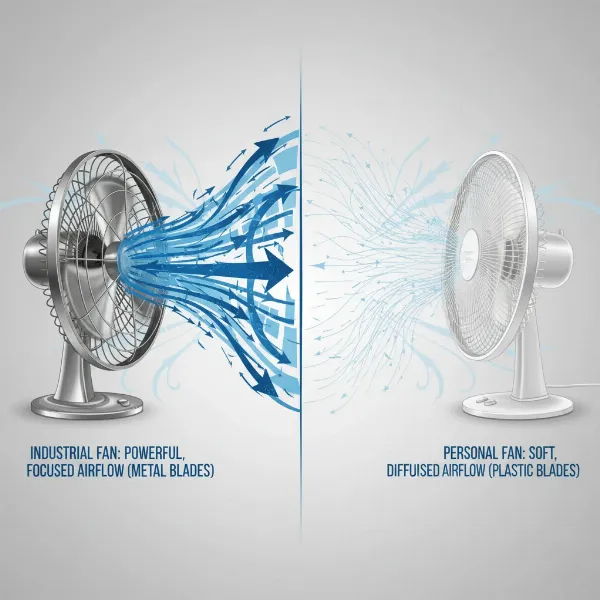 Visual comparison of strong, directed airflow from a metal fan and gentle, diffuse airflow from a plastic fan.
Lifespan and Resilience
Durability is another key differentiator. Metal fan blades, usually made from steel or aluminum, are renowned for their strength and resistance to physical damage. They can withstand impacts and perform reliably in demanding environments, including those with extreme temperatures. However, metal blades require proper coatings to prevent rust and corrosion, especially in humid conditions. Without this protection, they can degrade over time.
Plastic fan blades offer excellent resistance to rust and corrosion, making them a superb choice for humid environments like bathrooms or coastal regions. They don’t warp from moisture as wood blades might. However, plastic blades can be more prone to cracking or deforming under extreme stress, impact, or prolonged exposure to UV rays if not specifically treated. For long-term outdoor use, specialized UV-stabilized plastics are often necessary to prevent material breakdown and color fading.
Practical Considerations for Choosing Your Electric Fan
Selecting the right electric fan involves balancing various practical aspects that extend beyond just noise and airflow.
Weight and Portability
Plastic fan blades contribute to a lighter overall fan unit. This makes fans with plastic blades incredibly easy to move from room to room, ideal for those who need flexible cooling solutions. The reduced weight also places less strain on the motor, potentially leading to a longer motor lifespan. Conversely, fans equipped with metal blades are typically heavier. While this can sometimes imply greater stability, it also makes them less portable, often better suited for stationary use in a fixed location.
Cost and Energy Efficiency
For budget-conscious consumers, fans with plastic blades are generally more affordable at the point of purchase. Their lighter weight and the less powerful motors they require can also translate to lower electricity consumption over time, making them a more energy-efficient option for everyday domestic use. Metal blade fans, due to their robust construction and the more powerful motors needed, usually come with a higher upfront cost. While they may consume more power at peak performance, in specific large-scale or industrial applications, their efficiency in moving vast volumes of air per rotation can balance out energy usage when appropriately matched to the task.
Maintenance and Safety
Both types of fan blades require routine cleaning to maintain optimal performance and hygiene. Plastic blades are straightforward to wipe down and are naturally resistant to rust. Metal blades are also easy to clean, but it’s crucial to inspect any protective coatings for chips or scratches that could expose the metal to moisture and lead to rust.
From a safety perspective, both plastic and metal bladed fans are safe when properly enclosed within a sturdy protective grille. However, the higher momentum of heavier metal blades means that fans featuring them demand stricter safety standards and robust housing to prevent accidental contact, particularly in high-speed industrial models.
Finding Your Ideal Electric Fan: A Buying Guide
Making the best choice between metal and plastic fan blades ultimately comes down to understanding your specific needs and priorities.
What is your primary need? (Quiet vs. Power)
If a serene, quiet environment is paramount—for sleeping, studying, or relaxation—a fan with plastic blades will likely be your best bet. If you require powerful, widespread airflow for larger or more demanding spaces, and a higher noise level is tolerable, then a metal blade fan will deliver the robust performance you need.
Where will the fan be used? (Room size, environment)
For personal use, small bedrooms, or quiet living areas, plastic blade fans are generally ideal. Their moderate airflow and quiet operation are perfectly suited for these spaces. For large open-plan living areas, workshops, garages, or outdoor patios, a metal blade fan might be more effective in circulating air across a wider area. Consider the humidity levels; plastic offers inherent rust resistance, while metal needs proper treatment.
What is your budget?
If cost-effectiveness and ongoing energy savings are significant considerations, plastic blade fans typically offer a more economical solution. For those willing to invest in superior durability and maximum airflow, especially for heavy-duty applications, a metal blade fan represents a long-term investment.
Top Picks: Comparing Popular Electric Fan Blade Options
While specific product recommendations are beyond the scope here, we can categorize typical fan types by their blade material preference.
Most desk fans, tower fans, and personal fans designed for home use commonly feature plastic blades. These are engineered for portability, quiet operation, and energy efficiency, making them popular choices for individual cooling needs in bedrooms, living rooms, and small offices.
Conversely, many pedestal fans, floor fans, and industrial-grade fans often come with metal blades. These robust units are built to deliver powerful air circulation across larger areas, making them suitable for commercial spaces, workshops, or outdoor events where maximum airflow is prioritized over minimal noise. Even some high-end residential models that emphasize powerful cooling and a sleek, modern aesthetic may opt for metal blades.
Essential Tips for Electric Fan Usage and Maintenance
To ensure your electric fan, regardless of blade material, performs optimally and lasts for years, proper usage and maintenance are key.
Keep Your Fan Clean for Optimal Performance
Dust and debris accumulate on fan blades and grilles, impeding airflow and forcing the motor to work harder, which can increase noise and reduce efficiency. Aim to clean your fan every few weeks during regular use. Unplug the fan, remove the grille, and wipe down the blades with a damp cloth or a soft brush. For stubborn dust, a vacuum cleaner attachment can be useful. Ensure everything is dry before reassembling.
Maximizing Fan Efficiency and Safety
Position your fan strategically to enhance air circulation. Placing it near a window can help draw in fresh air or push out stale air. Avoid positioning it directly against walls or furniture that could block airflow. Use the lowest effective speed setting to conserve energy and minimize noise. While fans are built for continuous use, giving them occasional breaks, especially high-speed metal fans, can contribute to their longevity. Always ensure the fan is on a stable, level surface to prevent wobbling and potential noise or tip-overs.
Extending Your Fan’s Lifespan
Periodically check for any loose screws or components and tighten them. For older models, especially those with metal blades, a small amount of lubricant on the motor shaft (if accessible and recommended by the manufacturer) can help reduce friction and noise. When not in use, store your fan in a clean, dry place, ideally covered, to protect it from dust and environmental damage. This is particularly important for metal blade fans to prevent rust in humid storage conditions, and for plastic blades to avoid UV degradation if stored outdoors.
Where to Purchase a Reliable Electric Fan
Finding a reputable retailer is as important as choosing the right fan material. You can typically purchase electric fans from:
- Electronics stores: These often have a wide selection and knowledgeable staff.
- Supermarkets and department stores: Good for basic models and convenience.
- Online retailers: Offer immense variety and competitive pricing, but always check seller reviews and return policies.
When buying, always check the product thoroughly for any visible damage. Confirm the warranty details and understand the return policy. Reading customer reviews can provide real-world insights into a fan’s noise levels and durability.
Conclusion
The choice between metal and plastic fan blades for your electric fan is not a matter of one being inherently superior, but rather which material best suits your individual needs and the environment you wish to cool. Plastic blades generally offer a quieter, more lightweight, and often more affordable solution, ideal for personal comfort in tranquil settings. Metal blades, while typically noisier and heavier, deliver robust airflow and exceptional durability, making them the powerhouse choice for larger, more demanding spaces.
By considering factors like noise tolerance, required airflow, durability, portability, and budget, you can confidently select an Electric Fan that provides optimal comfort for years to come. What’s your top priority when selecting a fan for your space?
Frequently Asked Questions
Are metal fan blades more durable than plastic?
Yes, metal fan blades are generally more durable and resistant to physical damage and extreme temperatures. However, they can be susceptible to rust and corrosion if not properly coated, whereas plastic blades are naturally rust-resistant.
Do plastic fan blades warp over time?
Plastic fan blades can warp or deform over extended periods, especially under extreme stress, impact, or prolonged exposure to direct sunlight and UV radiation if the plastic material is not specifically treated for such conditions.
Can I use a metal blade fan in a humid environment?
Metal blade fans can be used in humid environments, but it’s crucial that their blades are treated with a protective coating (like zinc or galvalume) to prevent rust and corrosion. Regular inspection of these coatings is advised.
What factors contribute most to fan noise?
Beyond blade material, key factors contributing to fan noise include rotational speed, blade design and aerodynamics, motor quality, overall fan balance, installation method, and environmental factors like air resistance.
Are quieter fans less powerful?
Not necessarily. While plastic blades tend to be quieter and offer moderate airflow, advancements in fan technology, including aerodynamic blade designs and high-quality motors, mean that many quiet fans can still deliver effective and efficient cooling. The “power” of a fan is a balance of airflow volume and velocity.