Are you tired of tossing and turning on warm nights, only to be kept awake by a noisy fan? Or perhaps you’re seeking the perfect cooling solution for your little one’s nursery, where even the slightest hum can disrupt precious sleep? The quest for a truly quiet electric fan often feels like a paradox, as powerful airflow frequently comes with unwanted noise. However, advancements in fan technology have brought forth a new generation of electric fans designed to deliver refreshing breezes without disturbing your peace.
As an administrator for electricfanatic.com and a technician with over a decade of hands-on experience, I’ve seen countless fan models evolve. My goal is to guide you through the intricacies of selecting an electric fan that is not only effective but also whisper-quiet, ensuring a comfortable and tranquil environment for sleeping adults and babies alike. This guide will help you navigate the best quiet fans available in 2026, focusing on their performance, durability, and essential safety features.
Electric Fans: An Overview and Popular Types
Electric fans have been a household staple for over a century, evolving from simple oscillating blades to sophisticated air circulators. Their primary function is to create a wind chill effect, making a room feel cooler by accelerating the evaporation of sweat from the skin. Unlike air conditioners that cool the air itself, fans primarily focus on air movement.
Historically, fans were loud and bulky, but modern designs prioritize efficiency and quiet operation. Today, electric fans come in several popular types, each with distinct advantages and disadvantages:
- Pedestal Fans: These stand on an adjustable pole, allowing for varying heights. They typically offer wide oscillation and are effective for cooling larger areas. Their size, however, can sometimes make them less ideal for very small spaces.
- Tower Fans: Known for their sleek, space-saving vertical design, tower fans often feature bladeless or concealed-blade technology, making them safer for homes with children and pets. They usually offer a wide oscillation range and often include smart features like remote controls and timers.
- Desk Fans: Compact and portable, desk fans are perfect for personal cooling in small areas, such as a bedside table, desk, or nursery changing station. While convenient, their smaller size means they deliver a more localized airflow.
- Bladeless Fans: These fans draw air in through a base and project it through an annular jet, creating a smooth, uninterrupted flow. They are often considered safer, easier to clean, and sometimes quieter due to the absence of traditional blades.
- Air Circulators: Designed to move air throughout an entire room rather than just blowing air directly, air circulators can be highly effective for even cooling. Many models are engineered to be remarkably quiet, even on higher settings.
Understanding these types is the first step in finding the perfect quiet fan for your specific needs, particularly when undisturbed sleep or a serene nursery environment is paramount.
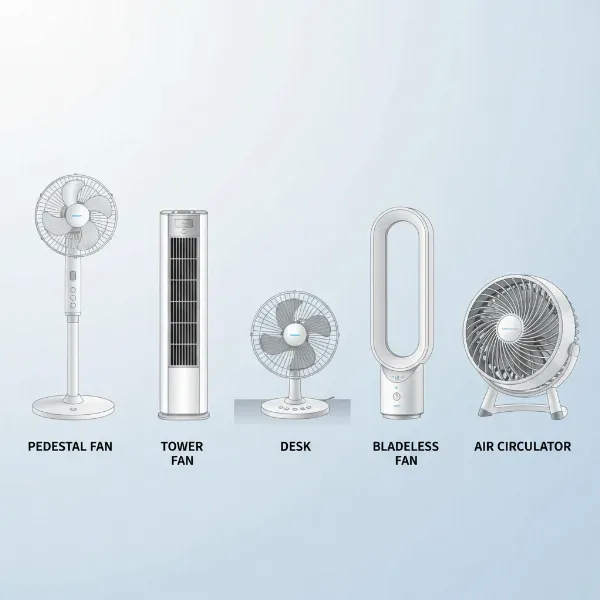 Visual comparison of different quiet electric fan types: pedestal, tower, desk, bladeless, air circulator.
How to Choose the Right Quiet Electric Fan
Selecting a fan that truly lives up to its “quiet” claim requires careful consideration. It’s not just about aesthetics or price; it’s about performance in the most critical environment: your bedroom or your baby’s nursery.
Determining Your Usage Needs
Before diving into specifications, consider where and how the fan will be used:
- Room Size: For smaller rooms like nurseries or compact bedrooms, a desk or small tower fan might suffice. Larger master bedrooms or open-plan areas could benefit from a powerful pedestal fan or a wider oscillating tower fan.
- Purpose: Is it purely for cooling during sleep, or do you also need it for white noise? Some quiet fans are so silent they don’t produce any background hum, which might not be ideal if you prefer gentle ambient noise to mask outside disturbances.
- Budget: Quiet fans, especially those with advanced features and ultra-low decibel ratings, can vary significantly in price. Determine a realistic budget that balances performance with affordability.
|
Our Picks for the Best Electric fan in 2026
As an Amazon Associate I earn from qualifying purchases.
|
||
| Num | Product | Action |
|---|---|---|
| 1 | XPOWER FC-100S Multipurpose 11 Pro Air Circulator Utility Fan with Oscillating Feature |

|
| 2 | Lasko 2520 Oscillating Stand Fan,White 16 Inch |
|
| 3 | Dreo Tower Fan for Bedroom, 25ft/s Velocity Quiet Floor Fan, 90° Oscillating Fans for Indoors with 4 Speeds, 4 Modes, 8H Timer, Standing Fans, Bladeless Fan, Black, Nomad One (DR-HTF007) |
|
| 4 | Dreo Fan for Bedroom, 120° Oscillating Standing Fan, Quiet Floor Fan with DC Motor, Pedestal Fan for Room, 9 Speeds, 4 modes, 20dB, 120° Manual Vertical, 37-42" Adjustable Height, 9H Timer, Black |
|
| 5 | Amazon Basics Air Circulator Fan, Desk Fan for Bedroom, Home and Office, With 90-Degree Tilt Head, 3 Speed Settings, Lightweight (3 LBS), 35 Watts, Black, 11.1"W x 6.3"D x 10.9"H |
|
| 6 | Amazon Basics 16" Pedestal Fan with Remote, Floor Fan, Standing Fan for Bedroom, Living Room, Office, with 3 Speeds, 3 Modes, Timer, Dual-Layered Blades, Adjustable Height, Tilt Head, 60W, Black |
|
| 7 | Viniper Portable Rechargeable Fan, Small Desk Fan : 3 Speeds & about 8-24 Hours Longer Working, 180 Rotation, Portable Desktop Fan Small but Mighty, Strong Wind (White, Light Black Blade)6.2 Inch |
|
| 8 | 10" Modern Standing Fan for Bedroom, Sleek Oscillating Pedestal Fan, 3-Speed & Height Adjustable Compact Floor Fan for Home Office & Dorm |
|
| 9 | Dreo Fan for Bedroom, 120° Oscillating Standing Fans, Quiet Floor Fan with DC Motor, 100ft Pedestal Fans for Room, 9 Speeds, 4 modes, 20dB, 120° Manual Vertical, 37-42" Adjustable Height, 9H Timer |
|
| 10 | LEVOIT Tower Fan for Bedroom, 25ft/s Velocity Standing Fan with 28dB Quiet for Sleep, Remoter, 12H Timer, 5 Speeds, 4 Modes, 90° Oscillation for Home, Office, Indoor, Bladeless 36 inch, White |
|
Key Criteria for Selection
Once you understand your needs, focus on these critical features:
- Noise Level (Decibels – dB): This is the most crucial factor. For sleeping environments, look for fans with decibel ratings under 30 dB on their lowest settings. For reference, a whisper is around 30 dB, and a quiet library is about 40 dB. Anything above 40 dB can be disruptive for light sleepers. Many top-tier quiet fans boast ratings as low as 15-20 dB.
- Airflow and Power: A quiet fan is useless if it doesn’t move enough air. Check for specifications like “airflow velocity” (measured in ft/s) or “airflow volume” (CFM – cubic feet per minute). Look for models that provide effective cooling even on their quietest settings.
- Features for Sleep & Nurseries:
- Sleep Mode: Many fans include a dedicated sleep mode that reduces fan speed and dims display lights to ensure minimal disturbance. Some even gradually decrease speed over time.
- Timer: A programmable timer is invaluable, allowing the fan to run for a set period before automatically turning off, saving energy and ensuring you don’t get too cold in the early morning hours.
- Remote Control: Adjusting settings without leaving your bed or disturbing a sleeping baby is a huge convenience. Look for remotes with glow-in-the-dark buttons for easy nighttime use.
- Oscillation: Wide oscillation helps distribute cool air evenly across the room, preventing hot spots.
- Night Light: For nurseries, a built-in soft night light can be a useful addition, providing gentle illumination without being overly bright.
- Safety (Bladeless designs): Fans with no exposed blades are essential for nurseries or homes with curious toddlers to prevent accidental injuries.
- Brand and Reliability: Established brands often offer better warranties and customer support. Look for reviews that mention long-term durability and consistent performance.
- Energy Efficiency: DC (Direct Current) motors are typically more energy-efficient and quieter than traditional AC (Alternating Current) motors. This can lead to savings on your electricity bill over time.
Comparing Popular Fan Types for Quietness
- Pedestal Fans vs. Tower Fans: Tower fans often excel in quiet operation due to their internal design, which can dampen noise more effectively than traditional bladed pedestal fans. However, some advanced pedestal fans, especially those with DC motors and optimized blade designs, can also be exceptionally quiet.
- Bladeless vs. Traditional Fans: Bladeless fans generally offer a smoother, less turbulent airflow, which can result in a quieter experience, especially at lower speeds. They also eliminate the mechanical noise associated with rapidly spinning blades.
- Air Circulators: While designed for powerful air movement, many modern air circulators are engineered with quietness in mind, using aerodynamic designs to minimize turbulence and motor noise.
Ultimately, the “best” type depends on your specific needs, but focusing on decibel ratings and quiet-specific features will guide you to the right choice.
Top 5 Quietest Electric Fans for Sleeping and Nurseries in 2026
After extensive research and evaluating fans known for their exceptionally low noise output, here are the top 5 quietest electric fans that promise serene sleep and peaceful nurseries for 2026. These models stand out for their innovative engineering, user-friendly features, and impressive quiet performance.
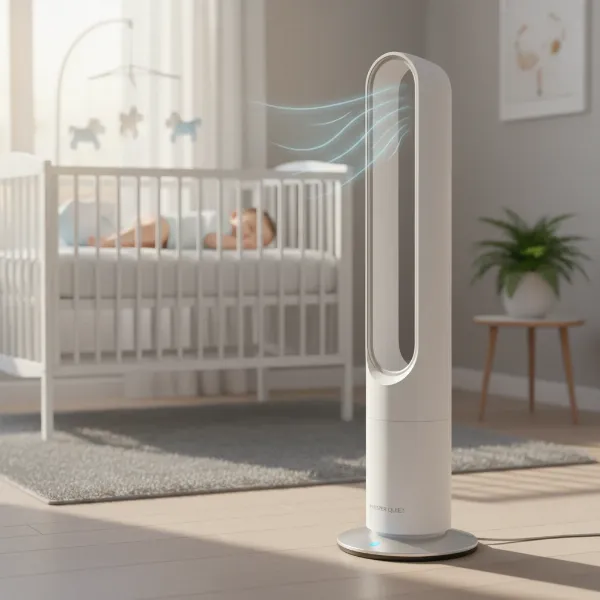 Ultra-quiet electric fan operating peacefully in a tranquil bedroom or serene baby nursery environment.
1. Brandson Brushless Silent Pedestal Fan
This fan is consistently highlighted as a leader in ultra-quiet operation, often lauded as a “test winner” for its minimal noise levels.
- Noise Level: As low as 15 dB on its lowest setting, making it practically silent.
- Features: Equipped with an energy-saving DC motor, remote control, and a timer function. It delivers good air performance even at low volumes.
- Ideal For: Light sleepers, nurseries, and anyone prioritizing absolute quietness above all else. Its quiet operation and powerful airflow make it an excellent choice for maintaining a peaceful environment without compromising on cooling.
- Pros: Unbelievably quiet, efficient DC motor, effective cooling at low speeds.
- Cons: May lack advanced smart home integration found in some other models.
2. Levoit Smart Silent Tower Fan
The Levoit Smart Silent Tower Fan is a fantastic option for those seeking effective cooling with intelligent quiet operation, particularly designed for bedroom use.
- Noise Level: Operates around 21 dB on its lowest settings, designed to be extremely quiet.
- Features: Features a unique sleep mode that intelligently adjusts fan speed based on room temperature, ensuring consistent comfort throughout the night. It also includes oscillation, a timer, and remote control.
- Ideal For: Bedrooms where temperature fluctuations can disturb sleep. Its smart features adapt to your environment, allowing for uninterrupted rest.
- Pros: Intelligent sleep mode, good balance of quietness and cooling power, sleek tower design.
- Cons: Some users might prefer even lower decibel ratings for absolute silence.
3. MeacoFan Sefte 8″ Portable Fan
The MeacoFan Sefte is a versatile and incredibly quiet portable fan, making it suitable for both bedside use and as a nursery fan.
- Noise Level: Achieves an impressive 27 dB on its lower speeds, which is virtually silent.
- Features: Offers both plug-in and cordless modes, a replaceable battery for ultimate portability, and a remote control with glow-in-the-dark keys—a thoughtful addition for nighttime adjustments. It also features a timer up to 12 hours.
- Ideal For: Individuals who need a portable, quiet fan that can be easily moved between rooms or used cordlessly. Its design is particularly appealing for bedrooms and nurseries where space or power outlets may be limited.
- Pros: Exceptional portability, very quiet on low settings, long timer, practical remote.
- Cons: Lacks smart features like app control or voice assistant compatibility.
4. Dreo Smart WiFi Tower Fan
The Dreo Smart WiFi Tower Fan combines advanced technology with quiet performance, making it a strong contender for modern smart homes.
- Noise Level: Operates quietly, with a brushless motor contributing to its low noise profile (ranging from approximately 25 dB on lowest settings up to 34 dB).
- Features: This sleek tower fan can be controlled via remote, an app, or even voice activation (Alexa/Google Assistant). It offers nine speeds, an auto mode that adapts to temperature changes, and a dedicated sleep mode.
- Ideal For: Tech-savvy users who appreciate smart home integration and precise control over their fan. Its powerful airflow combined with quiet operation makes it excellent for mid-sized bedrooms.
- Pros: Smart connectivity, robust airflow, multiple speed and mode options, effective sleep mode.
- Cons: Higher price point than some basic quiet models.
5. Duux Whisper Flex Smart Fan
The Duux Whisper Flex is a stylish and feature-rich fan that lives up to its name, providing a quiet and comfortable environment.
- Noise Level: Ranges from 22 dB on its lowest settings up to 34 dB at medium speeds, maintaining a remarkably quiet profile.
- Features: This smart fan boasts 26 different speed settings, along with Natural and Night modes for customized airflow. It can be connected via Wi-Fi for control through an iOS or Android app, and is compatible with Google Home and Alexa. An optional battery pack adds to its versatility.
- Ideal For: Users who desire a fan with extensive control options and smart home integration, along with a sleek design. Its adjustable height and oscillation make it adaptable to various room layouts.
- Pros: Extremely versatile with 26 speed settings, smart home compatibility, elegant design, optional battery use.
- Cons: Commands via voice control might be limited to basic functions.
Comparison Table: Top 5 Quietest Electric Fans
| Feature | Brandson Brushless Silent Pedestal | Levoit Smart Silent Tower | MeacoFan Sefte 8″ Portable | Dreo Smart WiFi Tower | Duux Whisper Flex Smart |
|---|---|---|---|---|---|
| Type | Pedestal / Table | Tower | Portable / Table | Tower | Pedestal / Table |
| Lowest Noise (dB) | 15 dB | 21 dB | 27 dB | 25 dB | 22 dB |
| Motor Type | DC Motor | DC Motor | DC Motor | Brushless DC Motor | DC Motor |
| Sleep Mode | Yes (Silent) | Yes (Temp-Adjusting) | Yes (Lowest Speed) | Yes | Yes (Night Mode) |
| Timer | Yes | Yes | Up to 12 hours | Yes | Yes |
| Remote Control | Yes | Yes | Yes (Glow-in-Dark) | Yes | Yes |
| Smart Features | No | Limited App Control | No | App, Voice Control | App, Voice Control |
| Oscillation | Yes | Yes | Yes | Yes | Yes |
| Special Features | Test winner for quietness | Adapts to room temperature | Cordless option | Auto mode, 9 speeds | 26 speeds, sleek design |
| Ideal for | Ultimate quietness, nurseries | Temperature-sensitive sleep | Versatility, portability | Smart homes, powerful cooling | Advanced control, style |
Tips for Using and Maintaining Your Electric Fan
Even the quietest fan benefits from proper usage and regular maintenance to ensure optimal performance and longevity.
Proper Fan Cleaning
Regular cleaning is essential for maintaining both hygiene and quiet operation. Dust and debris buildup on blades and grilles can increase noise and reduce airflow efficiency.
- Frequency: Aim to clean your fan at least once a month, or more often if used in dusty environments or a nursery.
- Tools: You’ll typically need a soft cloth, a vacuum cleaner with a brush attachment, and mild soap with water for deeper cleaning.
- Steps:
- Unplug: Always ensure the fan is unplugged before cleaning.
- Disassemble: Carefully remove the grille and, if possible, the blades according to the manufacturer’s instructions. Bladeless fans usually have fewer removable parts for internal cleaning.
- Dust Removal: Use a vacuum cleaner to remove loose dust from the grilles and blades. For hard-to-reach areas, compressed air can be effective.
- Wipe Down: Clean blades and grilles with a damp cloth. For stubborn grime, use a cloth lightly dampened with mild soapy water, then wipe again with a clean, damp cloth to remove any residue.
- Dry Thoroughly: Ensure all parts are completely dry before reassembling.
- Exterior: Wipe down the fan body with a soft, dry or slightly damp cloth.
Safe and Effective Fan Usage
Beyond cleaning, how you use your fan can significantly impact its performance and your comfort.
- Optimal Placement: Position the fan to create a cross-breeze by placing it near a window or door. For personal cooling, direct it towards yourself. In a nursery, ensure the fan is placed safely out of reach of children and not blowing directly on the baby.
- Adjust Speed: Use the lowest effective speed setting to minimize noise and energy consumption. Higher speeds naturally produce more sound.
- Avoid Continuous Use: While modern fans are durable, giving them a break, especially during cooler parts of the day or night, can extend their lifespan and prevent overheating. Use timers to automate shutdown.
- Combine with AC: If you have air conditioning, using a fan can help circulate the cooled air more efficiently, allowing you to raise the AC thermostat slightly and save energy.
Extending Fan Lifespan
A little proactive maintenance can significantly extend the life of your quiet electric fan.
- Inspect Regularly: Periodically check the power cord for any fraying or damage. Ensure all screws and connections are secure.
- Lubrication (if applicable): Some older fan models may require occasional lubrication of their motor bearings, though most modern fans, especially those with DC motors, are maintenance-free in this regard. Always consult your user manual.
- Proper Storage: When not in use, especially during colder months, store your fan in a dry, clean place, ideally in its original packaging or covered to prevent dust accumulation.
Where to Buy Reliable Electric Fans
Investing in a quality quiet fan is crucial for restful sleep. To ensure you’re getting a genuine product with warranty support, consider purchasing from reputable retailers.
- Electronics Stores & Department Stores: Large retailers like Best Buy, Target, and department stores often carry a wide selection of popular fan brands. This allows you to see the product in person and potentially compare noise levels (though store environments are often too noisy for accurate assessment).
- Online Marketplaces: Amazon, Walmart, and the official websites of fan manufacturers (e.g., Dreo, Levoit, Duux) provide convenience and often offer competitive pricing. Always check seller ratings and read customer reviews.
- Specialty Appliance Stores: Some stores specialize in home appliances and might offer a more curated selection of high-end or niche quiet fan models.
When making a purchase, always verify the product’s specifications, especially the decibel rating, and confirm the warranty details. Keep your receipt and any packaging for potential returns or warranty claims.
Electric Fan Buying Guide: Considerations for Your Purchase
Choosing a quiet fan means making an informed decision that balances performance with your personal environment. Here are key questions to guide your selection:
What Is Your Budget?
Quiet fans vary widely in price, from budget-friendly options to premium models with advanced features. Entry-level quiet fans might start around $50-$80, while high-end smart fans or bladeless designs can exceed $200-$300. Determine how much you’re willing to invest in quiet comfort. Remember that a slightly higher initial investment might lead to better performance, greater durability, and lower running costs over time.
How Large Is Your Room?
The size of your room dictates the fan’s required power.
- Small Rooms/Personal Use (under 150 sq ft): A compact desk fan or a small tower fan will likely provide ample airflow.
- Medium Rooms (150-300 sq ft): A medium-sized tower fan or a pedestal fan with good oscillation is usually suitable.
- Large Rooms (over 300 sq ft): Consider more powerful pedestal fans, large tower fans, or air circulators designed for whole-room coverage. Ensure the fan’s airflow velocity is sufficient to reach all corners of your space.
What Features Do You Need?
Prioritize features based on your lifestyle and the fan’s primary use:
- Absolute Silence: If you are an extremely light sleeper or need a fan for a baby’s nursery, prioritize the lowest possible dB rating (e.g., under 20 dB on lowest settings).
- Convenience: Remote control, a sleep timer, and dimmable LED displays are highly desirable for nighttime use.
- Smart Home Integration: If you already have a smart home ecosystem (Alexa, Google Assistant), a Wi-Fi-enabled fan offers seamless control and automation.
- Safety: For nurseries or homes with children, a bladeless design or a fan with a tightly meshed grille is a non-negotiable safety feature.
- Portability: If you plan to move the fan between rooms, look for lightweight models with integrated handles or cordless capabilities.
“The secret to a truly quiet fan lies not just in its motor, but in its entire aerodynamic design. Every component, from blade shape to grille pattern, plays a role in minimizing sound while maximizing airflow.” – Dr. Alistair Finch, Acoustic Engineering Specialist
Frequently Asked Questions
What is considered a quiet decibel level for a fan?
Generally, a fan is considered quiet for sleeping or nurseries if it operates at or below 30 decibels (dB) on its lowest settings. Many top-performing quiet fans achieve levels between 15 dB and 25 dB, which is akin to rustling leaves or a soft whisper.
Are bladeless fans quieter than traditional fans?
Bladeless fans often appear quieter because they produce a smoother, less turbulent airflow and lack the mechanical noise of rapidly spinning blades. However, the overall noise level depends heavily on the motor and internal air channeling design. Many high-quality traditional fans with DC motors can be equally, if not more, quiet on their lowest settings.
Can a quiet fan also be powerful?
Yes, modern engineering allows for both quiet operation and effective airflow. Many quiet fans utilize advanced DC motors and aerodynamic designs to move a significant amount of air efficiently while keeping noise to a minimum. Look for fans that specify both low decibel levels and strong airflow velocities.
Do fans with a “sleep mode” actually help?
Absolutely. Sleep modes are specifically designed to enhance nighttime comfort by reducing fan speed to the quietest setting, dimming or turning off display lights, and sometimes gradually decreasing airflow over several hours. This creates a consistent and undisturbed sleeping environment.
Is white noise from a fan good for sleep?
For some individuals, the consistent, low-frequency hum of a fan can act as a form of white noise, masking other disruptive sounds (like traffic or neighbors) and creating a calming environment conducive to sleep. However, for those seeking absolute silence, a fan with an extremely low decibel rating that produces minimal audible hum would be preferred.
In conclusion, finding the perfect Electric Fan for sleeping or a nursery doesn’t have to be a compromise between cooling power and quiet operation. With the right knowledge and focus on key features like low decibel ratings, specialized sleep modes, and smart controls, you can discover a fan that seamlessly integrates into your peaceful home environment. Embrace the tranquility and enjoy truly restful nights and serene daytime naps with one of the top quiet fans of 2026. What’s the most important feature you look for in a quiet fan?