Finding the perfect cooling solution can transform any space, especially when floor space is at a premium. An electric fan isn’t just about moving air; it’s about creating a comfortable, productive, and inviting environment. As an electric fan technician with over a decade of hands-on experience, I understand the nuances of what makes a fan truly exceptional. Today, we delve into a comprehensive review of the Hurricane Supreme Oscillating Wall Mount Fan, exploring its capabilities, features, and how it stacks up as a formidable contender for your ventilation needs. Whether you’re aiming to cool a bustling workshop, a cozy greenhouse, or an office that needs a consistent breeze, this review aims to provide the insights you need to make an informed decision.
Electric Fans: An Overview and Popular Types
Electric fans have a rich history, evolving from simple rotating blades to sophisticated air-moving devices designed for specific applications. Their primary purpose remains constant: to circulate air, creating a cooling effect through convection and evaporation. From the early 20th century to today’s smart home integrations, fans have become indispensable in maintaining comfortable indoor climates.
Modern electric fans can be broadly categorized by their design and how they are typically used:
- Ceiling Fans: Permanently installed on ceilings, these fans are excellent for circulating air in large rooms, providing widespread cooling without taking up floor space. Their main drawback can be a complex installation and the inability to easily move them.
- Table Fans: Compact and portable, table fans are ideal for personal cooling in smaller areas like desks or bedside tables. Their limited size means less powerful airflow, suitable for individual use rather than room-wide circulation.
- Pedestal Fans: Offering a balance between portability and power, pedestal fans stand on a tall base and are adjustable in height. They can cover larger areas than table fans but still occupy floor space and can be cumbersome to move frequently.
- Tower Fans: Known for their sleek, space-saving vertical design, tower fans provide oscillating airflow across a wide area. They are generally quieter and safer (bladeless or concealed blades) but might offer less direct air movement compared to conventional fans.
- Air Coolers (Evaporative Coolers): These fans use water to cool the air, offering a more refreshing breeze than standard fans, especially in dry climates. They require regular water refills and maintenance and are less effective in humid conditions.
- Bladeless Fans: Utilizing air multiplier technology, these fans draw in air and expel a smooth, uninterrupted stream. They are often safer, quieter, and easier to clean, but typically come at a higher price point.
Wall mount fans, like the Hurricane Supreme, carve out a unique niche. They offer the power of a larger fan without consuming valuable floor or desk space, making them a highly practical choice for targeted and efficient air circulation in diverse environments.
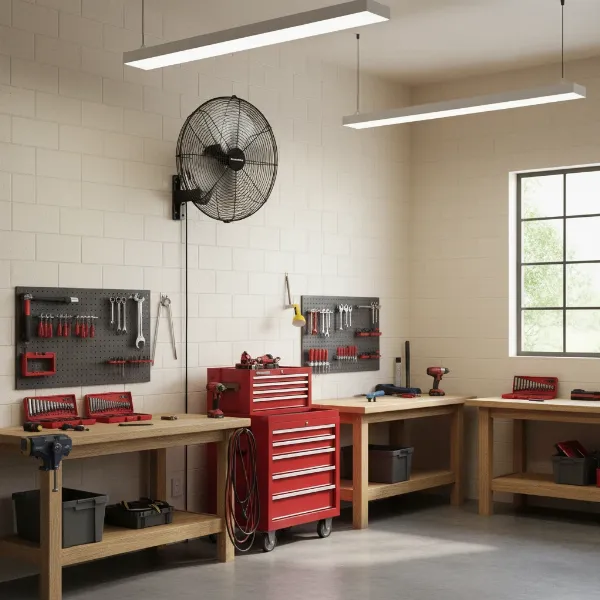 A powerful Hurricane Supreme wall mount fan installed in a workshop, saving floor space.
Choosing the Right Electric Fan: A Comprehensive Guide
Selecting the right electric fan involves more than just picking the first one you see. Thoughtful consideration of your specific needs and a few key criteria will ensure you choose a fan that delivers optimal comfort and value.
Determine Your Needs
Before diving into specifications, ask yourself a few questions about your environment and expectations:
- Room Size: A small table fan won’t suffice for a large garage, just as an industrial wall mount fan might be overkill for a compact office. Measure your room’s dimensions to estimate the required airflow capacity.
- Purpose of Use: Are you primarily seeking personal cooling, general room ventilation, or perhaps air circulation for a specific task in a workshop or greenhouse? The application dictates the fan’s design and power needs.
- Budget: Electric fans range widely in price. Setting a budget helps narrow down options, ensuring you find a fan that meets your financial and functional requirements. Remember to consider long-term operating costs, such as energy consumption.
|
Our Picks for the Best Electric fan in 2026
As an Amazon Associate I earn from qualifying purchases.
|
||
| Num | Product | Action |
|---|---|---|
| 1 | Amazon Basics Air Circulator Fan, Desk Fan for Bedroom, Home and Office, With 90-Degree Tilt Head, 3 Speed Settings, Lightweight (3 LBS), 35 Watts, Black, 11.1"W x 6.3"D x 10.9"H |

|
| 2 | Amazon Basics 16" Pedestal Fan with Remote, Floor Fan, Standing Fan for Bedroom, Living Room, Office, with 3 Speeds, 3 Modes, Timer, Dual-Layered Blades, Adjustable Height, Tilt Head, 60W, Black |
|
| 3 | 10" Modern Standing Fan for Bedroom, Sleek Oscillating Pedestal Fan, 3-Speed & Height Adjustable Compact Floor Fan for Home Office & Dorm |
|
| 4 | XPOWER FC-100S Multipurpose 11 Pro Air Circulator Utility Fan with Oscillating Feature |
|
| 5 | Lasko 2520 Oscillating Stand Fan,White 16 Inch |
|
| 6 | Dreo Fan for Bedroom, 120° Oscillating Standing Fan, Quiet Floor Fan with DC Motor, Pedestal Fan for Room, 9 Speeds, 4 modes, 20dB, 120° Manual Vertical, 37-42" Adjustable Height, 9H Timer, Black |
|
| 7 | Viniper Portable Rechargeable Fan, Small Desk Fan : 3 Speeds & about 8-24 Hours Longer Working, 180 Rotation, Portable Desktop Fan Small but Mighty, Strong Wind (White, Light Black Blade)6.2 Inch |
|
| 8 | Dreo Tower Fan for Bedroom, 25ft/s Velocity Quiet Floor Fan, 90° Oscillating Fans for Indoors with 4 Speeds, 4 Modes, 8H Timer, Standing Fans, Bladeless Fan, Black, Nomad One (DR-HTF007) |
|
| 9 | Dreo Fan for Bedroom, 120° Oscillating Standing Fans, Quiet Floor Fan with DC Motor, 100ft Pedestal Fans for Room, 9 Speeds, 4 modes, 20dB, 120° Manual Vertical, 37-42" Adjustable Height, 9H Timer |
|
| 10 | LEVOIT Tower Fan for Bedroom, 25ft/s Velocity Standing Fan with 28dB Quiet for Sleep, Remoter, 12H Timer, 5 Speeds, 4 Modes, 90° Oscillation for Home, Office, Indoor, Bladeless 36 inch, White |
|
Key Criteria for Selection
Once you understand your needs, evaluate fans based on these crucial criteria:
- Power and Airflow: Measured in Cubic Feet per Minute (CFM) and Revolutions Per Minute (RPM), these metrics indicate how much air a fan can move and how fast. Higher CFM and RPM generally mean more powerful cooling. For example, an 18-inch Hurricane Supreme fan can deliver up to 3,036 CFM on its highest setting.
- Noise Level: A powerful fan can be disruptive if it’s too loud. Look for models described as “quiet” or “low-noise,” especially if the fan will be used in a bedroom or office. Many modern fans offer powerful performance with minimal acoustic intrusion.
- Features: Beyond basic on/off, consider features like multiple speed settings (the Hurricane Supreme offers three), oscillation (essential for widespread cooling), adjustable tilt for directing airflow, remote controls, or programmable timers.
- Brand and Reliability: Reputable brands often signify better quality, durability, and customer support. Look for robust construction materials like powder-coated steel grills and chemical-resistant polypropylene blades, which are featured in the Hurricane Supreme fan, ensuring longevity and performance in various environments.
- Energy Efficiency: An energy-efficient fan can save you money on electricity bills over time. Check for certifications like ETL Listed, which indicates the product meets safety standards, and compare wattage for different models.
Comparing Popular Fan Types
When comparing fan types, the Hurricane Supreme Oscillating Wall Mount Fan shines for its ability to combine powerful air movement with space-saving design.
- Wall Mount Fans (like Hurricane Supreme):
- Pros: Excellent for saving floor space, providing powerful and directed airflow, ideal for high ceilings or crowded areas, 90-degree oscillation for wide coverage, adjustable tilt.
- Cons: Requires installation, less portable once mounted, often controlled by pull cords or a dial rather than a remote.
- Other Types (Ceiling, Table, Pedestal, Tower):
- Pros: Versatile placement (table/pedestal), wide coverage (ceiling), sleek design (tower), personal cooling (table).
- Cons: Occupy floor/desk space, can be less powerful for large areas, installation may be required (ceiling), limited range of air distribution without oscillation.
For those needing robust air circulation without cluttering their floor, a wall mount fan like the Hurricane Supreme presents an undeniable advantage.
Hurricane Supreme Oscillating Wall Mount Fan: In-Depth Review
The Hurricane Supreme Oscillating Wall Mount Fan is designed for serious air circulation, blending robust performance with practical features for a variety of demanding environments.
This fan comes in multiple sizes, commonly 12-inch, 16-inch, and 18-inch, allowing you to choose the right fit for your space and airflow requirements. Each size maintains the core features that define the Supreme series.
Key Features:
- 90-Degree Oscillation: A standout feature, the fan’s ability to oscillate side-to-side ensures comprehensive air distribution, effectively covering larger areas such as greenhouses, garages, and workshops. This can also be locked for stationary airflow.
- Three Speed Settings: Users can easily customize airflow with three distinct speed options (low, medium, high), controlled conveniently via low-hanging pull cords or a turn dial. This flexibility allows you to select the appropriate intensity for any situation.
- Adjustable Tilt Mechanism: The fan head can be tilted up or down, providing multi-position airflow direction. This is crucial for precise air circulation, whether you need a direct breeze or ambient air movement.
- Durable Construction: Built to last, the Hurricane Supreme features chemical-resistant polypropylene blades, a powder-coated steel grill, and a sturdy steel neck support. This robust design makes it suitable for both damp and dry environments, ensuring reliable performance over time.
- Convenient Power Cord: A 5-foot 120-volt power cord offers ample reach and flexibility for placement near an electrical outlet.
Performance:
The Hurricane Supreme is praised for its “high airflow capacity” and “strong consistent cooling”.
- 12-inch fan: 1412 CFM, 1450 RPM (on high).
- 16-inch fan: 2118 CFM, 1250 RPM (on high).
- 18-inch fan: 3036 CFM, 1250 RPM (on high).
Despite its powerful output, many users note its “quiet yet robust motor” that delivers consistent airflow without bothersome noise. This makes it suitable for environments where concentration or relaxation is important.
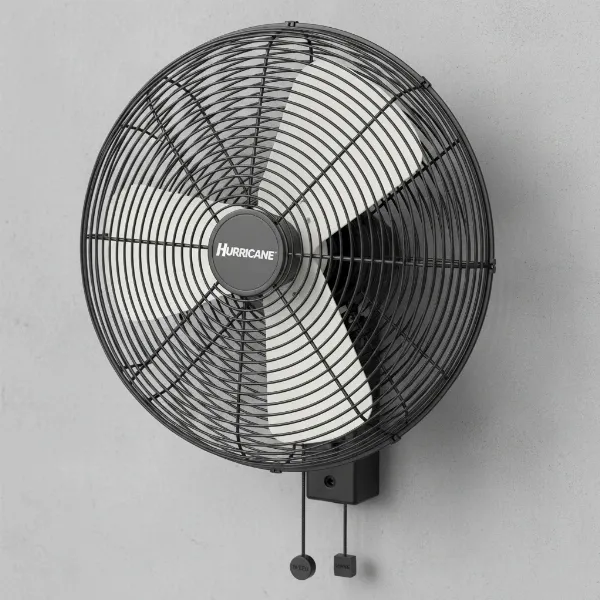 Close-up of Hurricane Supreme fan showing oscillation, speed controls, and durable construction.
Pros:
- Exceptional Airflow: Delivers significant air movement, capable of cooling and ventilating substantial spaces.
- Space-Saving Design: Wall-mounted nature frees up valuable floor and desk space.
- Versatile Application: Ideal for a wide range of settings, including homes, garages, workshops, greenhouses, and gyms.
- Quiet Operation: Provides powerful cooling without excessive noise.
- Durable Construction: Built with quality materials for long-lasting performance.
- Easy Control: Simple pull cords and a turn dial make operation straightforward.
Cons:
- Installation Required: Unlike portable fans, it requires initial mounting, which might involve drilling. The instruction manual recommends mounting at least 5 feet above the floor for optimal performance and safety.
- No Remote Control: Control is manual via pull cords or a dial, which might be inconvenient if mounted very high.
- Cord Length: The 5-foot power cord might require an extension cord depending on the distance to the nearest outlet.
- Cleaning: While durable, accessing the blades for thorough cleaning might be slightly more involved than with easily disassembled portable fans.
“The Hurricane Supreme fan is a game-changer for anyone needing serious air movement in a dedicated space. Its robust build and consistent performance make it a top recommendation for workshops and grow environments.” – John Peterson, Industrial Ventilation Specialist
Usage and Maintenance Tips for Your Electric Fan
Proper usage and regular maintenance are crucial for maximizing the performance and extending the lifespan of your Hurricane Supreme Oscillating Wall Mount Fan.
Proper Fan Cleaning
Regular cleaning prevents dust and debris buildup, which can reduce airflow efficiency and strain the motor.
- Frequency: Aim for a light dusting weekly and a deeper clean monthly, especially during heavy use seasons.
- Tools Needed: A soft cloth, a vacuum with a brush attachment, compressed air, and mild soap with water (for grilles and blades).
- Steps for Cleaning:
- Unplug the Fan: Always disconnect power before cleaning to prevent accidental startup and electric shock.
- Remove Grille: Carefully remove the front grille, usually by unscrewing clips or screws, to access the blades.
- Clean Blades: Wipe the fan blades with a damp cloth or use a vacuum brush attachment to remove dust. For stubborn grime, a cloth with mild soapy water can be effective, ensuring blades are dry before reassembly.
- Clean Grilles: Wash both front and rear grilles with soapy water, rinse thoroughly, and let them air dry completely.
- Wipe Motor Housing: Gently wipe down the motor housing with a dry or slightly damp cloth, avoiding getting moisture inside.
- Reassemble: Once all parts are dry, reassemble the fan, ensuring the grilles are securely fastened.
Safe and Effective Operation
To ensure safety and get the most out of your wall mount fan:
- Optimal Placement: Mount the fan on a sturdy wall surface at least 5 feet above the floor, away from curtains or other obstructions that could interfere with its oscillation or airflow. Ensure there’s enough clearance for the fan to oscillate freely.
- Adjust Speed Appropriately: Use the lowest speed setting that provides adequate cooling to conserve energy and minimize noise. Only increase speed when greater airflow is truly needed.
- Avoid Continuous Use: While durable, running any fan continuously for very long periods can lead to motor wear. Give your fan occasional breaks, especially during extreme heat.
- Check Power Cord: Regularly inspect the 5-foot power cord for any signs of damage. Do not run the cord under carpets or furniture where it could be pinched or tripped over.
Extending Fan Lifespan
A little proactive maintenance can significantly prolong your fan’s operational life.
- Inspect and Replace Worn Parts: Periodically check for any loose screws, cracked blades, or damaged pull cords. Address minor issues promptly to prevent them from escalating.
- Lubrication (If Applicable): Some older fan motors might benefit from occasional lubrication. Refer to your specific model’s manual to see if this is recommended and what type of lubricant to use. The Hurricane Supreme’s sealed motor typically does not require user lubrication.
- Proper Storage: If you won’t be using the fan for an extended period, clean it thoroughly, cover it to protect it from dust, and store it in a dry, safe place away from extreme temperatures or humidity.
Where to Purchase Reputable Electric Fans
When you’re ready to invest in a quality electric fan, knowing where to shop can be as important as knowing what to buy.
- Major Retailers: Large electronics stores, home improvement centers, and big-box retailers (like Walmart or Home Depot, which list the Hurricane Supreme fan) often carry a wide selection of fans from various brands. They typically offer competitive pricing and return policies.
- Online Marketplaces: Websites like Amazon, Hydrobuilder, and specialty grow supply stores (for models like the Hurricane Supreme often used in greenhouses) offer convenience and a broader range of options, often with customer reviews that can be invaluable. Be sure to verify seller reputation and return policies.
- Specialty Appliance Stores: For high-end or specific fan types, dedicated appliance stores may offer expert advice and more specialized models.
Key Buying Tips:
- Check Warranty: Always inquire about the warranty. The Hurricane Supreme fan typically comes with a 1-year warranty. A good warranty offers peace of mind.
- Inspect Product: If buying in-person, visually inspect the fan for any damage. When ordering online, unbox and test the fan upon arrival to ensure it functions correctly.
- Read Reviews: Customer reviews can provide real-world insights into a fan’s performance, durability, and any common issues.
Electric Fan Buying Guide: Your Questions Answered
Making the right choice involves addressing your core needs directly.
What is your budget?
Your budget is a primary factor. While the Hurricane Supreme offers excellent value for its performance, knowing your spending limit will help you filter options efficiently. Entry-level fans might cost under $50, while premium models with advanced features or robust industrial builds can range from $100 to several hundred dollars.
What is your room size?
The size of your room dictates the fan’s required power. For small rooms (under 100 sq ft), a 12-inch Hurricane Supreme fan or a smaller table fan might suffice. Medium to large rooms (100-400 sq ft) will benefit from a 16-inch or 18-inch wall mount fan, or a powerful pedestal fan. Very large or open-concept spaces might require multiple fans or an industrial-grade unit for effective circulation.
What features do you need?
Consider essential features:
- Oscillation: Crucial for widespread air distribution. The 90-degree oscillation of the Hurricane Supreme is a significant advantage.
- Speed Settings: Multiple speeds allow for flexible cooling.
- Adjustable Tilt: Important for directing airflow precisely.
- Controls: Do you prefer pull cords and a dial (like the Hurricane Supreme) or a remote control?
- Durability: For demanding environments like workshops, a robust build is non-negotiable.
Ultimately, balancing these needs with the fan’s capabilities will lead you to the best choice.
The Hurricane Supreme Oscillating Wall Mount Fan stands out as a powerful, durable, and space-saving solution for anyone seeking effective air circulation. Its robust construction, impressive airflow, and practical features make it an excellent investment for a variety of demanding indoor environments, from residential spaces to commercial workshops. With its three-speed settings and 90-degree oscillation, it provides customizable comfort and consistent cooling, proving its value without cluttering your valuable floor space.
Are you ready to experience the power and convenience of a wall-mounted fan in your space?
Frequently Asked Questions
Is the Hurricane Supreme Oscillating Wall Mount Fan easy to install?
Installation involves securely mounting a bracket to a sturdy wall surface and then attaching the fan unit. It comes with mounting hardware and clear instructions. Users report it’s a straightforward process, though some basic DIY skills might be helpful. The manual recommends mounting it at least 5 feet above the floor.
What are the power options for this fan?
The Hurricane Supreme Oscillating Wall Mount Fan operates on a standard 120-volt AC outlet and includes a 5-foot power cord. It features three-speed settings controlled by pull cords or a turn dial, offering flexible power levels for different needs.
Is the Hurricane Supreme fan loud?
The Hurricane Supreme fan is often described as having a “quiet yet robust motor” that delivers powerful airflow without bothersome noise. While any fan will produce some sound, it’s designed to operate efficiently without being overly disruptive, making it suitable for various indoor settings.
Can I use the Hurricane Supreme fan outdoors?
No, the Hurricane Supreme Oscillating Wall Mount Fan is designed for indoor use only. Its construction and electrical components are not rated for outdoor exposure to elements like rain or humidity. Using it outdoors could pose safety risks and damage the unit.
What sizes are available for the Hurricane Supreme Wall Mount Fan?
The Hurricane Supreme Oscillating Wall Mount Fan is typically available in three main sizes: 12-inch, 16-inch, and 18-inch. Each size offers different airflow capacities (CFM) to suit various room sizes and ventilation requirements.