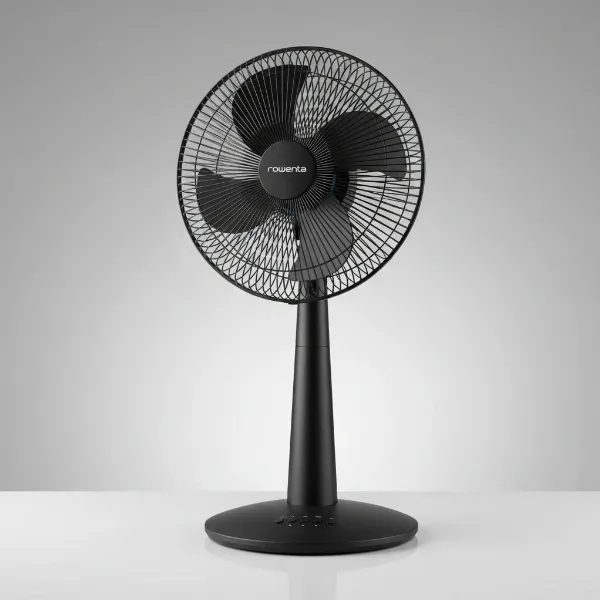
Escaping the daily grind to embrace the tranquility of the outdoors or embark on a new adventure is invigorating, but battling stifling heat can quickly dampen the experience. Imagine trying to sleep in a stuffy tent or enduring a long car ride without adequate airflow. This is where a reliable rechargeable portable electric fan becomes an indispensable companion. Far from being a luxury, the right portable electric fan offers a genuine solution to staying cool and comfortable, whether you’re deep in the wilderness or exploring a bustling city. As an experienced electric fan technician, I understand the critical balance between performance, durability, and portability needed for travel and outdoor use. This guide will walk you through everything you need to know to select the perfect cooling device, transforming uncomfortable heat into a pleasant breeze wherever your journey takes you.
Electric Fans: An Overview and Popular Types
Electric fans have been a cornerstone of personal comfort for over a century, evolving from simple oscillating units to sophisticated, feature-rich devices. While the core principle of moving air remains, the innovation in design and functionality has made them adaptable to virtually any environment, including the most demanding outdoor settings.
Traditionally, we think of ceiling fans, table fans, or standing fans for home use. For camping and travel, however, the focus shifts entirely to portable electric fans. These are distinct due to their primary power source being a rechargeable battery, their compact form factor, and enhanced durability to withstand outdoor conditions.
Key Portable Electric Fan Types for Outdoor and Travel Use:
- Handheld Portable Fans: These are the most compact, designed for personal cooling. They are lightweight, often USB-rechargeable, and perfect for a quick refresh on a hike or while waiting in line. Some models even feature a misting function for added cooling.
- Clip-On Portable Fans: Versatile and space-saving, clip-on fans can attach to tent poles, backpack straps, car visors, or virtually any ledge. They offer directional airflow and are ideal for personal cooling in confined spaces like tents or small vehicles.
- Tripod/Desktop Portable Fans: These fans offer more powerful airflow than handheld or clip-on models and come with a stable base or adjustable tripod legs. Many are designed to sit on a picnic table, inside a tent, or on a bedside table in a hotel. Many also include features like integrated LED lights and power bank functionality.
- Floor/Larger Portable Fans: While still portable, these fans are typically larger and designed for more significant airflow, suitable for cooling a larger tent, RV, or campsite area. They often boast longer battery life and more robust construction. Examples include the Geek Aire 12-Inch Camping Floor Fan, known for strong airflow and durable design.
- Hybrid Portable Fans: Some advanced models, like the Ryobi 18V One+ Hybrid Whisper Series Portable Fan, offer dual power options—running on a rechargeable battery or plugging into an AC outlet. This provides ultimate flexibility, ensuring you’re never without power.
The primary advantage of these portable electric fans is their independence from a direct power source, making them perfect for off-grid adventures. Their designs often incorporate features like hanging hooks for tents, durable casings for outdoor elements, and quiet operation for undisturbed sleep.
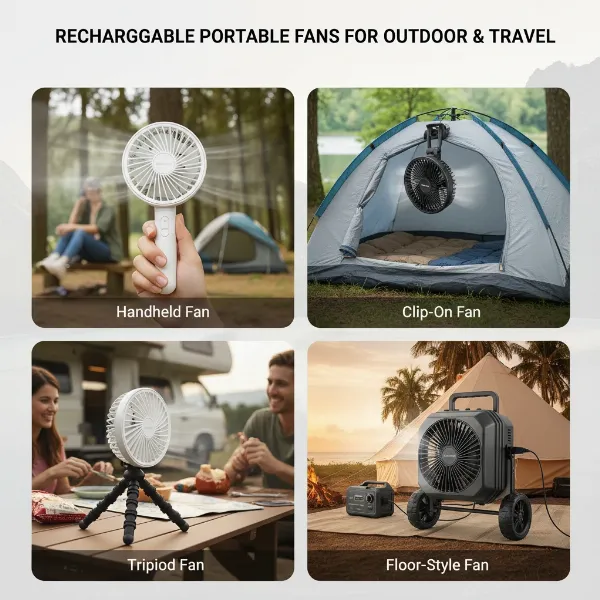 Diverse portable electric fans, including handheld, clip-on, tripod, and floor models, for outdoor and travel use.
Guide to Choosing the Right Portable Electric Fan
Selecting the ideal rechargeable portable electric fan requires careful consideration of your specific needs and the environments you’ll be using it in. A fan perfect for a backpacking trip might be underpowered for a family RV excursion, and vice-versa.
Determine Your Usage Needs
Before diving into features, consider how and where you’ll use the fan.
- Space to Cool: Are you cooling a small one-person tent, a large family tent, an RV, or just yourself? Smaller fans (handheld, clip-on) are great for personal use or tiny spaces, while larger models (tripod, floor fans) are better for broader coverage.
- Purpose of Use: Is it purely for cooling during the day, or do you need it for comfortable sleep at night? Night-time use prioritizes quiet operation and long battery life. Do you need it for ambient lighting, or to charge other devices?
- Budget: Portable electric fans range widely in price. Determine a comfortable budget, remembering that higher-priced models often offer superior battery life, durability, and additional features.
|
Our Picks for the Best Electric fan in 2026
As an Amazon Associate I earn from qualifying purchases.
|
||
| Num | Product | Action |
|---|---|---|
| 1 | Dreo Fan for Bedroom, 120° Oscillating Standing Fan, Quiet Floor Fan with DC Motor, Pedestal Fan for Room, 9 Speeds, 4 modes, 20dB, 120° Manual Vertical, 37-42" Adjustable Height, 9H Timer, Black |

|
| 2 | Viniper Portable Rechargeable Fan, Small Desk Fan : 3 Speeds & about 8-24 Hours Longer Working, 180 Rotation, Portable Desktop Fan Small but Mighty, Strong Wind (White, Light Black Blade)6.2 Inch |
|
| 3 | Lasko 2520 Oscillating Stand Fan,White 16 Inch |
|
| 4 | 10" Modern Standing Fan for Bedroom, Sleek Oscillating Pedestal Fan, 3-Speed & Height Adjustable Compact Floor Fan for Home Office & Dorm |
|
| 5 | XPOWER FC-100S Multipurpose 11 Pro Air Circulator Utility Fan with Oscillating Feature |
|
| 6 | Amazon Basics Air Circulator Fan, Desk Fan for Bedroom, Home and Office, With 90-Degree Tilt Head, 3 Speed Settings, Lightweight (3 LBS), 35 Watts, Black, 11.1"W x 6.3"D x 10.9"H |
|
| 7 | Dreo Fan for Bedroom, 120° Oscillating Standing Fans, Quiet Floor Fan with DC Motor, 100ft Pedestal Fans for Room, 9 Speeds, 4 modes, 20dB, 120° Manual Vertical, 37-42" Adjustable Height, 9H Timer |
|
| 8 | Amazon Basics 16" Pedestal Fan with Remote, Floor Fan, Standing Fan for Bedroom, Living Room, Office, with 3 Speeds, 3 Modes, Timer, Dual-Layered Blades, Adjustable Height, Tilt Head, 60W, Black |
|
| 9 | LEVOIT Tower Fan for Bedroom, 25ft/s Velocity Standing Fan with 28dB Quiet for Sleep, Remoter, 12H Timer, 5 Speeds, 4 Modes, 90° Oscillation for Home, Office, Indoor, Bladeless 36 inch, White |
|
| 10 | Dreo Tower Fan for Bedroom, 25ft/s Velocity Quiet Floor Fan, 90° Oscillating Fans for Indoors with 4 Speeds, 4 Modes, 8H Timer, Standing Fans, Bladeless Fan, Black, Nomad One (DR-HTF007) |
|
Key Criteria for Selection
Once you understand your primary needs, evaluate these critical features:
- Power and Airflow (CFM): This determines how effectively the fan moves air. A higher Cubic Feet per Minute (CFM) rating means more powerful airflow. Look for fans with multiple speed settings to adjust cooling intensity and conserve battery life. For hot conditions, robust airflow is crucial.
- Battery Life and Charging: For camping and travel, extended battery life is paramount. Look for models offering at least 8-12 hours on medium settings, with some high-end units providing 24-60+ hours on lower speeds. Consider the battery capacity (often expressed in mAh or Wh) and the charging method (USB-C is preferred for fast and universal charging). Some fans double as a power bank, allowing you to charge your phone or other devices, adding significant value.
- Noise Level (Decibels – dB): A noisy fan can disrupt sleep, especially in a quiet tent. Look for fans advertised as “whisper-quiet” or with low decibel ratings (e.g., under 40-50 dB). Reviews often highlight real-world noise performance.
- Portability and Design: The fan’s size, weight, and ease of transport are crucial. Look for lightweight, compact, and foldable designs. Features like integrated handles, hanging hooks (essential for tent ceiling attachment), and sturdy bases or flexible tripods enhance usability.
- Durability and Weather Resistance: Outdoor environments can be unpredictable. Choose fans built to withstand dust, minor impacts, and splashes. Water-resistant (IPX rated) or rugged designs are beneficial for camping.
- Additional Features:
- Integrated LED Light: Many camping fans include an adjustable LED light, useful as a tent lantern or emergency light.
- Remote Control: Offers convenience for adjusting settings from your sleeping bag or across the campsite.
- Timer Function: Allows you to set the fan to turn off automatically, conserving battery or ensuring it doesn’t run all night if not needed.
- Oscillation: Some larger fans offer oscillation to distribute airflow more widely.
Comparing Popular Portable Electric Fan Types
| Fan Type | Pros | Cons | Ideal Use Cases |
|---|---|---|---|
| Handheld | Ultra-portable, lightweight, personal cooling | Limited airflow, short battery life | Quick cool-downs, city travel, theme parks, short walks |
| Clip-On | Versatile mounting, directional airflow, compact | Can be less stable on thin surfaces, moderate airflow | Inside tents, car, desk, strollers, personal space cooling |
| Tripod/Desktop | Stable, good airflow, often feature-rich (light, power bank) | Less compact than handheld/clip-on, heavier | Tent interiors, picnic tables, car camping, RVs, hotel rooms |
| Floor/Larger | Powerful airflow, long runtime, durable, wide coverage | Less portable, heavier, takes up more space | Large tents, RV living areas, group camping sites, outdoor gatherings |
| Hybrid (AC/DC) | Ultimate flexibility with dual power options (battery & plug-in) | Can be heavier/bulkier, higher initial cost | Car camping with power access, RVs, backup for longer trips, home emergency use |
Choosing the right type depends heavily on your activity. Backpackers will prioritize ultra-light clip-on or handheld fans, while car campers might opt for a larger, more powerful tripod or floor fan.
Comparison Table: Top Rechargeable Portable Electric Fans
To help you navigate the myriad options, here’s a comparison of some highly-rated rechargeable portable electric fans that frequently earn praise for their performance in camping and travel scenarios:
| Model | Key Features | Battery Life (Approx.) | Noise Level (dB) | Ideal For |
|---|---|---|---|---|
| Ryobi 18V One+ Hybrid Fan | Hybrid power (battery/AC), powerful airflow, durable, hanging hooks | 7-21 hours | Whisper series | Car camping, RVs, workshops, long trips |
| Geek Aire 12-Inch Camping Fan | High-velocity airflow, water-resistant, robust metal frame, power bank | 4-24 hours | Moderate | Large tents, outdoor gatherings, demanding conditions |
| Warmco 20000mAh Desk Fan | High capacity battery (20000mAh), integrated LED light, foldable, USB-C fast charge, power bank | 15-48 hours | ~45dB | Tent interiors, desk use, extended trips |
| Nitecore NF10 Camping Fan | Compact, long runtime, quiet operation, multi-functional (light) | 8-20 hours | Low | Backpacking, small tents, personal cooling |
| Auggury Camping Fan | Oscillation, remote control, built-in light, grab handle, fold-away hook, power bank | Up to 60 hours | Quiet | Tent sleeping, general campsite use, comfort |
| JISULIFE Handheld Fan Life7 | Ultra-portable, long runtime for size, foldable, 3-in-1 (hand/desk/neck) | 4-15 hours | Low | Personal cooling, travel, city exploration |
Note: Battery life estimations are typically on the lowest speed setting and can vary significantly with higher speeds and additional features (like lights) activated.
Tips for Using and Maintaining Your Portable Electric Fan
Proper use and maintenance will significantly extend the life and efficiency of your rechargeable portable electric fan, ensuring it’s ready for every adventure.
Proper Cleaning for Your Portable Electric Fan
Regular cleaning prevents dust and debris buildup, which can reduce airflow and strain the motor.
- Frequency: Clean your fan at least once a month during heavy use, or before/after each camping trip.
- Tools: You’ll need a microfiber cloth, a soft brush (like an old toothbrush or paint brush), compressed air, and mild soap with water.
- Steps:
- Safety First: Always ensure the fan is turned off and unplugged (if hybrid) before cleaning. Remove the battery if it’s detachable.
- Disassemble: Carefully remove the front grille, following the manufacturer’s instructions. Some fans might require a screwdriver.
- Clean Blades and Grille: Use a soft brush or compressed air to remove loose dust from the blades and both grilles. Wipe them down with a damp cloth and mild soapy water, then dry thoroughly.
- Wipe Housing: Use a damp cloth to clean the exterior housing. Avoid getting water into the motor or charging ports.
- Reassemble: Once all parts are dry, reassemble the fan.
Safe and Effective Use
Maximize your fan’s performance and ensure safety with these guidelines:
- Optimal Placement: Position the fan to maximize airflow in your space. In a tent, hanging it from a loop can provide overhead circulation. On a table, ensure it’s on a stable, flat surface.
- Adjust Speed Judiciously: Use lower speed settings when possible to conserve battery life, especially overnight. Only crank it up when maximum cooling is essential.
- Avoid Continuous Max Use: While tempting in extreme heat, running the fan constantly on its highest setting can reduce battery runtime and potentially shorten the motor’s lifespan over time. Give it breaks if possible.
- Keep Vents Clear: Ensure the fan’s intake and exhaust vents are unobstructed to prevent overheating and maintain efficient airflow.
- Protect from Elements: Even water-resistant fans benefit from protection. Keep your fan under cover during heavy rain or strong winds to avoid damage.
Extending Lifespan through Maintenance
A little proactive care goes a long way.
- Battery Care: Recharge your fan’s battery fully before storage and periodically (e.g., every 3-6 months) if storing for an extended period. Avoid fully draining the battery repeatedly, as this can degrade its capacity over time. Store batteries in a cool, dry place.
- Check for Damage: Before and after trips, inspect the fan for any cracks, loose parts, or frayed cables. Address minor issues promptly to prevent them from worsening.
- Lubrication (If Applicable): Some older or larger fans might have motor shafts that benefit from occasional lubrication. Consult your user manual before applying any lubricants. Most modern portable fans are sealed and do not require this.
- Proper Storage: When not in use, store your fan in a clean, dry place, ideally in its original packaging or a protective bag, away from extreme temperatures.
“A well-maintained portable electric fan isn’t just a comfort device; it’s a critical safety tool in hot outdoor conditions. Think of it as investing in your well-being.” – Johnathan Reed, Outdoor Gear Specialist
Where to Buy Reliable Portable Electric Fans?
Finding a trustworthy retailer is just as important as choosing the right fan. You want peace of mind knowing your purchase is backed by customer service and a warranty.
Recommended Places to Purchase:
- Major Online Retailers: Websites like Amazon, REI, and Backcountry offer a vast selection, competitive pricing, and user reviews that can provide valuable insights. Look for products with high ratings and numerous verified purchases.
- Outdoor Gear Stores: Specialized camping and outdoor equipment stores (both brick-and-mortar and online) are excellent resources. Staff often have personal experience with the products and can offer tailored advice. Brands like Ryobi and Geek Aire are frequently found here.
- Electronics Retailers: Stores like Best Buy or other local electronics shops may carry a range of portable electric fans, especially general-purpose models suitable for travel.
- Direct from Manufacturer: Buying directly from the brand’s website can sometimes offer exclusive deals or ensure you get authentic products and direct warranty support.
Important Buying Considerations:
- Read Reviews: Always check recent customer reviews for insights into real-world performance, battery life, noise levels, and durability.
- Warranty: Verify the warranty period and what it covers. A good warranty indicates the manufacturer stands behind their product.
- Return Policy: Understand the retailer’s return policy in case the fan doesn’t meet your expectations.
- Compare Prices: Don’t hesitate to compare prices across different retailers to find the best deal.
Portable Electric Fan Buying Guide (Key Considerations)
When it’s time to make a decision, simplify your thought process by asking yourself these three crucial questions.
What is Your Budget?
Your budget will significantly narrow down your options. Basic handheld or clip-on fans can be found for under $30, offering essential personal cooling. Mid-range fans ($30-$80) typically provide better battery life, more robust construction, and additional features like LED lights or power bank functionality. Premium fans (over $80) often boast professional-grade durability, exceptional battery longevity, powerful airflow, and advanced smart features like app control or highly efficient motors.
What is Your Room Size (Tent/Space)?
The size of the area you intend to cool dictates the fan’s required power and type. For personal cooling or very small spaces like a single-person tent, a compact handheld or clip-on fan (e.g., JISULIFE) is sufficient. For a 2-4 person tent, a medium-sized tripod or desktop fan (like the Warmco 20000mAh fan with hanging capabilities) works well. If you’re cooling a large family tent, an RV, or an outdoor gathering area, a larger floor fan or a powerful hybrid model (such as the Ryobi 18V One+ Hybrid) will be necessary to provide effective air circulation.
What Features Do You Need?
Prioritize features based on your specific activities. For multi-day camping trips without power access, long battery life and power bank functionality are critical. If you’re backpacking, lightweight and compact are non-negotiable. For sleeping, a quiet motor and timer function are essential. If you need ambient light, an integrated LED lantern is a dual-purpose benefit. For car camping or RVs, a hybrid power option offers flexibility. Determine which features are “must-haves” and which are “nice-to-haves” to guide your selection.
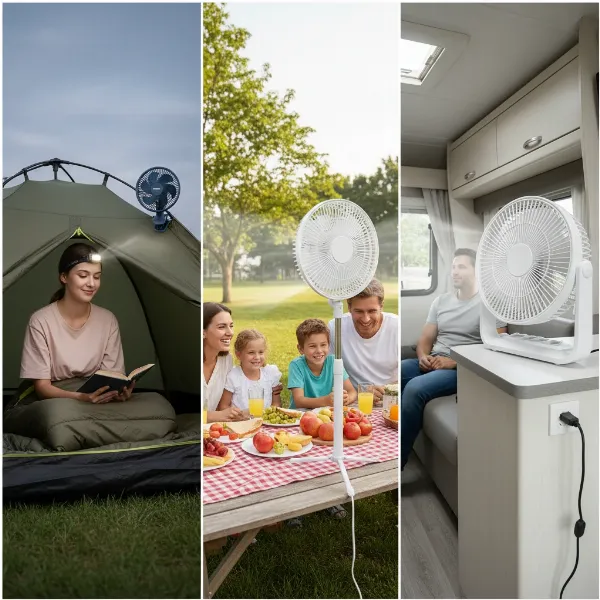 People using various portable electric fans in different scenarios, highlighting selection criteria.
Conclusion
The pursuit of comfort during outdoor adventures and travels is a goal we all share. A high-quality rechargeable portable electric fan is no longer a luxury but a fundamental component of your gear, offering respite from the heat and enhancing overall enjoyment. By understanding the different types of portable electric fans, evaluating key features like battery life, airflow, and noise, and considering your specific needs, you are well-equipped to make an informed decision. Remember to prioritize durability and proper maintenance to ensure your chosen electric fan remains a reliable companion for countless journeys.
What exciting adventure will you bring your new portable electric fan on first?
Frequently Asked Questions
How long do rechargeable portable fans typically last on a single charge?
The battery life of a rechargeable portable electric fan varies significantly based on its size, battery capacity, and the speed setting used. Most models offer between 4 to 12 hours on higher settings, but many can run for 24 to over 60 hours on their lowest speed settings, making them ideal for overnight use in tents or during extended travel. Always check the manufacturer’s specifications and user reviews for real-world performance estimates.
Can rechargeable portable fans also charge other devices?
Yes, many modern rechargeable portable electric fans come with a built-in power bank function, typically via a USB-A output port. This feature allows you to use the fan’s internal battery to charge your smartphone, tablet, or other small electronic devices, adding valuable utility when you’re off-grid. Look for fans that explicitly state “power bank” or “USB charging output” in their feature list.