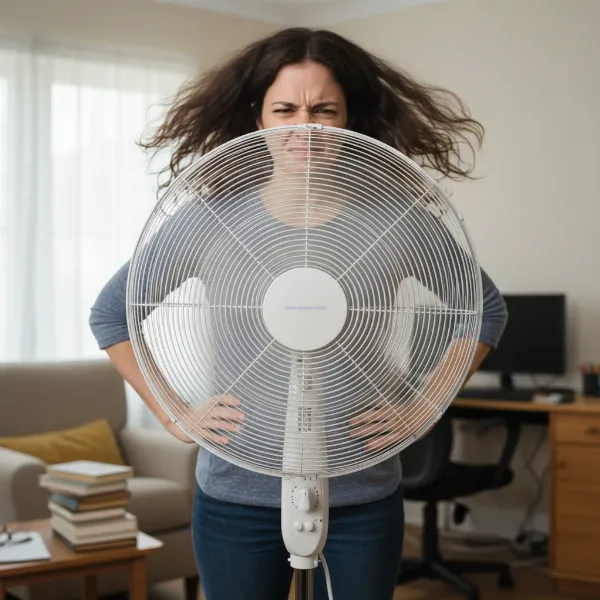
Stepping into a home adorned with vintage decor offers a unique sense of nostalgia, charm, and timeless elegance. Yet, even in the most beautifully curated spaces, the need for effective cooling remains paramount. This is where retro style fans become more than just appliances; they transform into essential elements of your interior design, seamlessly blending classic aesthetics with modern comfort. As an admin for electricfanatic.com with over a decade of hands-on experience in the world of electric fans, I’ve seen how these iconic pieces can elevate a room, offering both a refreshing breeze and a powerful statement of style.
Electric Fans: An Overview of Popular Retro Styles
The world of electric fans boasts a rich history, and retro styles encapsulate different eras, each with its distinctive charm and design philosophy. These fans are not just about moving air; they are about evoking a feeling, a bygone era when appliances were built with both function and enduring beauty in mind. Modern reproductions often capture this spirit, while authentic vintage pieces tell a story all their own.
When exploring retro fans, you’ll encounter several prominent styles:
- ’50s Style Pedestal Fans: These iconic fans often feature a large, sturdy base, a prominent motor housing, and classic, cage-like grilles. They frequently come in vibrant colors like cherry red, turquoise, or classic black and chrome, adding a playful pop of retro fun. They are perfect for living rooms or bedrooms where you want a statement piece that also delivers a powerful breeze.
- Art Deco Fans: Exuding pure elegance, Art Deco fans from the 1920s and ’30s showcase smooth, streamlined designs, often accented with polished chrome or brass, and sometimes featuring decorative fluting or embossed patterns. These sophisticated fans are typically compact, desk-style models that bring a touch of class to a formal living space, study, or stylish kitchen.
- ’40s and ’50s Desk Fans: Characterized by their robust, often utilitarian metal construction and straightforward design, these smaller fans offer reliable cooling without fuss. They carry a more industrial feel, making them ideal for a home office, workshop, or kitchen counter where functionality and durability are key.
- Industrial-Style Fans: Highly popular in modern loft apartments or spaces with an industrial aesthetic, these fans mimic powerful, no-nonsense designs found in old factories. They feature heavy-duty metal construction, large blades, and exposed motor details, often available as floor-standing, desk-mounted, or wall-mounted units.
These various styles prove that vintage-inspired cooling is diverse, offering something for every taste and decor, blending functionality with fantastic design.
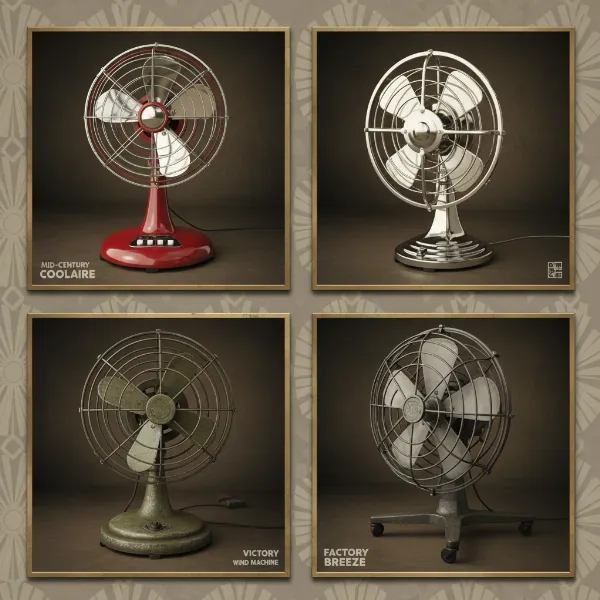 Collage of popular retro electric fan styles: 50s pedestal, Art Deco, desk, industrial.
Guide to Choosing the Right Retro Style Fan
Selecting the perfect retro fan for your vintage home decor involves a blend of aesthetic consideration and practical assessment. It’s about finding a fan that not only complements your style but also provides the cooling performance you need.
Determine Your Needs
Before diving into models, consider these factors:
- Room Size: A larger room will require a fan with higher airflow (measured in CFM – cubic feet per minute) or a whole-room air circulator. Smaller rooms might benefit from a compact desk or personal fan.
- Purpose of Use: Are you seeking general room cooling, a quiet breeze for sleep, a focal point for your decor, or all of the above? For example, some fans provide excellent white noise for sleeping.
- Budget: Retro fans range widely in price, from affordable reproductions to high-end designer pieces and collectible antiques. Set a realistic budget to narrow down your options.
|
Our Picks for the Best Electric fan in 2026
As an Amazon Associate I earn from qualifying purchases.
|
||
| Num | Product | Action |
|---|---|---|
| 1 | Viniper Portable Rechargeable Fan, Small Desk Fan : 3 Speeds & about 8-24 Hours Longer Working, 180 Rotation, Portable Desktop Fan Small but Mighty, Strong Wind (White, Light Black Blade)6.2 Inch |

|
| 2 | LEVOIT Tower Fan for Bedroom, 25ft/s Velocity Standing Fan with 28dB Quiet for Sleep, Remoter, 12H Timer, 5 Speeds, 4 Modes, 90° Oscillation for Home, Office, Indoor, Bladeless 36 inch, White |
|
| 3 | Lasko 2520 Oscillating Stand Fan,White 16 Inch |
|
| 4 | XPOWER FC-100S Multipurpose 11 Pro Air Circulator Utility Fan with Oscillating Feature |
|
| 5 | Amazon Basics 16" Pedestal Fan with Remote, Floor Fan, Standing Fan for Bedroom, Living Room, Office, with 3 Speeds, 3 Modes, Timer, Dual-Layered Blades, Adjustable Height, Tilt Head, 60W, Black |
|
| 6 | Amazon Basics Air Circulator Fan, Desk Fan for Bedroom, Home and Office, With 90-Degree Tilt Head, 3 Speed Settings, Lightweight (3 LBS), 35 Watts, Black, 11.1"W x 6.3"D x 10.9"H |
|
| 7 | Dreo Fan for Bedroom, 120° Oscillating Standing Fan, Quiet Floor Fan with DC Motor, Pedestal Fan for Room, 9 Speeds, 4 modes, 20dB, 120° Manual Vertical, 37-42" Adjustable Height, 9H Timer, Black |
|
| 8 | 10" Modern Standing Fan for Bedroom, Sleek Oscillating Pedestal Fan, 3-Speed & Height Adjustable Compact Floor Fan for Home Office & Dorm |
|
| 9 | Dreo Tower Fan for Bedroom, 25ft/s Velocity Quiet Floor Fan, 90° Oscillating Fans for Indoors with 4 Speeds, 4 Modes, 8H Timer, Standing Fans, Bladeless Fan, Black, Nomad One (DR-HTF007) |
|
| 10 | Dreo Fan for Bedroom, 120° Oscillating Standing Fans, Quiet Floor Fan with DC Motor, 100ft Pedestal Fans for Room, 9 Speeds, 4 modes, 20dB, 120° Manual Vertical, 37-42" Adjustable Height, 9H Timer |
|
Key Criteria for Selection
Once you understand your needs, evaluate fans based on these important criteria:
- Power and Airflow: Look for specifications like CFM (cubic feet per minute) to gauge how much air a fan moves. Higher CFM generally means more effective cooling, especially for larger spaces. The Vornado Vintage Air Circulator Fan, for example, is noted for effectively cooling entire rooms using a vortex of air.
- Noise Level: While some appreciate the soothing hum of a retro fan, others prefer quieter operation. Modern retro-style fans often incorporate technology to minimize noise, while certain models, like the Vornado, offer varying noise levels that can double as white noise for sleep.
- Features:
- Speed Settings: Multiple speed options allow for customized comfort.
- Oscillation: This feature ensures air circulates across a wider area.
- Adjustable Tilt: Directs airflow precisely where needed.
- Remote Control/Timer: Modern conveniences found in many reproduction models.
- Brand and Reliability:
- Historical Brands: Emerson Electric, General Electric, Westinghouse, and Robbins & Myers were pioneers, known for durable, well-crafted fans. Their vintage models are highly sought after by collectors.
- Modern Brands: Companies like Vornado and Hunter (for ceiling fans) offer retro-inspired designs with contemporary performance and safety features. Look for reputable brands known for quality construction.
- Energy Efficiency: Many modern retro-style fans are designed to be energy-efficient, often incorporating LED lighting options in ceiling fan models, which can help reduce electricity consumption.
- Materials and Finish: The choice of materials significantly impacts the fan’s authenticity and durability.
- Metal Construction: Robust metal (brass, iron, steel, chrome) is a hallmark of true retro design and indicates longevity.
- Finishes: Antique brass, bronze, brushed nickel, or pewter tones, along with rich painted finishes, can perfectly complement a vintage aesthetic.
Comparing Popular Retro Fan Types
Understanding the nuances of each type helps you make an informed decision:
| Fan Type | Pros | Cons | Ideal For |
|---|---|---|---|
| Desk Fan | Compact, portable, perfect for personal cooling, ideal for smaller spaces. | Limited area coverage, less powerful for large rooms. | Home offices, bedside tables, kitchen counters. |
| Pedestal Fan | Powerful airflow for larger areas, often a statement piece, adjustable height. | Can be bulky, requires floor space. | Living rooms, larger bedrooms, open-plan areas. |
| Ceiling Fan | Circulates air efficiently throughout a room, often integrates lighting, saves floor space. | Installation required, less portable, style must complement ceiling height. | Bedrooms, living rooms, dining areas, covered patios. |
For a strong cooling effect in a bedroom, consider a Vornado Vintage Air Circulator Fan, known for its ability to circulate air throughout an entire room.
Top Retro Style Fan Models for Vintage Homes
Several modern brands excel at blending vintage aesthetics with contemporary performance. Here are some noteworthy options that consistently receive high marks for both style and function:
| Model Name | Type | Key Features | Airflow (Approx. CFM) | Noise Level | Style Highlights | Price Range |
|---|---|---|---|---|---|---|
| Vornado VFAN Vintage Air Circulator | Desk/Floor | Vortex air circulation, 3-speed settings, durable metal construction, compact. | 600-700 | Low to Medium (good white noise) | Deep teal green, bronze details, 1945 original inspiration. | Mid-High |
| Hunter Retro Desk Fan | Desk | 3-speed, oscillation, adjustable tilt, all-metal construction. | Not specified | Medium | Brushed nickel or matte black, classic desk fan look. | Mid |
| Holmes 10” Vintage Table Fan | Desk | 3-speed, motorized oscillation, adjustable head, all-metal base with rotary dial. | Not specified | Low to Medium | Black base with silver cage, 4-blade design. | Low-Mid |
| Kichler Vintage Ceiling Fans | Ceiling | Sophisticated designs, energy-efficient technology, detailed craftsmanship. | Varies | Low | Ornate detailing, heritage finishes, classic silhouettes. | High |
These fans offer excellent performance while enhancing your home with a distinct retro appeal. For instance, the Vornado model is beloved by users for its sturdy build and powerful air circulation, making it a great choice for warm climates.
Tips for Using and Maintaining Your Retro Fan
Proper care ensures your retro fan continues to look great and perform efficiently for years to come, preserving its aesthetic appeal and functionality.
Proper Cleaning
Regular cleaning is crucial for optimal performance and hygiene.
- Frequency: Aim for a thorough cleaning every few weeks, or more often if used daily in dusty environments.
- Tools Needed: A soft cloth, mild soap solution, a small brush (like a paintbrush or old toothbrush) for grilles, and a vacuum with a brush attachment.
- Steps for Cleaning:
- Always unplug the fan before attempting any cleaning.
- Use a vacuum cleaner with a brush attachment to remove dust from the grilles and blades.
- Wipe down the exterior of the fan with a soft cloth moistened with a mild soap solution.
- For intricate grilles, use a small brush to dislodge dust and dirt.
- Ensure no water drips onto or into the motor housing.
- Do not attempt to remove the fan blade unless the manufacturer’s instructions specifically permit it for cleaning, as this can damage the unit. Avoid harsh chemicals like gasoline or thinners.
Safe and Effective Use
Maximize your fan’s benefits while ensuring safety.
- Placement: Position your fan strategically to promote optimal air circulation. For instance, a floor fan angled towards the ceiling can help circulate air throughout an entire room more efficiently. Ensure it’s on a stable, flat surface to prevent tipping.
- Adjust Speed: Use lower speeds for gentle air circulation and quieter operation, and higher speeds for maximum cooling when needed.
- Avoid Continuous Use: While durable, it’s generally good practice to give your fan a break, especially if using an older, unrestored vintage model.
- Safety for Vintage Fans: If you acquire an authentic vintage fan, always consult with an electrician or restorer to ensure it has up-to-date wiring before using it as a functional appliance. Many older fans lack modern safety features.
Extending Longevity
A little preventative maintenance can significantly prolong your fan’s lifespan.
- Inspect Regularly: Periodically check for any loose screws, wobbling, or unusual noises.
- Lubrication: If your fan has moving parts that require lubrication, consult the user manual for specific instructions and appropriate lubricants.
- Proper Storage: When not in use, especially during off-seasons, clean the fan thoroughly, cover it to prevent dust accumulation, and store it in a dry place.
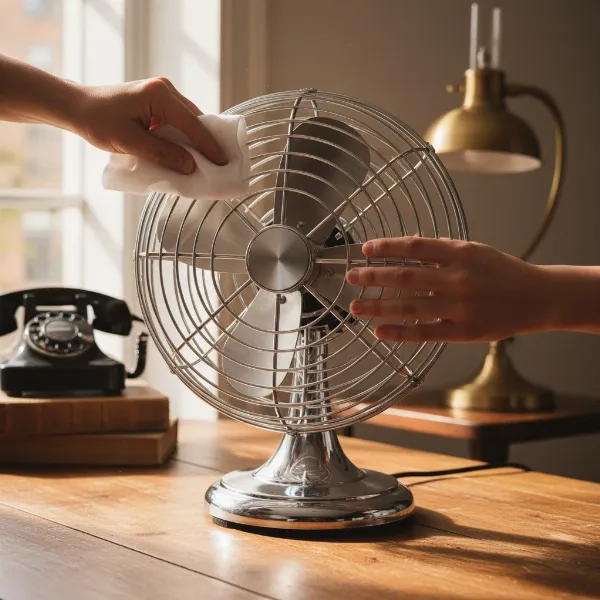 A retro-style electric fan being carefully cleaned in a beautifully decorated vintage living room.
Where to Buy Authentic & Reproduction Retro Fans
Finding the perfect retro fan, whether an original antique or a faithful modern reproduction, can be an exciting hunt.
- For Authentic Vintage Fans:
- Flea Markets & Outdoor Antique Shows: These are prime locations for discovering unique industrial antiques or mid-century pieces.
- Antique Shops & Vintage Boutiques: Look for stores specializing in mid-century furniture or architectural salvage.
- Online Marketplaces: Websites like eBay, Etsy, and Chairish offer a wide selection, but always verify authenticity and request detailed photos from sellers. Remember to check the condition, especially the wiring.
- For New Retro-Style Fans (Reproductions):
- Department Stores & Home Goods Retailers: Stores like Wayfair or those carrying brands like Better Homes & Gardens offer a range of modern fans with retro designs.
- Specialty Fan Retailers: Websites directly from brands like Vornado or Hunter Fan offer their full range of retro-inspired models.
- Online Retailers: Amazon and other large e-commerce sites carry numerous options; pay attention to customer reviews for quality and performance.
When purchasing, for new fans, ensure you understand the warranty. For vintage fans, prioritize safety and consider professional restoration if you intend to use it as a functional appliance rather than just a decorative piece.
Retro Fan Buying Guide: Your Quick Checklist
Making the final decision can be simplified by answering a few key questions:
What is your budget?
This will help you decide between an original vintage piece, which can be more expensive, and a modern reproduction, which often offers a more accessible price point with updated features.
What is your room size and aesthetic?
Determine if you need a powerful floor fan for a large area, a charming desk fan for a smaller space, or a stylish ceiling fan to complement your overall vintage theme. Consider the specific retro style (Art Deco, ’50s, industrial) that best matches your existing decor.
What features do you need?
Prioritize features like oscillation for wider airflow, multiple speed settings for customizable comfort, quiet operation for bedrooms, or even remote control for convenience. Think about whether you prefer the robust metal construction characteristic of true retro designs, ensuring both durability and authentic appeal.
Conclusion
Retro style fans are truly more than just devices to combat the heat; they are functional works of art that inject personality, history, and undeniable charm into any vintage-inspired space. From the sleek lines of Art Deco to the vibrant hues of the ’50s, there’s a retro fan design waiting to perfectly complement your home’s unique character. By prioritizing durable construction, considering crucial features like airflow and noise levels, and choosing a style that truly resonates with you, you can find a fan that not only keeps you cool but also becomes a cherished part of your home for years to come. So, why settle for a purely utilitarian fan when you can embrace a piece that tells a story and elevates your decor? Which retro style will you choose to bring vintage elegance and refreshing comfort to your space?