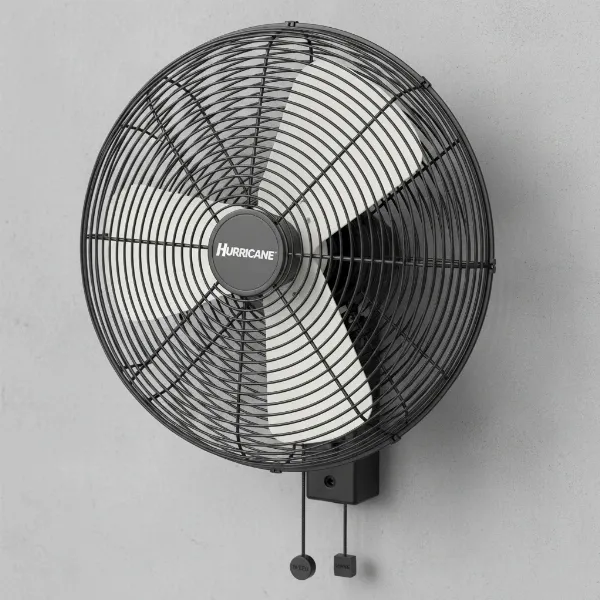
Waking up to a soaked carpet is never a pleasant surprise, whether it’s from a leaky pipe, an overflowing tub, or an unexpected spill. The immediate aftermath can feel overwhelming, but swift action is your best defense against lasting damage, unpleasant odors, and the dreaded growth of mold and mildew. An electric fan, when used correctly, is your powerful ally in transforming a soggy situation into a dry, fresh space. This comprehensive guide will walk you through the most effective strategies to harness the power of your electric fan and other essential tools to dry your wet carpet quickly and efficiently, safeguarding your home and health.
Understanding the Urgency of Wet Carpet Drying
Why is drying wet carpet quickly so crucial? The clock starts ticking the moment moisture penetrates your carpet fibers. Within 24 to 48 hours, standing water or persistent dampness creates an ideal breeding ground for mold and mildew. These fungi not only emit a musty odor but can also pose serious health risks, triggering allergies, respiratory issues, and other irritations. Beyond health concerns, prolonged wetness can damage your carpet fibers, delaminate the backing, and even compromise the subfloor beneath, leading to costly repairs or replacement. Acting fast with effective drying techniques is paramount to mitigating these risks.
Essential Tools for Effective Carpet Drying
To tackle a wet carpet effectively, you’ll need more than just an electric fan. A combination of specific tools will ensure thorough moisture removal and optimal drying conditions.
- Wet-Dry Vacuum (Shop Vac): This specialized vacuum is designed to extract large volumes of water from carpets and upholstery, far surpassing the capabilities of a standard household vacuum cleaner.
- Electric Fans/Air Movers: From powerful industrial air movers to your trusty oscillating floor fan, these devices are critical for circulating air and accelerating evaporation. Different types offer varying levels of power and airflow.
- Dehumidifier: Essential for removing moisture from the air, a dehumidifier works in tandem with fans to pull dampness out of the environment, significantly speeding up the drying process.
- Clean, Dry Towels or Rags: For initial blotting and absorbing surface moisture, towels are indispensable.
- Protective Gear: Depending on the water source, gloves and even a respirator mask might be necessary, especially if dealing with contaminated water.
- Carpet Puller/Pliers: Useful for gently lifting carpet edges to access the padding and subfloor if needed.
Step-by-Step Guide: How to Dry Wet Carpet Quickly with Electric Fans
Drying wet carpet is a methodical process that combines water extraction with strategic airflow and environmental control. Follow these steps for the best results.
Step 1: Prioritize Safety and Assess the Damage
|
Our Picks for the Best Electric fan in 2026
As an Amazon Associate I earn from qualifying purchases.
|
||
| Num | Product | Action |
|---|---|---|
| 1 | Amazon Basics 16" Pedestal Fan with Remote, Floor Fan, Standing Fan for Bedroom, Living Room, Office, with 3 Speeds, 3 Modes, Timer, Dual-Layered Blades, Adjustable Height, Tilt Head, 60W, Black |

|
| 2 | XPOWER FC-100S Multipurpose 11 Pro Air Circulator Utility Fan with Oscillating Feature |
|
| 3 | Viniper Portable Rechargeable Fan, Small Desk Fan : 3 Speeds & about 8-24 Hours Longer Working, 180 Rotation, Portable Desktop Fan Small but Mighty, Strong Wind (White, Light Black Blade)6.2 Inch |
|
| 4 | Dreo Tower Fan for Bedroom, 25ft/s Velocity Quiet Floor Fan, 90° Oscillating Fans for Indoors with 4 Speeds, 4 Modes, 8H Timer, Standing Fans, Bladeless Fan, Black, Nomad One (DR-HTF007) |
|
| 5 | 10" Modern Standing Fan for Bedroom, Sleek Oscillating Pedestal Fan, 3-Speed & Height Adjustable Compact Floor Fan for Home Office & Dorm |
|
| 6 | Lasko 2520 Oscillating Stand Fan,White 16 Inch |
|
| 7 | Dreo Fan for Bedroom, 120° Oscillating Standing Fans, Quiet Floor Fan with DC Motor, 100ft Pedestal Fans for Room, 9 Speeds, 4 modes, 20dB, 120° Manual Vertical, 37-42" Adjustable Height, 9H Timer |
|
| 8 | Amazon Basics Air Circulator Fan, Desk Fan for Bedroom, Home and Office, With 90-Degree Tilt Head, 3 Speed Settings, Lightweight (3 LBS), 35 Watts, Black, 11.1"W x 6.3"D x 10.9"H |
|
| 9 | LEVOIT Tower Fan for Bedroom, 25ft/s Velocity Standing Fan with 28dB Quiet for Sleep, Remoter, 12H Timer, 5 Speeds, 4 Modes, 90° Oscillation for Home, Office, Indoor, Bladeless 36 inch, White |
|
| 10 | Dreo Fan for Bedroom, 120° Oscillating Standing Fan, Quiet Floor Fan with DC Motor, Pedestal Fan for Room, 9 Speeds, 4 modes, 20dB, 120° Manual Vertical, 37-42" Adjustable Height, 9H Timer, Black |
|
Before anything else, ensure the area is safe. If the water source is a burst pipe or leak, shut it off immediately to prevent further saturation. Be extremely cautious of electrical hazards; if outlets or appliances are submerged, turn off the power to that area from your main breaker box. Promptly remove any furniture, electronics, and other belongings from the wet carpet to prevent further damage to both the items and the carpet itself. This also gives you clear access to the affected area for drying.
Step 2: Remove Excess Water Thoroughly
The more water you extract manually, the less work your fans and dehumidifiers will have to do. Begin by laying down clean, dry towels on the wet area and pressing down firmly, or even walking on them, to absorb as much surface water as possible. Replace saturated towels with fresh, dry ones. Next, deploy your wet-dry vacuum. Go over the entire affected carpet area repeatedly, slowly and deliberately, until no more water is being drawn into the vacuum’s tank. For deep saturation, you may need to empty the tank multiple times. This initial extraction is critical for preventing mold growth.
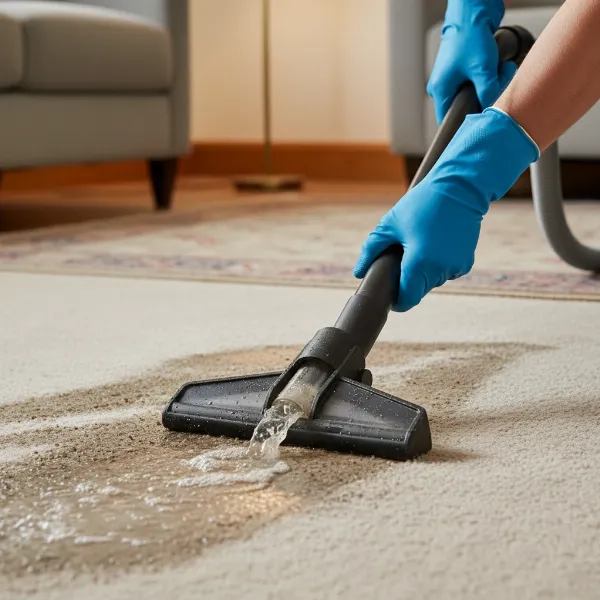 Person using a wet-dry vacuum to extract water from a damp carpet.
Step 3: Optimize Airflow with Electric Fans
Once most of the standing water is removed, it’s time to introduce strong airflow. Position your electric fans strategically around the wet carpet. For surface drying, aim fans directly at the damp areas. For wall-to-wall carpeting where the padding might be wet, gently lift a corner or edge of the carpet using pliers. Prop it up (you can use blocks of wood or even plastic bottles) and direct an industrial fan or air mover underneath the carpet to blow air onto the padding and subfloor. Using multiple fans, set up in a “vortex” or circular pattern, can create effective cross-ventilation, ensuring air circulates over and under the entire wet area, accelerating evaporation.
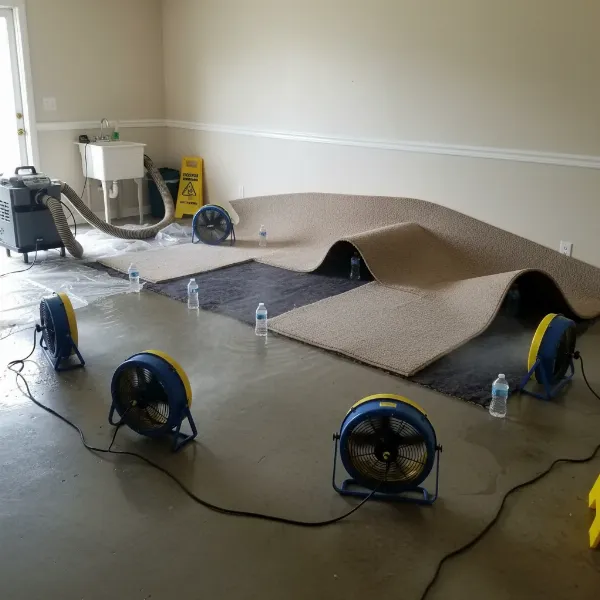 Multiple industrial fans strategically placed to dry a lifted, wet carpet.
“The key to effective carpet drying is not just removing the water, but creating an environment where moisture can evaporate quickly from all layers—carpet, padding, and subfloor.” – Andrew Rohr, Carpet Cleaning Specialist
Step 4: Control the Environment for Faster Evaporation
Fans alone are not enough; controlling the room’s environment is equally important. Place a dehumidifier in the room and keep it running continuously, emptying its collection tank regularly. Dehumidifiers pull moisture out of the air, preventing it from settling back into your carpet. If the weather outside is dry and warm, opening windows can help create natural airflow. However, if it’s humid outside, keep windows closed to allow the dehumidifier to work most efficiently. Increasing the room’s temperature slightly with a heater can also help, as warmer air holds more moisture, leading to faster evaporation.
Step 5: Monitor Progress and Ensure Complete Dryness
Drying wet carpet is not a one-time event; it requires continuous monitoring. Regularly check the carpet, padding, and subfloor by hand to feel for any lingering dampness. It’s crucial that all layers are completely dry within 24-48 hours to prevent mold. If the carpet padding remains stubbornly wet, you may need to replace it, as it’s highly susceptible to mold. Continue running fans and the dehumidifier until all areas feel bone dry to the touch and there is no residual musty odor.
Choosing the Right Electric Fan for Wet Carpet Drying
Not all electric fans are created equal when it comes to drying wet carpet. Understanding the different types can help you select the most efficient tools for your situation.
Centrifugal Air Movers: The Professional Edge
Centrifugal air movers, often called carpet drying fans or blowers, are specifically designed for water damage restoration. They produce a high-pressure, focused airflow that effectively lifts moisture from surfaces and penetrates deeply into carpet padding. These are ideal for significant water damage due to their power and efficiency.
Axial Fans: For Broad Area Coverage
Axial fans are larger, round fans that produce a high volume of airflow, but with less pressure than centrifugal fans. They are excellent for general air circulation across larger areas, helping to ventilate the room and encourage overall evaporation. While less intense than air movers, multiple axial fans can be very effective in tandem with dehumidifiers.
Standard Household Fans: For Minor Incidents
For small spills or slightly damp areas, your regular oscillating pedestal or box fans can certainly help. They provide basic airflow to aid evaporation. However, for heavily saturated areas or widespread wetness, they will likely be insufficient for rapid and thorough drying, making industrial-grade options a better choice.
| Fan Type | Key Benefit | Ideal Use Case | Power & Airflow |
|---|---|---|---|
| Centrifugal Fan | High-pressure, targeted airflow | Heavy water damage, drying under carpet | High |
| Axial Fan | High-volume, broad air circulation | General room ventilation, speeding evaporation | Moderate to High |
| Household Fan | Convenient, accessible for minor dampness | Small spills, slightly damp surfaces | Low to Moderate |
Common Mistakes to Avoid When Drying Wet Carpet
Even with the right tools, missteps can prolong the drying process or lead to bigger problems. Be mindful of these common errors:
- Not Acting Fast Enough: Delaying action for even a few hours significantly increases the risk of mold growth.
- Insufficient Water Removal: Relying solely on fans without first extracting as much standing water as possible with towels and a wet-dry vacuum is inefficient and ineffective.
- Ignoring the Carpet Padding and Subfloor: Moisture trapped beneath the carpet can cause severe, hidden damage and mold, even if the surface feels dry.
- Incorrect Fan Placement: Simply pointing a fan at the carpet might not be enough. Strategic placement, including lifting the carpet to dry underneath, is crucial.
- Skipping the Dehumidifier: Without a dehumidifier, the moisture evaporated by fans simply stays in the air, creating a humid environment that slows drying and encourages mold.
When to Call the Professionals
While DIY methods can be highly effective for minor water damage, there are situations where professional intervention is necessary. If you’re dealing with a large flood, water from a contaminated source (like sewage), or if the carpet has been wet for more than 48 hours, it’s time to call in restoration specialists. Professionals have specialized equipment, such as powerful truck-mounted extraction units and high-capacity dehumidifiers, that can handle extensive damage. They can also safely assess for and remediate mold, ensuring your home is healthy and dry.
Conclusion
Confronting a wet carpet can be daunting, but with the right approach and the strategic use of an electric fan, you can restore your floor to its former glory. Remember, speed is of the essence; the quicker you act to remove water, boost airflow, and control humidity, the more likely you are to prevent mold, odors, and costly damage. By following these steps and leveraging the power of your electric fan and supporting tools, you’re well-equipped to tackle wet carpet emergencies with confidence. What’s the biggest challenge you’ve faced when trying to dry a wet carpet?
Frequently Asked Questions
Can a regular household fan dry a wet carpet?
A regular household fan can help dry a small, slightly damp area of carpet by increasing air circulation. However, for deeply saturated areas or widespread wetness, its power and focused airflow are generally insufficient for rapid and thorough drying, making specialized air movers or industrial fans a more effective choice.
How long does it take to dry a wet carpet with fans?
The drying time for a wet carpet with fans can vary significantly, ranging from 24 hours to several days. Factors like the amount of water, the type of carpet, humidity levels, room temperature, and the number and type of fans used all play a crucial role in determining the overall drying duration.
Is it necessary to lift the carpet to dry the padding?
Yes, if the carpet padding underneath is wet, it is highly recommended to lift the carpet to allow air to circulate directly onto the padding and subfloor. Padding absorbs and holds moisture, and if left damp, it is a prime spot for mold growth, even if the carpet surface appears dry.
What is the best way to prevent mold after a wet carpet incident?
The best way to prevent mold after a wet carpet incident is to remove all excess water within 24-48 hours and ensure complete dryness of the carpet, padding, and subfloor. Using a wet-dry vacuum, strategic fan placement, and a dehumidifier are critical steps to achieving this rapid and thorough drying.
Should I open windows while drying a wet carpet with a dehumidifier?
It depends on the outdoor humidity. If the air outside is dry, opening windows can aid ventilation and speed drying. However, if it’s humid outside, keep windows closed to allow the dehumidifier to work most effectively by concentrating on removing moisture from the indoor air without fighting external humidity.